Microsoft: Back in the Game Part 2 – Windows Phone 8

So we are now into the second half of our “Back in the Game” coverage. While there has already been an article on Windows Phone 8 already, this article aims only to introduce all of the features we know of at the moment of the upcoming mobile operating system without venturing too deep into actual buying advice or other criticisms.

Microsoft first released its Windows Phone operating system (up from Windows Mobile 6.5) less than two years ago with Windows Phone 7, which received an update to “Mango” less than a year ago. While plentiful in features, Windows Phone 7 lacked one thing. This one thing is probably the first thing that people think of when when they buy a smartphone today – apps. Yes, Windows Phone has never had that massive big name app support that Apple and Google have had with iOS and Android respectively. However, Microsoft aims to put that to rest with their new Windows Phone 8 ecosystem.

The Kernel
What is this kernel you speak of? No, Microsoft have not planned to use corn to power their latest smart phones. The kernel is the core, the base, the operating system in its barest form, and what Steve Ballmer and co. have done, is to use the same Windows NT core that drives Windows 8…named the truly imaginative “Windows Core”.

Now, this won’t amaze most readers out there, and those with good memories may remember that during the keynote for the first iPhone, Scott Forstall said that iOS, or what was named iPhone OS back then, was also a version of OS X, their Macintosh operating system. Doesn’t that mean that Redmond is simple copying Cupertino? No, iOS was implemented in a way that OS X provided the simple and most basic operating system to install apps and run like it should. App developers were still required to learn how to use the iPhone Software Development Kit (SDK). WP8 running on the same Windows Core enables those currently developing Windows 8 apps to immediately start developing WP8 apps using their current SDK because of this new ecosystem. WP8 will have the same file system, encryption etc as Windows 8. This does not mean that Windows 8 programs will be able to run on WP8, but it means that there will be no time wasted when it comes to rolling out apps. Those developers who have been reluctant to learn the iPhone SDK or any other mobile SDK no longer need to and can get to work immediately. This radical change has not affected current apps though as the 100,000 apps present in the Windows Phone Store at the moment will still run fine on any new WP8 handsets.

So what does using the Windows Core bring to the table for app developers then? The Windows Core will bring features such as Multi-Core Processor support, HD resolution and SD card support. Windows Phone 8 can theoretically support up to 64 cores. The shared codebase allows developers to use existing libraries such as C++ and SQLite, which will run natively on the mobile OS. Probably the best news for games developers is DirectX support. Games developers can be building the Windows and Windows Phone game at the same time. With series classics such as GTA 3 and Max Payne being ported to iOS and Android, in a few years time as mobile graphics power improves, we may see more PC games of now and yesteryear being easily ported to the Windows Phones. Crysis anyone?

Carrying a wallet was so last year
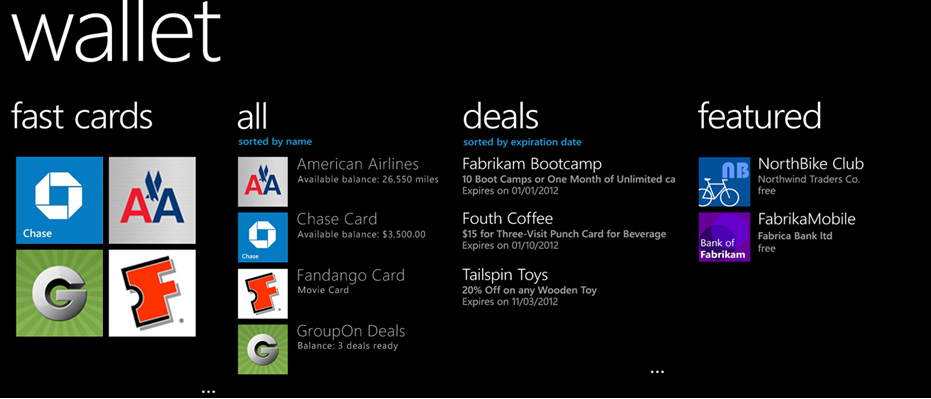
WP8 phones will also have built in NFC support. Near Field Communication is a feature that Google built into its Android operating system allowing contactless payments…and that’s about it. Remember Apple’s Passbook app that saves our tickets, and other e-paperwork? Well what do you get when NFC + Passbook have a love child? I present WP8’s Wallet hub. A place where credit cards, membership cards and other pieces of valuable plastic can be stored and then USED from the phone in participating stores. I can just imagine Orange taking advantage of this with the Orange Wednesdays deals – get your code, reserve seats, save into Wallet hub, go to cinema, hover phone on top of NFC device, claim free seat and purchase ticket using the credit card information already saved in the Wallet hub. Simples.
Where's wallet?

It is now safe to remove your…
I am sure that many of you iPhone users have been frustrated over the fact that your iTunes library on your iPhone cannot be altered through interfacing with the phone itself. I personally have been. It needs a connection to the computer wired or wireless. Well because Windows Phone 8 uses the same Windows Core as Windows 8, users can find a friend with the another WP8 phone with a song that they like, load it onto an SD card, plug it into their own phone and then either save it to their own or play it through the Media Centre thanks to WP8’s ability to simply register the SD card as removable storage and easy interacting with files and folders on it. I can’t for the life of me get the SD card to register on my iPhone, wait…

Windows Phone Start Screen
What about the interface? Any phone’s UI is the thing that people will interact with most and arguably is a make or break for any phone. Can’t really have a phone that does amazing things but people actually hate using it. The Windows Phone interface has always been a love or hate affair. Windows Phone 7 introduced a new meaning to the word “Tiles”. No they aren’t icons, they are tiles, just like widget and gadgets are different, right Microsoft? Anyways, Windows Phone 7 offered a thing called Live Tiles where the icons representing their respective apps are animated showing relevant information from how many emails or missed calls there are to the latest trending photos on flickr. They simply provided additional bits of information. The main page was also rather unbalanced as there would be a small arrow to the top left of the screen which led to the list of all the apps.
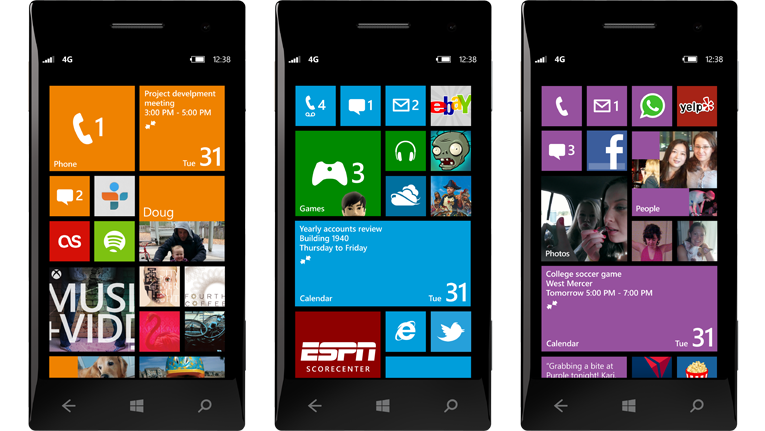
I love a photo of me putting on makeup on my homescreen.

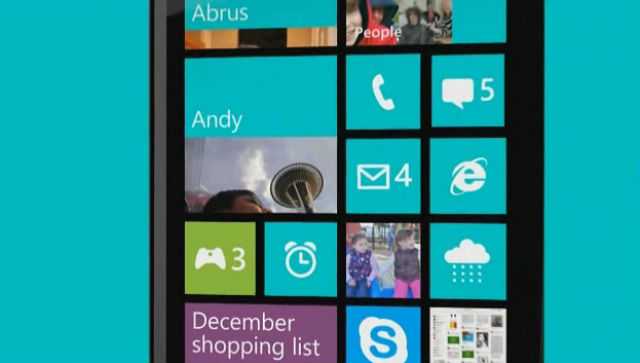
Windows Phone 8 introduced Windows Phone Start Screen. Gone is the arrow and gone is list of apps. Now, all your apps seem to appear on your main screen but I’m sure that we will get some kind of a launcher or something in the final release. Now, users can customise the size of their live tiles allowing them to easily view what they are interested in and reduce the size of the lesser viewed tiles. I can just imagine that I’ll be spending hours getting the perfect tessellation of different sized apps with little to do with use, purely aesthetics. A game of tile tetris maybe?

Skype
Windows Phone 8 has Skype integration to the max (or to the deep…deep integra- oh you get the picture). Skype will be an app available for download and upon installation will integrate with the People Hub, Phone Dialer and probably the Wallet hub too. Microsoft has done the simple task of not bothering to create its own single platform communicator such as BBM or FaceTime and instead use an already existing, good communicator that is Skype.

Where are we again?
Nokia has always been well known for its ability to deliver a good and reliable Maps experience and since last year, after announcing the partnership with the Finnish mobile company, Microsoft’s Bing service has been slowly aligning with Nokia Maps. Nokia Maps will bring offline support and much better global coverage, something Bing Maps and even Google Maps have been lacking in. The Nokia NAVTEQ data will now also be available to developers that can take advantage of the Maps system that will be present on the phone and use it within their own applications. This potentially means that if an enterprising third party wished to develop a Navigation app for Windows Phone 8, the final product could actually be just a front-end that is utilising the existing Maps data present on the phone.

Business and Enterprise
Finally, Windows Phone 7 lost a huge chunk of market share to the leading business mobile brand RIM due to its lack of many features useful to the business user. With this new move to Windows Core, the same Enterprise encryptions that are used in the Windows Desktop environment have been made accessible on the mobile platform, opening up all kinds of business and enterprising applications. I would not be surprised to see some kind of seamless native synchronising between Windows Phone 8 and Windows Home Server.

What about current Windows Phone users?
There is good news for those on previously released handsets as Microsoft will be rolling out Windows Phone 7.8, which adds many but not all of the features of WP8 to existing handsets. Although Microsoft has not disclosed what particular features will or will not be available for upgrade, the new Windows Phone Start Screen will be.

So as we see, Microsoft has opened the door to the great possibilities of Windows Phone 8 – but remember that the summit was for developers, and new consumer features will be announced nearer to the launch date. I look forward to seeing a future where at the swipe of a phone, I can redeem my vouchers, pay for and save my flight tickets in one go, play on a game that was written by experienced PC game developers whilst chatting to a friend on Skype and copying over some files from an SD card I borrowed from my brother. I can currently only do one of those things with my iPhone. I believe Microsoft is truly back in the game with an amazing concept that if executed well, should be able to dominate the mobile market. DeThroning the fruit and the robot is certainly going to be hard but when the final product comes out, I have a feeling we are going to see some game changing.

News in Briefs 24/06/12

Greek elections bringing about pretty much the same stuff as before, education changes, coalition splits, more chuntering from Ed Miliband, and a Syrian Civil War that people have stopped caring about. It’s been a busy week so it’s time to get started. Although I hope this column won’t include most of that stuff, if I’m lucky!

Political Oops of the Week

Away from Syria and the same old stuff from the Eurozone, we now move to Egypt once again. It’s been a long time since much of relevance happened in Egypt, but after the military rulers dissolved the entire parliament last weekend things started to move forward again. So this week they then introduced new powers for themselves. To put it simply, they can now control the budget, implement new legislation (as governed by themselves), and the president now doesn’t really exist in any real capacity despite the fact the leader of the Muslim Brotherhood won fair and square.

This pretty much reminds me of how most dictatorships are created. The military tends to always back a dictator and this is how they do it. The only difference is that the military happens to have a ruler from its own brotherhood, as opposed to an outsider leading it.

Dictatorship

On the plus side, at least that bed-ridden bastard Mubarak is about to go to the great hospital bed on Satan’s right nipple.

The Painful…

This was quite a recent YouGov poll conducted in the US. It basically said that 63% of all high level Republicans still believe that Iraq had Weapons of Mass Destruction (WMD) when they invaded it in 2003. This was compared to 15% of Democrats. So you’re telling me that the most powerful country in the Western world should be governed by a party like the Republicans who have a majority of people that believe that WMDs existed in Iraq in 2003? And this is despite the fact that solid evidence consisting of first-hand accounts are arguing for the opposite.

I don’t like to believe that all Americans are complete and utter morons, but the politicians certainly are. Not only do they operate a system that favours only the multi-millionaires, due to the lack of any controls on campaign spending, but it’s an example that a lot of rich people really do live sheltered lives. I hope for the sake of the entire Western world that Obama receives a second term in the White House. But the problem is I honestly do think that he will get voted out, and we will all be left regretting that.

Republicans

…And the Pointless

Zimbabwean MPs have decided to undergo circumcision as part of a campaign to reduce the prevalence of AIDS in the country. In 2009 Unicef reported that around 14% of the adult population had either HIV or full-blown AIDS. I can understand that the National Trust says that you can reduce AIDS by up to 60% by getting circumcised. However, what gets me is how we prevent the same problem in the West. We don’t mutilate our own cocks in order to prevent it. It just seems to be extreme and unnecessary. Surely a better idea to reduce those Unicef statistics would be to just use a little common sense and just stop having so much sex with strangers? Those statistics will go down by themselves if people just use a little responsibility and common sense.

Oh wait, common sense is in short supply these days isn’t it?

The So Outrageous that it’s Borderline Hilarious

Jimmy Carr is the subject of this section this week as his story really is fitting. Let’s look at the facts. Jimmy Carr utilises a legal yet slightly unethical loophole to bring his tax bill down to single figures, when realistically it should be nearer 50%. For those who don’t understand how he did this, I’ll explain the general process. This scheme, which many figures like the members of Take That are using, is all about creating an off-shore company. The way it works is that they send the money to the company and they then have it loaned back to them immediately. When it comes to loans there’s no tax attached to them so he’s essentially getting the same amount of money without paying any tax at all.

Jimmy Carr
What, me, stealing? No, it must be some other guy called Jimmy Carr.

So this week he apologised. I watched his shows and he did get heckled quite a bit, but the most surprising thing is that he was actually being cheered for everything despite the fact that what he did was still blatantly wrong. He never had to pay back any of this money and now the matter is supposedly closed.

It really does amaze me how fickle some people are. We’ll complain about bankers and multinational companies doing this sort of thing for hours and hours on end, but when Jimmy Carr does it then all it takes is a crap apology and that’s the end of the matter. Come on!

Anyway, maybe next week won’t be as bleak and irritating after all…

Nokia Purity HD Headset Review

There’s a peculiarity in the technology world. Nokia is, in many ways, the undisputed media king. Dolby Surround Sound, untouchable cameras (HTC’s new flagship One series, boasting its camera, still pales beside the Nokia N8, not to mention the jaw-dropping 808 PureView), TV-Out, HDMI, superior audio output without headphones, and the 808 PureView records sound at such a high quality that it’s like you’re really there. Mass storage mode lets you drag any file onto the phone, and you can plug your USB stick into the phone and play the video, music or photos on a TV, which is great if you’re staying in a hotel. The N900 would wirelessly play media from computers on the Wi-Fi network, and these could then be played on the television via the TV-Out. And, if you were watching a film via TV-Out, you could multitask without interfering with the display on the television, say if you wanted to look up the actor on IMDB. Features such as these made Nokia phones incredibly close to genuine computers, and users were not left thinking “i’ll have to wait until i get back to my laptop”.

Yet, for some reason, Apple is considered the king of media. Apple, whose devices play only the iTunes file format – forget AVI files and click-and-drag here. Apple, who will play media from the phone or tablet to the television only if you own Apple TV. Apple, whose cameras have only just started to take decent photos provided it’s not nighttime, because an LED flash is apparently good enough. Apple, whose audio output through the iPhone’s speakers is so tinny and weak as to be barely listenable. Any sensible person would consider this a slight dichotomy – how could a company whose devices do more, regardless of the file format and output, and take better pictures, and sound better, and interfere less with the user’s actions, be considered inferior to a company whose devices do relatively little, and only if the user follows strict criteria?

The reason is probably because Apple invented the iPod, the go-to portable music player. Portable music is convenient, but it’s always been a trade off because of poor sound quality – audiophiles aside, many people neglect to think of the quality of headphones and consider them all equal. With the iPhone’s speakers so bad as to make music not worth listening to, it’s a sad fact that the supplied headphones aren’t much better. In recent times, though, headphones have received more attention, especially with the Beats headphones accompanying HTC handsets. Nokia has also been paying attention to this entertainment sphere and has now released the Nokia Purity HD Headset, designed to offer the best portable music listening experience ever. For those using them on a Nokia Lumia device, the headphone lead can also be used to pause, skip, forward or rewind tracks, answer calls and talk hands-free.

This is all good on paper, but do the headphones live up to the hype, especially the “High Definition” title?

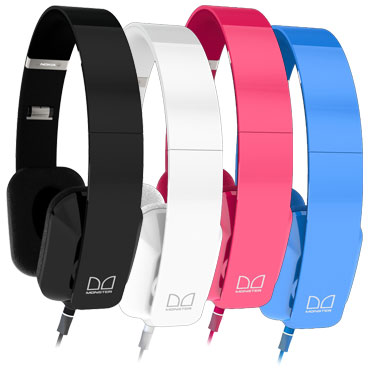
In a word: Yes. The Purity HD headsets are extremely comfortable, designed for the padding to rest around the ears rather than on them. They come in a range of colours designed to match the colour of the phone, including black, cyan, magenta and white. The quality delivered through the headphones is second to none; few would argue against the fact that typically listening to music on a mobile phone yields a poorer listening experience than on a stereo or through other speakers. The Purity HD headset, however, seems to have finally overcome this. The audio levels sound exactly as they were intended, with a perfect blend of treble, mid and bass. Compared to other headphones, on-ear and in-ear, the difference in quality is noticeable immediately, especially on songs with prominent bass or low-end. Perhaps the ultimate positive result was that they even made the iPhone’s music sound good.

One of the main features of the Nokia Lumia range is the inclusion of music apps, like Nokia Music and Mix Radio. With Mix Radio, users can launch the app and choose a genre, from blues to jazz and pop to disco, then select a decade or a random playlist, with no login required, offline playback and no usage fee. In other words, the Lumia range provide a hefty amount of free music to be listened to at any moment in time even if the user doesn’t transfer any of their own collection to the device. And with top of the range headphones to accompany it, all Lumia owners can enjoy a stellar listening experience as and when they want to.

Apple made a huge marketing campaign over the iPhone containing an iPod. Perhaps now Nokia needs to make a similar campaign informing the public that they can have their own customisable, portable radio wherever they go, so they can break away from their standard playlists. And with the Purity HD headphones, they can finally enjoy listening to the music they enjoy the way it was meant to be listened to, no matter where they are.

Why Microsoft’s Windows Phone 8 Upgrade Path is Correct

Since Microsoft unveiled key aspects of Windows Phone 8 yesterday the company has received some flak for not allowing current generation Windows Phones to get the new operating system in full. Instead, handsets running Mango will get updated to Windows Phone 7.8, which brings the new start screen, continued updates, new apps, and more details will follow nearer the release date. While some users feel betrayed by buying a new handset like the Nokia Lumia 900 only to find it won’t receive Windows Phone 8, Microsoft is right in its decision.

The reason for the ire against Microsoft is because today people buy a phone and expect it to receive software updates in future. However, a look at competing systems shows it isn’t rosy for them either. Android is well known for its fragmentation, and there are modern Android phones that are at least one or two software updates behind the latest. Ice Cream Sandwich was supposed to be the operating system that changed that, but Gingerbread is still the most widely used Android software on the market. To make matters worse, while Microsoft is offering Windows Phone 7.8 to existing users, Google offers nothing to handsets that can’t get a full update. It also often leaves the update process to OEMs and carriers, whereas Microsoft is offering Over The Air (OTA) updates to bypass the carriers. This means that all Windows Phone users will be getting something, while a competing provider often offers nothing.

Microsoft’s approach also circumvents Apple’s problematic approach. Apple does not offer all features to all phones, even if it can run – Siri was an app that worked fine on the iPhone 4, but when Apple baked it into the OS they made it so it can only work on the 4S, forcing users who wanted it to upgrade. When the company offered iOS5 to the 3G and 3GS handsets, the Internet was awash with disgruntled customers who had notice a massive decline in performance and speed of their phones, because the hardware wasn’t capable of running it properly.

So what Microsoft has done is the sensible option – release a “Windows Phone 8 lite” for existing handsets so that the features that will run will be provided, and anything that can’t be provided will be reserved for new handsets. While it isn’t yet known exactly what features will be coming in 7.8, like Skype integration, at least users know they will definitely get an update to improve their experience, which is not true of Android users. Most of the changes in Windows Phone 8 are hardware related, like MicroSD support, multi-core support, higher screen resolutions and NFC, and of course these changes cannot come to existing phones just like previous iPhones did not sprout a front-facing camera or Retina display when Apple announced them. Indeed, this is a main point in the online discussion of events – while the tech blogs are quick to bash Microsoft’s decision, when Apple does something similar or even worse to its mobile consumers, silence ensues.

More to the point, Microsoft’s changes were wholly necessary. The existing kernel for Windows Phone does not allow for the seamless integration and interaction between Windows Phone and Windows 8, so a change had to be made. This change was better to happen now while the userbase is relatively small rather than wait for the operating system to gain more marketshare. By causing this disturbance now, Microsoft has hopefully laid a path to prevent an identical situation happening in the future, and more importantly has laid a very solid foundation for users to enjoy an excellent product in the near future, with unparalleled communication between the phone, tablet and PC. While some users may be peeved that they’re not getting Windows Phone 8 in full, the upshot is that a very new experience in computing will come out of it.

Locked-In, In More Ways Than One

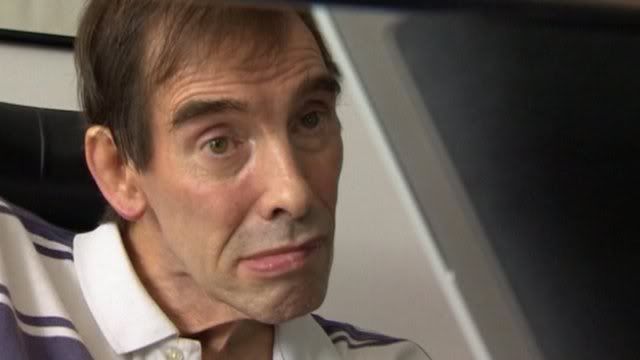
The chances are that you’ve already heard of the case being put forward by the family of 58-year-old Tony Nicklinson. Tony suffers from a syndrome known as locked-in syndrome. This syndrome arose due to the fact that he had a stroke that left him paralysed everywhere, but his mind still functions perfectly.

As a result of his injuries, he can now only communicate through a special computer. This computer monitors his eye movements and allows him to speak. The case being put forward is that he wants it to be made legal for a doctor to allow him to die, but the government has said that this will authorise murder.

Tony Nicklinson
Tony Nicklinson

On one hand, the government is right. Such a system would be open to corruption from dodgy doctors and those who would happily kill off ailing relatives in an attempt to claim what they have without waiting. Yes, this corruption would be there, but it’s also something that has to be worked around. You can’t just accept that nothing can be done about corruption. You can’t just accept this and refuse to implement a better system because of it.

What the government is essentially doing is condemning Mr. Nicklinson to years and years of misery at the hands of locked-in syndrome. And make no mistake, he’s not ill. What irritates him is the fact that he’s still perfectly healthy and he will live for years and years to come. And he will have to live like that for the rest of his life. That’s why he wants to die, but why shouldn’t he be allowed to die? Switzerland has a system where people can get doctors to kill them, a process known as euthanasia.

We have the basic human right that we have a right to life, so surely we also have the right to die? I’m quite frankly sick of the rubbish from the past that says that every life is sacred. No, it’s not. Life is not sacred. It’s just a life like every other animal on the planet. They are our lives. And our lives are something that we should be able to end if we feel like it. Suicide is now legal under the Suicide Act of 1961, and with the excellent safeguards against malpractice in euthanasia other countries have in place, it is an antiquated idea that it should be illegal. It’s unfair and it’s just plain wrong. It’s almost as if it’s admitting that the government has control over our lives.

This case of locked-in syndrome comes just after another case where an anorexic woman from Wales, who wanted to die, ended up in court. The terrifying thing is that even though the woman wished to die, the judge ruled against her and declared that she must be force-fed to prevent her death.

Now we are not only avoiding the issue, we are actively working against it.

Justice