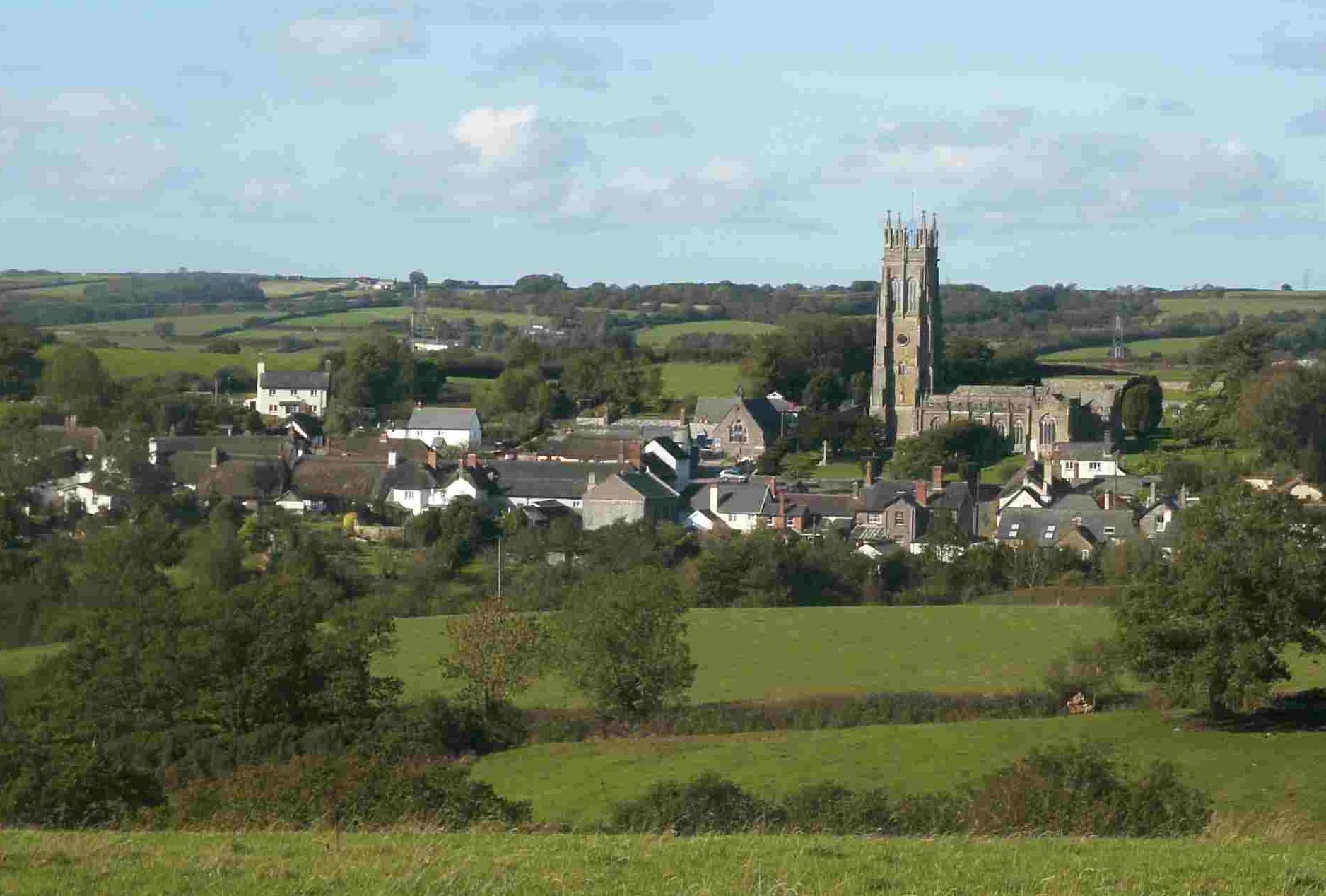
Tales From a Village

//
// <![CDATA[

// ]]>

The exodus from our cities to a rural idyll seems to be more popular than ever. People even endure six or more hours of commuting, just to finally come home to their dream home in the stix.

What images does living in the countryside conjure up? Roses around the cottage door? A Labrador or two spread out in front of the Aga, perhaps? Friendly rustic types popping round with home reared honey and eggs? Above all, you would expect a bit of peace and quiet, wouldn’t you?

Some years ago, my husband and I moved from Leeds to a small, East Yorkshire village, to escape the rigours of city life and enjoy a more relaxed atmosphere. A row of twelve old chalkstone houses had been modernised and we moved into the end house. The village’s claim to fame was the Great Flood of 1888, when it’s said that a grand piano and also several pigs were swept away down the streets. Imagination conjured up an image of a pig, perhaps playing the piano as it sped to its doom.

Inclement weather could still have an impact, as winter power cuts were quite common. Sometimes, the village could be cut off entirely, to the delight of the local school children who enjoyed a day’s sledging instead of lessons. One year, an RAF helicopter had to drop supplies onto the village green.

We came to realise that it was actually easier to go for long walks in the countryside environments in and around Leeds than it was around our village. We were surrounded by farmers’ land and there wasn’t much public access. When there was, you had to keep your dog on a lead. We began to envy Londoners who lived near the freedom of Hampstead Heath.

There were two shops, one pub and one bus a day to the local market town. Apart from church and PTA functions and the Women’s Institute, entertainment was at a minimum, though rumours of wife swapping were rife. A mobile library called, which tended to sway like a storm tossed canoe, as you were trying to choose a book   It was debatable whether the literature on offer was worth the inevitable sea sickness.

Peace and quiet was the last thing we got. It was soon apparent that the local fly boys liked nothing better than to terrify the life out of us by skimming over our chimney in their fighter jets, making a noise that made your head burst and your windows rattle. Also, there was a coach depot opposite the houses, by the name of Riley’s, which only had a few coaches pottering about when we moved in but then seemed to breed overnight. Suddenly, there was a whole fleet of them – clapped out, rusty wrecks that limped home on a wing and a prayer. They had the contract for the local school run, often breaking down part way. The kids were even asked to get out and push on one occasion.

You really took your life in your hands if you trusted one to get you to Scarborough. Remarkably, a coach trip did manage to go all the way to London. A resident from the village happened to be walking down Regent Street on a sightseeing holiday in the capital, when the sound of a dodgy exhaust made her turn around. Sure enough, there was a Riley’s coach struggling up the road, belching fumes all the way. Periodically, they would light a gigantic bonfire of old, unwanted tyres. The acrid smoke spread throughout the village and the indescribable smell lingered for ages. You couldn’t hang your washing out that day.  We were usually woken by the revving of an engine, which was the driver making it warm and cosy, while he went to eat a three-course breakfast; that’s if the cockerel or bird song didn’t wake us first or the merry church bells ringing at eight in the morning.

Sometimes, people would have long conversations at six in the morning directly underneath our bedroom window. It was tempting to throw a bucket of cold water over them. At night, dogs would be constantly barking and I would just be dropping off when the big, hairy man at No. 8 would start calling his cat in for the night, with a high pitched “Twinkle, Twinkle”. There was also the hooting of the owls, the roar of boy racers on motorbikes and the shouts of the returning revellers from the village pub at chucking out time. Just to ice the cake, there was a pig farm in the centre of the village, which was fine unless you were down wind.

As for neighbours, the small community seemed to attract eccentrics in disproportion to the population. Across the road, in the aforementioned coach depot, there was an old man whose name no one could pronounce. Inexplicably, everyone called him Albert. He was from Estonia and he had been a POW in the nearby camp during World War Two. After the war, he dared not return to his homeland for fear of being shot as a traitor, having fought for the Germans. He worked on the coaches as a mechanic and was rewarded with a wooden hut to live in, in the yard alongside where the coaches were parked. This was just a step up from homelessness. The owner of the coach firm had unlawfully rigged something up that tapped his own electricity supply into the mains. It was an all mod cons hut. The coach firm has since, unsurprisingly, gone bust and they built posh houses on the site. I bet Albert is still there, defiant in his hut with his flag of independence raised, surrounded by commuting yuppies.

Beatrice was a pensioner who lived alone but liked to talk to herself and dressed up like a femme fatale from the French Resistance, complete with caked-on stage make up and a beret worn at a jaunty angle. Taking her dog for a walk involved dragging her reluctant little terrier behind her, but she wouldn’t let her cat out because the sunlight might damage its fur. It used to sit on the window ledge and look outside, forlornly. Her favourite hobby was going to people’s funerals, regardless of whether she had known them or not. This was an opportunity to really dress up. Her son was a famous television presenter, whom she persuaded to open the Village Fete one year. This was done in great haste. He couldn’t escape quickly enough, not even stopping to sample the homemade rhubarb and ginger jam.

Then there was Bill and Doreen. Bill, a Brummie, who would engage you for hours, if you let him, in a discourse on the internal combustion engine and the performance of his latest banger and Doreen who made all the neighbours cringe in terror. Her temper was legendary and caused me to hide until the coast was clear. They too had dogs. Doreen’s favourite rant was “Act your age, not your shoe size”. One was never sure if this was directed at Bill or the hapless dogs. Early one morning, after a skinful, Bill fell down the stairs and landed in the fish tank, which sat at the bottom of the staircase, breaking the glass as he did so. There was water and fish everywhere. It was later reported that as he lay bleeding and concussed, Doreen completely ignored him and calmly rescued the fish. This incident passed into village folklore.

They kept a couple of goats, which were once savaged by Jack, a huge St. Bernard who resided at No. 5 with Steve and Julie. He was a lovely old thing, continuously salivating, partial to stealing eggs, downing Mars Bars and swallowing the odd child here and there (Jack, not Steve). Doreen’s father, however, who was staying with her at the time, took great exception to this attack on his daughter’s livestock. It all ended in an unseemly brawl between himself and Steve as they rolled around the garden.

Steve and Julie were ardent vegetarians but seemed to live on a diet of veggie burgers and chips. If Julie couldn’t be bothered scrubbing, which was more often the case, she would throw a saucepan in the bin and simply buy a new one. She was quite friendly to me, trusting me to lend her countless cups of sugar, onions, eggs, etc. However, this did bring its rewards. She did not replace these items but instead, felt so beholden to me as to shower me with gifts. I got a nice pair of eggcups from Habitat, a new colander and a smashing Delia Smith cookbook. Julie would pack her bags once a fortnight and leave Steve. You could set your watch by it. She always returned, to burn more saucepans and borrow more sugar.

Steve was a builder and had a shiny red pickup truck. There was a wood pigeon, which had taken a shine to all our gardens, eating up everyone’s seedlings in the process. Steve kindly volunteered to remedy this. Not by shooting it; they were vegetarians after all but by driving it far away and releasing it. He didn’t drive far enough. It kept coming back. He took it further and further away. Three times. Finally, the fourth trip was successful, just when we thought we’d have to put it on the train to Inverness.

Speaking of pigeons, it soon became apparent to us that life is too short to pluck one. One day, a man with a shotgun appeared at our back door. He was an acquaintance of ours and he’d brought an offering of a brace of pigeon. We were rather taken aback. It turned out he wanted to help us poor city folks with a bit of country goodness. We thanked him very much. Unfortunately, he took this politeness to be a sign that more pigeons would be welcome. It takes hours to pluck a pigeon. It’s the most tedious chore on Earth and you end up with a teaspoon of meat for your effort. A dry and tasteless teaspoon as well. But those pigeons kept coming. Thankfully, our benefactor moved out of the village. Or did my husband load him into Steve’s pickup and send him far away?

Watson’s fulfilled the traditional role of the corner shop. Everything under one roof. Unless you wanted basic food items (not counting the rotting bananas in the window). You couldn’t get garden peas; they only had processed. You couldn’t get tinned peaches either – “There was no demand for them”. But you could get prunes, string and amusing books written in the Yorkshire dialect.   They had a one and a half hour lunch break and always shut for two or three days during bank holidays. The youngest son of the family was the village milkman and delivered every other day. He liked his bank holidays off too, which meant that he delivered a double order sometimes. One morning, we were met with eighteen bottles of milk on the doorstep.  We worked out that the milk, which was frequently sour, had last seen a cow seven days previously. It was being transported from Leeds, where people got their milk nice and fresh!

What you couldn’t get at Watson’s, you could possibly buy from the various provisions vans that toured the villages.  There was always a long queue at the butcher’s van. George had his scales and his till in the back of the van, where incredibly everything he weighed was “just a bit over”. He was a jolly soul, until his wife ran off with his brother, resulting in bitter diatribes against her and all women in general, which his customers had to listen to, while they waited for their sausages.

There was a general feeling of insulation there. Some elderly people had literally never been further than a six-mile radius, perhaps just visiting the nearby market town occasionally. There was a ‘them and us’ attitude towards newcomers. Remarkably, this tiny place had French and Dutch residents and a gay couple that were all much more accepted than people from West Yorkshire. Wessies, as we were affectionately called, were the most unwelcome. My husband was once accused in the pub of coming to take “our jobs and our women”. You weren’t considered a proper villager until you had three generations in the graveyard, but in fact, the incomers actually contributed to the life of the village more than most.

Beautiful, peaceful countryside, full of people living in harmony, enjoying nature’s bounty?  Forget it. It was too much stress for us; we went back to Leeds for some peace and quiet. And fresh milk.




News in Briefs 01/07/12

There’s a thief in our midst! Ok, that’s not really a shock as it seems like there’s always a thief around these days. But things just seem to get worse. Just when you think that the worst of something has passed it just comes back and slaps you back in the face again. Anyway, I think you might be able to predict some of what comes up this week.

Political Oops of the Week

So Chancellor Angela Merkel decided to give in and now the German taxpayer will be actively funding the broken banks of Europe. I can’t help but think that this will be the decision that everybody regrets in the next five years. Let’s look at it like this. Germany has essentially said that we will save Europe with everything we have. Now, the only way they can do this is by plugging more and more money into it.

It’s nothing but a delusion. What Chancellor Angela Merkel doesn’t realise is that it’s just deluding the markets because every time German money is plugged into the hole the markets will go up, but the currency is fundamentally flawed. It’s broken and it just eats money and swallows it up. Unlike other currencies that occasionally get hungry, the Euro suffers from perpetual hunger. After what it’s been through no investor will trust it again. It will collapse, and now that Germany has committed herself she will go down with the Euro sooner or later.

Let’s look at the overall logic of the affair. Closer integration and spending got us into this mess in the first place. So what’s the logic to solve the problem? Oh that’s right, more integration and more spending. Yeah, that’ll work.

Homeless
Oh look it's a vision of Germany in the future.

The Painful…

Lord Wei, the guy who was the guru of David Cameron’s Big Society plan, has marked his return to public life as he just revealed that he wants to encourage new retirees to volunteer and give something back to the community. Ok, he hasn’t said that it’s compulsory or anything like that, it’s not like national service. Now, I can understand that it would be a nice thing to have as some pensioners probably would like to volunteer and do something with their time. But what gets me is that he’s having the audacity to say that pensioners should be giving something back to society.

The contradiction in what Lord Wei is saying is shocking. As part of this Big Society initiative he’s saying that since pensioners have worked for the community all their lives they should now be giving back to the community. How is working your entire life not giving something to society? If anything they should be encouraged to go away and do what they like because they’ve dedicated their lives to society. It just seems so ungrateful and just blatantly wrong.

I don’t have a problem with the fact that he wants to make a service like this available, but what I do have a problem with is the way he’s presenting it. He’s making it sound as if new retirees haven’t given enough and should be made to do more. In other words, he’s basically going for the guilt-trip factor.

…And the Pointless

The pointless, wow, we have something quite weird this week. This week it was aged 46 Nicolas Saunders who was caught by his ex-wife in her bed with her bull mastiff. If you don’t know what a bull mastiff is then we’ve provided you with a picture of one here. And, yes, the father-of-three was naked. He actively called the dog to his room and his wife found him attempting to stick his lightning rod into Sasha’s weather balloon; Sasha is the dog.

He was then arrested and was forced to provide a sperm sample, which, of course, came back as a 100% match to the substance found on Sasha. But Mr. Nicolas Saunders isn’t finished yet. Even despite his humiliation he now has to go back to court for pre-sentencing. I’m curious to know how many years you can possibly get for having sex with your ex-wife’s dog, maybe he can tell us all about it soon?

Bull mastiff

The So Outrageous that it’s Borderline Hilarious

This is the part that’s incredibly predictable. I’ll just give you one entity to attune you to the subject matter that I’m going to be discussing next. Ready, ok let me just stretch it out, it’s the banks. Yes, the banks are at it again. Corruption, cheating, thieving, and doing it doggy style with the public’s money once again.

Thief

Firstly, the banks started by being caught for manipulating interest rates. Although as of this writing it’s only been Barclays that were fined the £290 million the other banks are also under investigation, and the case is expected to cast its net over a number of American banks as well. So expect more fines and more naming and shaming to come after this case.

But it wasn’t over, oh no. Less than 48 hours later they were back in the news because they’ve been caught mis-selling insurance plans to small businesses. Supposedly, these expensive packages were designed to protect small businesses against the impact of changing interest rates. Whilst the packages were perfectly applicable to some businesses, the banks were selling them to companies that didn’t even need them. And they were too complicated to understand so they made sure that nobody would ever know that they were pointless.

And before this we had the Payment Protection Insurance (PPI) scandal, which was just blatant exploitation. Oh and nobody can forget all the stuff that we had to deal with in 2008 when they almost committed suicide.

What can we do about it though?

The answer is probably nothing as they have a complete and total hold over us. If we upset them then they just move somewhere else. And if that happens then London will turn into a slum.

Anyway, maybe next week won’t be so bleak and irritating after all…

British Rock Meets a Soul Queen – ‘Interpretations: The British Rock Songbook’ – Bettye LaVette

Track Listing:
The Word (John Lennon/Paul McCartney)
No Time To Live (James Capaldi/Stephen Winwood)
Don’t Let Me Be Misunderstood (Bennie Benjamin/Gloria Caldwell/Sol Marcus)
All My Love (John Baldwin/Robert Plant)
Isn’t It A Pity (George Harrison)
Wish You Were Here (David Gilmour/Roger Waters)
It Don’t Come Easy (Richard Starkey)
Maybe I’m Amazed (Paul McCartney)
Salt Of The Earth (Michael Jagger/Keith Richards)
Nights In White Satin (David Hayward)
Why Does Love Got To Be So Sad (Eric Clapton/Bobby Whitlock)
Don’t Let The Sun Go Down On Me (Elton John/Bernard Taupin)
Love Reign O’er Me (Peter Townshend) [BONUS TRACK]

Released 2010

When different musical genres mix, it doesn’t always work.  Sometimes, it’s a mess and fans of either side of the fusion are left dissatisfied.  So, what happens when veteran soul singer, Bettye LaVette, takes on rock and pop classics from the British canon?  The result is superb.  Hers is the voice of smoky clubs at midnight.  At 64 years old, it’s not a fresh voice but one that oozes experience of loves won and lost. Imagine if Tina Turner, Mahalia Jackson, and Aretha Franklin morphed following a night on the bourbon and you get the idea.  She takes these songs where they have never been before.

Don’t be put off if you are not a fan of the originals.  This is a Bettye LaVette record through and through and I suspect she would make a Julie Andrews song sound sexy. She may not be a well-known face in the UK but she’s on the must have list for historic gatherings in America.  Her duet with Jon Bon Jovi on the Sam Cooke classic, A Change Is Gonna Come, was one of the highlights at the Obama Inaugural Celebration at the Lincoln Memorial.  LaVette has dipped her toes into rock and country before this release.  She’s recorded with the rock country band, Drive By Truckers and she performed the bonus track here, Love Reign O’er Me by The Who, at the Kennedy Center Honors in 2008.  Apparently, she made Pete Townshend cry.

This album goes further than Bettye’s previous rock outings with renditions of songs by psychedelic rock bands, Pink Floyd and Traffic, and stadium giants, the Rolling Stones and Led Zeppelin.  There is a bias towards the Beatles with one Beatles track and one cover each of Paul, George, and Ringo solo records.  Less surprising is the selection of the bluesy Nina Simone song, Don’t Let Me Be Misunderstood, which was a hit for The Animals.  She doesn’t go for the obvious, preferring to perform the lesser-known Salt of the Earth by the Stones rather than (I Can’t Get No) Satisfaction.

LaVette strips each song down to its raw emotions and the musical arrangements are sympathetic.  This record neatly closes a circle, back to when white boys first played air guitar in their bedrooms in England to the American R&B blasting from their transistor radios.  They went on to become the ‘British Invasion’.  LaVette is simply returning the compliment and it’s a reminder that there are no boundaries that can’t be crossed.


Can Doctors do a Damn Thing?

I may as well get it out there and just say no. Doctors are backing future industrial action and are refusing to accept the new changes to their professions without a fight. Of course, it’s all about pensions where they will have to put in more to get less out. In theory, it’s upsetting as they had a deal, but in reality they are still getting almost £50,000 a year as part of their pension plans. However, with the British Medical Association now calling for the health secretary Andrew Lansley to resign, things only look like they are going to get worse.

kidding

Let’s look at the way doctors take industrial action. They take industrial action by refusing to carry out non-emergency care. So they still go into work, but instead of doing most of their work they just sit around and do nothing. It’s almost like a passive form of resistance or a slow-down, as some call it. Does it put the public in danger? No. Does it irritate the hell out of people who might have had their operations delayed for months because of it? Yes.

So can doctors do anything?

Any successful strike either has to have popular support or power. Doctors have the power as they can simply refuse to care for people any longer, which would have massive consequences. However, we all know, and health secretary Andrew Lansley also knows, that they won’t do this. Even with the recent industrial action not all doctors supported it as they believed that the general public shouldn’t suffer because of any dispute they had. Ok, so the doctors have power that they can’t use. That’s that out of the way.

Do they have popular support?

It really depends on who you ask about popular support as there will be differing opinions. You ask the government and they will say no, which they’ve actually said on live TV as part of BBC News. If you ask a doctor who wants to go on strike then the doctor will not really answer the question. Instead they’ll just talk about fairness for the next five minutes. So, no, they don’t have popular support. What they don’t realise is that people don’t care about your £50,000-a-year pension. To most people, this is an absolutely fantastic pension, regardless of what happened to change. And people won’t have their healthcare disrupted over a dispute like this. Fairness, in the eyes of doctors, has to come through mass disruption. And people are simply not interested in that.

doctor
It seems as if you have a..ah I don't care, I'm on strike.

So doctors can’t really do anything at all as they don’t have either of the key things they need to produce a successful strike. As for whether they are correct, well that’s up to you to decide. In my opinion, they are only correct because they already signed a deal. Doctors who were already in the profession when that original deal was signed, I believe, should be kept under that deal. The new changes from health secretary Andrew Lansley should only apply to new doctors who will be entering the profession. Yes, doctors will argue that they deserve those massive pensions, but a few more years training than everybody else shouldn’t entitle you to that much when everybody else has to suffer.

Why should you be an exception?

Rookie Photographers are Killing the Industry

That’s something that’s commonly said by professional photographers these days. As soon as they lose a client to a rookie they automatically turn on them and then they fly into a rage that lasts for the rest of the day. However, are these rookies really killing the industry of professional photography? Do professionals have a right to be upset?

To answer the latter question, professionals do have a right to be upset. But it’s not for the reason you are thinking of. The only reason they have a right to be upset is because they are losing business. Although, it has to be mentioned that this is just the nature of the industry. These days it’s simple to pick up a good camera. The days of the photographer in a darkroom are gone. Today all you have to do is upload your pictures to Facebook and you already have professional-looking photographs. Add on the fact that Photoshop and other image editing programs are available and what exactly does the professional provide?

Camera

At this point the only thing a professional provides is experience, but experience is not something that’s a defining factor these days. If you can shoot professional photographs and present them in an attractive manner then you can do the same job that these professionals can. In essence, it’s a case of sour grapes.

In the past, the photographers were on a plane of their own. If you took a photograph from one of these cameras then people knew you were serious. If you took one from a poor quality camera then they knew you were just an amateur. Technology has advanced by so much that this isn’t the case anymore. This means it can be harder to differentiate between the hobbyist and the one who does it for a living. Many of them don’t like this. In fact, they absolutely hate it as it doesn’t have the status it once did. Ok, I would be upset too if I was in this position, but if a professional is losing lots of their business then it’s their fault in part.

Why do I say that?

Simple, professional photographers have often been in the game for so long that they are unwilling to change. Previously they could just sit on their arses and wait for clients to come to them. So they didn’t have to do that much marketing as they had the equipment, the experience, and the work to put them well above everybody else. Now that everybody has that stuff they are forced to start marketing. Many of them can’t or won’t do this, though. So instead of adapting to a changing industry they have to whine, they have to moan, and they have to bitch about all the rookies entering the industry.

“What about those evil low prices?” I hear a master whine.

Well those evil low prices are a problem, it’s true. That means it’s natural that trade will decline a little bit. However, those who are looking for quality will pay a higher price. If they want a $100 photo then they can have a $100 photo, but they could have a $200 photo instead. So really it’s a case of educating one’s customer base. How can this be done? Well that can be done through marketing. You educate your customers and you will get the people to pay that little bit extra for quality.

Those who decide to sit around and cry about it will only falter as the amateurs and hobbyists continue to take great photos and make lots of money out of them. Don’t want to adapt? Then too bad, I’ll see you when I walk past the local job centre.

Unemployed