News in Briefs 08/07/12

Wow I didn’t know hell had frozen over in the past week. Somebody actually decided to open up criminal investigations over the recent banking scandal and Andy Murray didn’t continue to be a massive disappointment by being knocked out of a Wimbledon Semi-Final, yet again. Maybe I’ll actually have nothing to talk about this week as everything is all right and well with the world? Nah just joking, apart from that stuff nothing has really changed. George Osborne is still a slime ball, Nick Clegg is still spineless, and we are still fighting a worthless conflict in Afghanistan. Ho-hum!

Political Oops of the Week

Some of you may not have heard about this as it wasn’t something that made the news in the face of Bob Diamond and his antics. But George Osborne is expected to defend the banks’ rights to provide multi-million pound bonuses for its employees. This is in the face of EU proposals that are proposing that bonuses should be kept down to a 1:1 salary to bonus ratio. Now tell me how is this right?

bank bonus

Ok, let’s look at the main argument for it. If we stop paying the bankers those big bonuses then they will simply move to somewhere like Switzerland or Monaco and thus cause financial destruction of the UK. I agree with him, but only if it wasn’t the whole of Europe doing that. If we did it on our own then it would be a genuine concern, however it’s everybody who is considering this. If it happens on an international basis then it doesn’t matter what the banks do because they won’t get more money if they simply move to another country. And it’s not as if they will ever completely leave Europe, so there’s no threat there.

What gets me is that George Osborne looks like a guy who would stab you in the back, and now he obviously has done that. And this is just days after he claimed that he was going to take the bankers to the cleaners with all that new legislation too. Poor show, George!

The Painful…

When people get desperate they can do really silly things. One of those situations happened this week when a man set himself on fire outside of a job centre in Birmingham. He came in at about 9:00am that morning and started threatening people with a can of petrol over a benefit payment that hadn’t been made. The building was evacuated and he tied himself to the railings outside. He then dropped his trousers, doused himself in petrol, and set himself on fire. But since the police had already been called he was put out quite quickly.

Now I can empathise with the fact that going to a job centre in Birmingham must be one of the most degrading experiences known to man, but talk about an extreme reaction. I’m not sure whether this shows he was just nuts or whether we have really driven people that far. I’m siding with the latter as the cuts made by the government and the fact that there are few jobs means that many people now have no hope at all. In an effort to either get attention or find a way out they are committing very public acts like this.

But we all know that nothing will change as the government couldn’t care less about these people. In fact, it wouldn’t surprise me if you all forget about this within five minutes.

…And the Pointless

Does anyone remember the story of King Midas who gained the power to turn anything he wanted into gold by just touching it? Well Barak Obama evidently decided to gain the power to do something similar because after he hugged one of his supporters who served him breakfast she fell over and died.

70-year-old Josephine Harris who served the president in Ohio during a campaign trail felt strange, apparently, when serving the president. But she apparently ignored the symptoms, according to her daughter. And yet a few hours later she died of natural causes. Either this was due to over excitement or Barak Obama now has the power to kill old people by hugging them. I’d like to think that it isn’t the latter, but if he can become the first black president then who said that he can’t have some extra tricks up his sleeve?

Photobucket

The So Outrageous that it’s Borderline Hilarious

A man called Stephen Birch is the subject of this part of the News in Briefs column this week. All you need to know is that he’s a South African property developer. This week he shocked the world by going public with the view that he had found the grave of Madeline McCann. Yes, we are back to that old chestnut again (sigh).

Anyway, whilst he was carrying out scans on an area of land he owned he claimed that a grave was present with human bones. Ok, that’s believable as finding a grave site on derelict land is not unheard of. But what gets me is that even before digging them up he’s already claiming that it must be Madeline McCann. Really, Stephen? Of all the people who have died since humanity began you are assuming that this grave has to be of a specific person? To me it sounds like somebody just wants lots of rewards and a chance to get on TV. Well he might manage the latter, but it certainly won’t be as heroic as he’s wishing it to be.

South African
AMAGAD, JUSTIN BIE...MADELINE MCCANN!

Anyway, enough of that, maybe next week won’t be as bleak and irritating after all…

The Difficulty of Being a Graduate

There was once a time when being a graduate was all the rage. You had the world at your feet and you could march through any door and scream: “I have a first-class degree in engineering, now give me a job!” Admittedly, this is a little bit of an exaggeration, but the point is if you did that then they would actually give you a job. It’s not like that anymore, though.

graduation

A study from the Higher Education Statistics Agency revealed that 10,000 new UK graduates are now working in basic jobs; which to you and me means jobs that can be done by anybody without seeds for brains. This has actually doubled in the past five years. So it shows that we are on an upward trend, and it certainly can’t be blamed on the recession.

The recession caused many people to lose their jobs and for fewer jobs to become available, but it’s not something that would have seen such a dramatic increase. Yes, young people could now find themselves competing with people with years and years of experience, but it still shouldn’t account for everything. There are other reasons, and one of these reasons could be put down to the impact that more graduates are having on the system.

There’s no getting away from the fact that there are now more graduates than ever before. The more and more people go to university the more competitive it will get. And even though the number of new university students hasn’t surged in the past few years, we have to remember that these graduates are from three years ago. That’s where there were a lot of new university students entering university. Only now are we seeing the dramatic impact of what the last government did with their silly idea of having ‘50% of all young people going to university’ targets.

So more graduates equals more competition and fewer jobs equal more competition, but is there another contributing factor? There is. And that is the number of people who lack the ‘soft’ skills required to effectively function at work. It’s great to have those academic skills, but they apply very little to the real world. University students often lack experience, which means they are forced into these jobs. And what’s more, we have to take into account the fact that a lot of these degrees are completely pointless to start with. Why would anyone other than a theatre care less about the fact you got a degree in theatre? And why would a theatre care when all they want is talented people, not those with academic qualifications?

janitor
What graduate jobs are made of!

A surge in graduates, more pointless degrees, a lack of skills applicable to the real world, and fewer jobs are all contributing to the toxic mix that we have today. At the moment there doesn’t look as if there’s a solution. All I could ever say to graduates is to keep doing those basic jobs to get the skills needed, take up some voluntary work, and never act as if your degree entitles you to anything.

The Invaders – Classic Sci-Fi TV

“The Invaders. Alien beings from a dying planet. Their destination, the Earth. Their purpose, to make it their world. David Vincent has seen them. For him, it began one lost night on a lonely country road, looking for a shortcut that he never found…”

So begins, what is for me, unarguably the most atmospheric opening title sequence to any TV show ever made.

I remember watching this show when I was a kid during school holidays and its depiction of one man’s crusade against an alien invasion absolutely fascinated me.  Watching it again today thrills me no less, and possibly even more because now I can appreciate it for its subtext, the general processes that went in to filming it and of course, the nostalgia – perfectly tailored slim-fitting suits (fashionable once again) and gas-guzzling cars with chewing gum suspension and Batmobile-like rear fins over chrome bumpers so deep and wide you could stretch out and sleep on them. Having been made almost half a century ago, there are certain things about the show that are a little simple but overall it holds up very well for a contemporary audience, particularly if one bears in mind the era in which it was made.

Roy Thinnes plays architect David Vincent, who one night witnesses the landing of a flying saucer and subsequently learns of an alien plot to take over the world. However, when he attempts to convince the authorities of his discovery he is not believed and is considered to be a bit of a crackpot. Thereafter, every episode begins with Vincent turning up at random locations around the U.S. with the belief that the weird or unexplained occurrence he has learned of in the area is alien in nature and therefore worthy of investigation in the hope that he can get his hands on some proof to back up his wild claim. Sadly for him, obtaining that proof is not as easy as he would like because the aliens are a resourceful bunch and experts at disappearing without a trace. More often than not, Vincent winds up at the end of each episode back at square one, no closer to being able to show the world the truth. Although, giving the man credit, he usually manages to scupper whatever plans the aliens were up to.

The reasons this show worked so well were numerous, not least because of the central concept of one man, a hero figure, fighting against a seemingly invisible force in order to save mankind. Many of the greatest stories ever told have that saviour figure at their core. Then there was the element of paranoia rooted deep within the American psyche at the time thanks to the “Red-Scare” a decade earlier and the lingering fear that communists were infiltrating every level of society with the intention of influencing and undermining the American way of life. Invasion of the Body Snatchers made in 1956 clearly reflected this obsession and was a definite precedent for The Invaders. But then, the same concern is still relevant today as we are all uncomfortably aware of the difficultly in trying to recognise a deadly enemy with a few pounds of Semtex strapped around their waist when they look, dress and talk just like the rest of us.

The Invaders was a finely put together show with excellent production values thanks to producer Quinn Martin who was at the time, already a big noise in television. Much of the filming was done on location which injected a measure of realism into the show too and the writing was gritty and generally dark in nature. There were no happy endings to this show; at best an episode would end with a mild sense of accomplishment and relief – yes, a single battle won but let’s not forget the main war continues.

Thinnes as Vincent was perfectly cast as the lonely hero and never failed to convince me of the nightmare world he inhabited. He was certainly a capable actor in the action scenes and although he made Vincent likeable, he portrayed him as a man carrying the burden of not being able to trust anyone, of harbouring utter hatred for the invader for destroying the life that he had had and essentially forcing him into a life on the road to continually pursue or be pursued. The show also had plenty of guest stars to keep things interesting and the acting was generally top-notch.

The wonderfully evocative theme tune composed by Dominic Frontiere (a regular of Quinn Martin productions) together with the opening titles that allows us to see aliens aboard a space ship heading towards Earth while a deep, leaden voice narrates the introduction are incredibly atmospheric and have been etched on my memory forever. Seriously, if you’re a sci-fi fan who enjoys shows like the X-Files and Dark Skies but you’ve never seen The Invaders, then I highly recommend you check it out. It only ran for two seasons and a mere 43 episodes were aired between January ’67 and March ’68 but it’s gritty, intelligent science fiction and well worth viewing.


The Genius Behind Celebrity Culture and Tabloid Journalism

The word ‘celebrity’ is one used so often now it has virtually evaporated into the realm of nothingness. Where once it was used to denote someone worthy of ‘celebration’ and signify a prominence in the public consciousness, with ever expanding media outlets, sports, films, music, television and opportunity for pure notoriety, nowadays the label is thrown about just as liberally as if we were labeling ourselves.

In 1961 a man called Daniel J. Boorstin wrote a book called The Image: A Guide to Pseudo-events in America. In it, he defined celebrity as “a person who is known for his well-knownness”. Saying that due to a technological revolution, ease in communication and a cultural change in journalism, that the term had “severed fame from greatness” – effectively saying the relationship between what you did and how famous you were had become virtually non-existent. That was over 50 years ago.

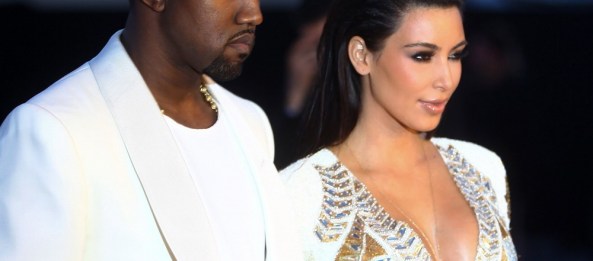
In 2012, rich and famous like Kim, Khloe and Kourtney Kardashian, Paris Hilton, Katie Price, Amy Childs and more are some of the many individuals who have risen to the forefront of our awareness, becoming household names and making millions to boot – but for what? An interesting characteristic of the phenomena that is 21st century celebrity culture, is it’s peculiar (at worst, vulgar) fascination with personality, rather than craft, creed or contribution to society. ‘Celebrity’ enthusiasts in 2012 are much more likely to care about a star’s ‘dirty secrets’ (which in all, aren’t that secretive) than they are to find out about their latest film role or album they’ve spent nine months molding in a high-rise New York studio. The perception of what equates to success has changed drastically, who gives a fuck what you do – as long as people pay attention. Even the idea that modern ‘reality’ stars represent a fascination with character is flawed; I mean, look at this video of Kim Kardashian on Alan Carr’s Chatty Man – I’ve seen turds with more personality.

So if celebrity culture is so vacuous, empty and superficial, what’s the big deal? Where does the fascination, obsession, exposure and fortune come from? The answer is altogether a more clever affair.

If you’re a citizen of the United Kingdom of Great Britain and Northern Ireland, you’re probably aware of one of the less appetising aspects of our nation. While our Broadcast Journalism oozes sophistication, sensibility and stoicism (a trait that makes the likes of yankee Fox News look like a live feed from a mental asylum) our newspapers, tabloids and print media is where our share of the nutjobs lie. With an obsession with scandal, exclusives and sensationalism wrapped in a confidently crude preoccupation with anyone off the telly – the British press and magazine stands present a fertile patch for celebrity culture to grow, and grow, and grow.

The thing is, the likes of OK!, More!, Hello, Now and every other similar magazine in existence (not to mention the tabloid’s gigantic appetite for anything ‘celeb’) are widely assumed to have a tough job on their hands. You’d be forgiven for thinking that your favourite members of the rich and famous are much too busy to deal with the likes of an army of Entertainment Journalists, and that the thought of a gabbling sweaty intern looking for column inches would be enough to convince anyone to temporarily abandon the public sphere in favour of a glass of champy and a bubblebath in private seclusion. No, not quite.

The fact is, whether it’s our luminous “prince charming” Peter Andre, or DIY SOS presenter Nick Knowles (no, i’m not even fucking joking) every single one of these ‘celebs’ will rely on these publications to some extent, whether it’s an extra buck or the basis for their entire wellbeing. Kerry Katona might rant on about ‘press intrusion’ and respecting privacy, but if it weren’t for her staple in the British magazines and tabloids, she’d be behind a till at Tesco, on top of the mountain of ‘those who were famous but aren’t anymore’. There’d be no TV interviews, no reality programmes, no fly-on-the-wall documentaries – because nobody would give a flying fuck, simple as.

‘Dramality’ programmes like TOWIE, Made in Chelsea, Geordie Shore and Keeping Up With The Kardashians essentially survive on coverage of the cast’s extra-curricular activities – and others’ interest in them. Now, imagine if the entire media simultaneously stopped giving a fuck; these people would drop off our radar like a sack of shit, but they won’t. Extroverted, fame hungry individuals like these present an opportunity for endless content, it’s a dream come true.

The magic thing about Celebrity Culture is it’s virtually self-sufficient. Publications need their column inches, celebs need their space in the spotlight, less they face the reality of a life of perceived ‘mediocrity’ – no attention, no sequins, and no glitter and champagne. OK!,  Hello and their compatriots are willing to satisfy this desire in return for endless details of your life, elaborated emotions and saucy stunts. Their very presence fortifies the myth of what’s hot, who’s in fashion, who’s worth talking about and who isn’t. Their ability to create and manifest their own stories and plot lines, only for people to lust after them later is at best a con (and at worst a travesty). The fact that Britain’s biggest selling newspaper has a Politics section dwarfed 10-fold by its Entertainment coverage is a sad sign to say the least, all the worse considering it floats on a bed of bafoons. And I’m sorry, if you’re still paying money to read about Kerry fucking Katona 11 years after she left Atomic Kitten, you’re a moron mate.

Old Habits Die Hard: Why the Church of England Won’t Support Gay Marriage

The Church of England is an institution with roots reaching far back into British history. It has presided over changes in law, monarchy and societal trends, and it has updated itself (albeit reluctantly) in order to reflect movements in national thought. So why is it digging its heels in so strongly over the proposal to include civil partnerships within the definition of marriage?

As one irreverent wit recently highlighted on Facebook, it is ironic that the Church of England is making a fuss about changes to marriage law when it was itself created by Henry VIII so that he could get a divorce, something that the Catholic Church would not allow him to do. Humour aside, however, and after much research, I think I’ve finally worked out what their problem is – but before I release this particular puppy from its catapult, let’s have a quick review of how I reached my conclusion.

I wasn’t convinced by the line in the papers about how passing this legislation would undermine the Church’s status as principal administrator of State marriages in the UK and alter the meaning of marriage for everybody (with the implication that this would be a bad thing). I really don’t understand how this claim can be substantiated. For one thing, the C of E’s own website states that, in the present day, “more than a quarter of all marriages in England take place before God in the traditional setting of a Church of England church” – I’m just going to assume I’ve misunderstood something fundamental about the definition of State marriages, because “more than a quarter” does not constitute the lion’s share. (If you have a decent explanation for me, please leave a comment.) For another, why would including gay couples in the definition of marriage dilute the meaning of marriage itself?

The Church appears to define marriage as being between a man and a woman because matrimony is first and foremost a precursor to procreation… so why doesn’t it have a problem with elderly hetero couples getting wed for reasons of companionship? They sure as hell aren’t marrying because they want to have kids. And does this mean that infertile couples’ marriages are also invalidated in the eyes of the Church because their union won’t produce offspring? In the Church’s opinion a loving, stable relationship, sanctioned legally through marriage, is the best environment in which to raise a child – those who enter into a civil partnership are making the same level of commitment, so how could this water down the meaning of marriage?

My search for a coherent, reasoned argument – unsurprisingly thwarted by trawling through online media – took me to the Church of England’s own website, where they’ve put up an explanation regarding the Church’s views on civil partnerships and the current proposed changes to “marriage”. Their statement was revealing. While the Church supports civil partnerships – or “friendships”, as the Archbishop of York calls them – it maintains that a “marriage” is traditionally between a man and a woman and that the State has no right to change this – doing so would, in fact, change the definition of “marriage” for everyone. It also maintains that it is arguing for the protection of “marriage” – not just religious marriage but civil marriage as well – and that anyone suggesting that religious marriage be treated separately is failing to acknowledge the Church of England’s established role in providing State-recognised marriages to religious and non-religious couples alike.

This is a pretty weak argument, for several reasons. Firstly, the Church would appear to be advocating the stagnation of British law in order to protect the status quo (primarily for itself, that is, as society needs change in order to remain healthy). I would argue that even the Church, although admittedly long established and still to some extent involved with law-making in the UK, should not have the power to halt the evolution of our legal system just because it doesn’t like the proposed changes. To say that it is trying to protect the definition of both religious and civil marriages actually weakens its position – if separate definitions of religious and civil marriages existed, then to change the definition of civil marriage would in no way affect the definition of marriage for those who might object on religious grounds to the inclusion of same-sex legal partnerships within said definition. And for any married, hetero couples who might object on non-religious grounds, surely the redefining of marriage as “a state into which two people may enter, who love one another and wish to take on the legal responsibilities and benefits that such an arrangement would bring” could draw no objection, as it would be a blanket definition that applies to everyone and would therefore take nothing away from the meaning of a marriage between a man and a woman.

The Church also argues that there is no need to redefine marriage, as civil partnerships provide the same legal rights to same-sex couples as marriages do to straight couples. (I looked this up – they’re virtually identical. There’s some different wording, obviously, but that’s about it.) So, in fact, what we have currently, in our already highly complex legal system, is two ways of saying the same thing – isn’t this a bit pointless? If civil partnerships and marriages provide the same things to couples, and marriages aren’t exclusively religious, and all partnerships are recognised as equal in the eyes of State and Law, why as a society do we need to have one “traditional” and one “modern” definition of love-based partnership?

The Church of England really shot itself in the foot when it allowed gay people to become vicars, as it very publicly and officially put aside the Bible’s argument against homosexuality when it did so. Now bereft of that religiously-sanctioned homophobia, it is forced to come up with weakened, trivialised nonsense in order to try and hang on to marriage as the sole purview of the straight. What the Church now has, in fact, is a percentage of its religious representatives who are forbidden by their own institution to wed! Oh, you’re a gay vicar? That’s progressive; isn’t that cool that you can continue practising your faith without having to deny your sexuality… Oh, but you and your partner have to remain celibate, and your Church won’t let you marry your partner, in the sight of your own God or otherwise, despite your devotion and unshaken belief? That’s… fucking nonsensical, hypocritical, degrading and tragic. What kind of “organised” religion are we dealing with here?!

I think what the Church of England should really be concerned about (and perhaps it is, deep down) is the potential schism looming between those religious organisations that wish to perform marriages for same-sex believers and those that think marriage can only be between a man and a woman. It has, in fact, already garnered a backlash from some of its own vicars for its arguments against the inclusion of same-sex couples in the definition of marriage. Additionally, as the proposed legislation would actively disallow gay marriages in a religious context, the Church is potentially looking at some serious future arguments in the European Court of Human Rights. But as the C of E survived the admission of gay vicars, so I suspect it will survive this, with a mixture of grudging compromise, popularity contest antics and no doubt more embarrassing statements along the way.

So, after my “quick” overview… my conclusion? Rather anticlimactic, I’m afraid: that the Church is afraid of change, paranoid over losing its grip, and confused about what exactly, in the modern day, it really believes.