The following post is like any good discussion or debate in that it brings up two points of view and in much the same way as a battery has two electrodes, the positive anode has its negative counterpart, the cathode.
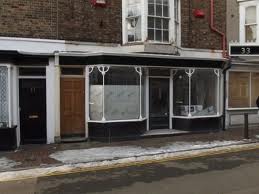
I was journeying through the South East countryside recently on a rather long and ponderous bus ride that took me through places I’d never heard of, and it occurred to me just how miserable our small town and village high streets look for the most part. If they aren’t a few locals milling about short of being ghost-towns where dusty little bric-a-brac shops seem to be permanently closed and tiny Post Offices-cum-newsagents-cum-grocers are open for just a few hours every day either side of lunchtime, they are filled with half-empty charity shops, dreadful kebab parlours and sparsely-furnished coffee shops where the lattes and cappuccinos don’t really taste like coffee at all but rather scorched bland milky wetness. In fact, in many cases the only thing missing from these high streets is the occasional ball of sagebrush blowing across the road whipped up by some lonely breeze. Now, don’t get me wrong, I’m not knocking charity shops, I’ve picked up one or two bargains from their bookshelves myself over the years but how many do we really need? In some high streets you’ll see three, four, perhaps even five charity shops doing battle, each one purporting to help improve the lives of the sick and aged of our society as well as those unfortunate animals who find themselves without a loving home. But once upon a time there would have been jumble sales in village halls for this kind of aid and the high streets would have been home to good old fashioned sweetshops or ironmongers, greengrocers and butchers.
Nowadays of course, everyone and his uncle drives five miles to their local superstore where every conceivable shopping need is catered for. You want bread, beer, Brussels sprouts? Go to the superstore where you can buy one and get one free. You want to buy a new TV or a cordless drill? Go to the superstore and save 10% on both. You want banking, insurance, a new pair of shoes? Go to the superstore, it’s all there and more often than not at a better price than can be found elsewhere. And isn’t it great that we can all go home with a bargain? Why, we’ve probably even bought things we didn’t really need but hey! they were on special offer so what the heck! I’ve actually saved money! And yet what a double edged sword it is.
It’s understandable that we all want a bargain, we all want to save pennies in these lean times but unfortunately the flip side is, the superstores get all the business and therefore all the power. And so, poor old Somersbottom’s Bakery in the high street has to close down because they can’t afford the rent anymore and dear old Mrs Wigglesbury behind the Post Office counter who’s been the smiley face and chatty friend to all for two generations has closed down because our great leaders in their slimy corridors of power have decided that we don’t need her anymore. Perhaps if we stopped using our cars for every single little trip – to get the paper or a pint of milk – perhaps if we hadn’t all rushed out to save a few quid at the nearby superstore, our rural community shops that had previously supplied us with our weekly needs might still be around. But maybe that’s what our government wants.
Okay, that was the negative. Now for the anode of my thoughts. Micro Pubs! I saw an article on the news recently regarding this fairly new concept which seems set to become a minor explosion around the country and it made me almost ‘whoop’ with joy. I find it heart-warmingly wonderful that certain enterprising individuals have taken it upon themselves to open up these tiny drinking establishments and bring a little life back into these derelict premises that litter our country high streets and hopefully it’ll spark the beginnings of a resurgence in rural community life. Not only does a Micro Pub recycle these business properties that have become casualties of our times but they also utilise the terrific home-grown products of our often struggling Micro Breweries that would otherwise probably struggle to survive. Great British Ale!
How many of us are put off by the frightful noise and garish flashing lights of our pubs today where you can hardly hear yourself speak over the din and the person serving you barely offers more in the way of chitchat than the price you must pay, where the beer is often overpriced, poorly kept and mostly fizzy and foreign? I’ve often heard it said that the only way a pub can make money these days is to serve food and while that’s all well and good and some of them serve very good homemade food indeed, many of them serve nothing more than microwaved muck that they market as “hearty fare”. And anyway, shouldn’t food be what restaurants serve? A pub should be a place to go for a nice pint or two, to chat with friends or strangers who may or may not become friends themselves, not a place filled with every kind of entertainment from bleeping video games to the incessant screening of sporting fixtures. If you want those things go to an arcade or a sports club. Once again, it’s the case of a single concern trying to accommodate all for the sake of profit over good neighbourly service and while it might be construed as convenient, killing two birds with one stone, so to speak, it bypasses that crucial connection of trust, kindness and loyalty between purveyor and consumer that we all secretly wish was still present in our retailing experiences.
I for one sincerely hope that the emergence of the Micro Pub will herald the coming of the Micro Greengrocer and the Micro Fishmongers and Ironmongers and the return of many other shops of yesteryear so that all our high streets thrive once again and we don’t have to jump in our cars and drive five bumper-to-bumper miles polluting the air with our overpriced petrol just to buy a new pair of socks. Or maybe that’s what our government wants.