An Interview with Tunafish Media

The following questions were answered by Smudge Jones and James McDonald. They founded Tunafish Media in January 2010, along with their business partner Richard Brooks.

Who is Tunafish Media?
SJ:   We are a Manchester-based media production company, operating out of the Sharp Project. We are probably best known for the music videos we have made for Danny Mahon, The Last Party and Daystar, but we have done a lot of corporate, commercial and events stuff as well.
JM: We have worked with Pretty Green, Harvey Nichols and Northern Restaurant and Bar amongst others.

Can you briefly explain the background of you all?
SJ: We all met at the University of Salford, where we were all studying on various Media Production courses. Me and Ric were on the same course and worked together often, Macca joined us later on.
JM: There was another guy who worked with them, but he was ill so I ended up getting drafted in.

What made you want to work together to create Tunafish Media, and where did the name Tunafish come from?
SJ: After uni, I was working on a business enterprise scheme and that gave us some decent contacts to do things ourselves.
JM: Me and Ric were working on various film sets and TV channels, but the three of us were still doing stuff on the side. We decided to just make a go of it.
SJ: Starting ourselves and trying to build something from the ground up just seemed like a more interesting option than joining a bigger a company and working our ways up individually.
JM: The name? Basically, wherever we went Ric was armed with a tuna sandwich. We’d be on a shoot and he’d be stood their eating tuna.
SJ: He was literally eating tuna all of the time, we went to the cinema and he was there eating a tuna baguette stinking the place out. He mixes up a bit now though, he has pasta one day a week.

Can you tell our readers what services are offered? Do you offer every facet of multimedia, or do you focus primarily on video content?
JM: Video content is our specialty, but we do offer a lot of social media services to certain clients as well.
SJ:  I used to work in radio for years, but most of the time we get approached for video work. We’ve not really had the chance to do any radio yet.

What does Tunafish Media offer that sets it apart from other multimedia companies out there?
JM: We’re young, we’re still enthusiastic. Other companies may have lost that enthusiasm over time.
SJ: There are some great production companies out there now. Mellow9 in London is one that springs to mine. It’s a good time for TV, film and video production in England at the minute. There’s a lot of talented people out there and seeing the work they are producing only makes you want to improve and keep moving forward yourself.

You have developed a wide client base since starting only 2 years ago. What would you say has been your favourite company to work with and project to work on, and why?
JM: Each company is different and have their own merits.
SJ: Each represents a different challenge, mixes it up.
JM: Every day is different pretty much, which you can’t really say if you are working in an office. No offence to office workers.

Do you have a dream collaboration that you’d like to happen?
SJ: Eric Cantona or Owen Wilson.
JM: I’d like to do a feature film with someone like Tom Hardy or Leonardo Di Caprio, I really like them as actors.
SJ: I’d like to stand on a David Fincher set for a day and just watch him work.
JM: Mr. Motivator, Wolf From Gladiators, Mike Skinner, Jet from Gladiators, Chris Moyles, Eureka Johnson, in fact anyone from Gladiators.
SJ: What was the referee called? I want him to record my voicemail message…

What does the future hold for Tunafish Media?
JM: We’d just like to see where it goes, continue to work with exciting people and keep that buzz that we’ve got.
SJ: Keep moving forward, keep improving, see what happens.
JM: He was called John Anderson by the way
SJ: Oh yeah that’s the guy.


To learn more about the company or hire them for production work, visit the site at www.tunafishmedia.co.uk
A Question of Sport Sponsorship

On Saturday 19 May, at 11.30am (or thereabouts), the Olympic Flame was borne down the central street of Falmouth, a small but busy student town in Cornwall. The golden torch was held aloft by Gavin Cattle, captain of Cornwall’s only professional rugby team, the Cornish Pirates. The street was lined both sides with excited spectators; police officers had their work cut out just trying to keep people out of the path of approaching vehicles. The air of anticipation was palpable, yet restrained, as we Brits are wont to be.

With half a dozen others I watched the proceedings from the first-floor window of a flat on the main street, which afforded front-row seats, as it were. (Well, front row and up a bit. You could say we were in the Gods, in fact. I’m sure the original Olympians would have approved.) I had been feeling cynical about the Olympics (cynical? As a Londoner, I’ve been positively dreading it), but sitting here, looking out at the smiling faces in the sunshine, I had to grudgingly admit to feeling a little bit excited – feeling as though I were about to witness history.

The Olympic torch was scheduled to pass by our window at 11am, but (as is common with such events) it turned up a little later than expected. It probably could have reached us a good few minutes earlier, however, had Mr Cattle not been preceded by the Games’ ridiculous sponsorship entourage, comprising The Coca Cola Bus (replete with weary employees waving half-heartedly and shouting “Woo!”), the Samsung wagon, the BMW contingent, the Lloyds TSB truck, and several other vehicles marked simply “London 2012”, each bearing their own little glut of grinning, waving who-are-theys. The torch-bearer, bless ‘im, bringing up the rear, was almost an anticlimax by comparison.

My earlier cynicism was back. I could’ve sworn the Olympics was supposed to celebrate athletic excellence, not capitalist might…? We had gathered at this window to watch one of 8,000 honoured members of the British public take part in the Torch Relay, which was meant to be a way of saying that it is Britain, not just London, that is hosting the 2012 Olympics. To be blunt, what the blue hell does Coke have to do with that?!

I realise the Games is a massive event and that the money to pay for it has to come from somewhere, but these huge displays of corporate wallop are tacky and embarrassing. One of my friends pointed out that the small British flags being handed out during the procession had Samsung branding on the reverse, and opined that America, for example, would never dare deface its own flag in the name of corporate sponsorship. (The Cornish flags among the crowds were unadorned, by the way.) I’m not particularly patriotic, but I must admit, my friend had a point. However, as the Olympic Games is itself a brand (we all know the five rings logo), I doubt that we’ll ever see a return to Olympics free from intrusive corporate content. Perhaps I should just be glad that the money still exists to fund the Games. I just wish that the sponsors could be a bit more… restrained.

Animals Do Have Personalities

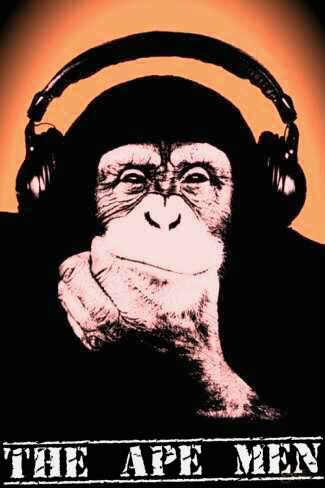
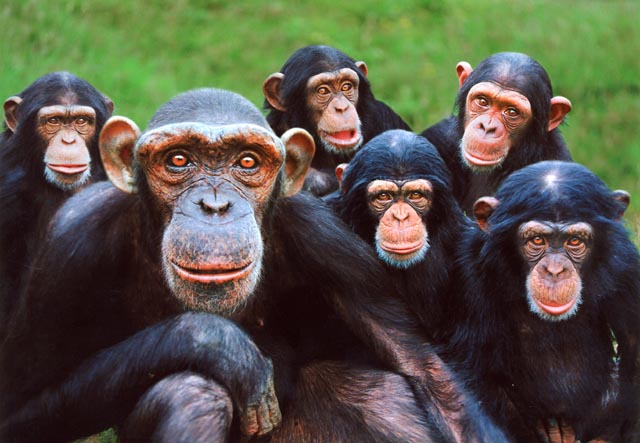
Chimpanzees apparently do have personalities, according to a new study. Although, what first struck me was: “How does one define a personality?” I’ve always viewed it as something quite subjective. When I consider someone to be the type of person who lacks a personality, I tend to have people who disagree with me. They’re wrong, of course, but they still disagree with me.

Anyway, the research team at the University Of Edinburgh apparently found that Chimpanzees do have personalities. What is an animal personality, though? Well an animal personality is defined as the differences between different animals. To make it a little clearer, if there’s a fish and he can see some bait in the water. A fish with personality A may think to himself that he doesn’t want to take the risk and isn’t interested anymore. A fish with personality B may decide he will take the risk to get the juicy piece of bait on the end of the hook. And this can be applied to a variety of different scenarios.

The study also specified that chimpanzees and animals like Orang-utans, which are sometimes referred to as ‘People of the Jungle’, need and require friends just like most humans. But surely we knew this in the beginning due to the herd mentality of many species of ape? If you watch any nature show then you will see it. In fact, some species of ape will even get their protein from killing and cannibalising other apes.

What does all this mean, though?

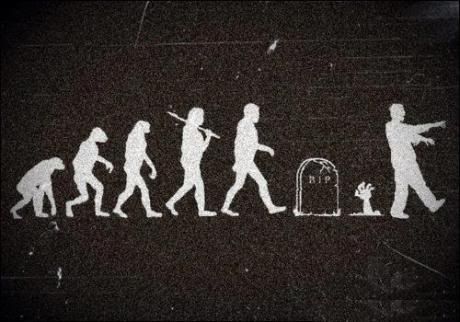
In short, it will have very little impact on our scientific advancement, nor will it influence tomorrow or anything like that. What it will show, with a little more research, is that we did evolve from a common ancestor; the common ancestor being the ancestor chimpanzees evolved from too. And this will have a profound impact on a variety of religious sects as they still don’t believe that evolution even exists.

Evolution

Furthermore, a question I’ve always wondered about, is who exactly is this common ancestor? If we can gradually trace ourselves back then it will yield the various incarnations of ourselves all the way throughout history. It doesn’t necessarily mean anything, but it is a point of interest at least.

On a side note, the only thing we have to be surprised about is why didn’t we know all this before? Why do humans still find it hard to grasp that we are just really intelligent apes? Why do so many humans still think we came from somewhere special, as if we are not like anything else on our planet? If we did then surely we could have predicted this to start with. Surely we are just slightly more intelligent monkeys?

Ape Man

Film Review: How Green Was My Valley

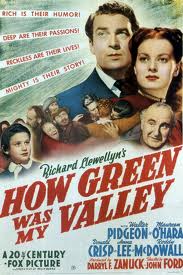
Not that it holds any significance but the first time I heard of this movie was during an episode of Frasier, that sitcom, which in this reviewer’s opinion, is quite possibly the cleverest and finest ever produced. Intrigued by Doctor Crane’s appraisal of the film, I sought out a copy to see why that pompous Seattle-based shrink regarded it so highly. And as the end credits rolled, I could do nothing more than concur with the good Doctor’s assessment. It truly is a masterpiece. It was nominated for ten Academy Awards and ended up winning five including Best Picture and Best Director – this in a year when such future classics as Sergeant York, Citizen Cane and The Maltese Falcon were also competing.

Set in a small coal-mining town in the South Wales Valleys at the end of the nineteenth century, the film follows the lives of the Morgan family, told in retrospect through occasional narrations by the youngest of the clan, Huw (a splendid performance by a twelve year old Roddy McDowell). It follows them through socio-economic upheaval, the passing of a way of life and the disintegration of their close-knit family unit. It is at once moving, tragic and uplifting.

Director John Ford (who, with a total of four, holds the record for most Best Director Oscars won) was always adept at giving us the idyllic family scenario and never more so than here. Living in a frugal household with five brothers – all coal-miners like their father – and a sister (the breathtakingly lovely Maureen O’Hara), Huw’s childhood seems perfect as the film begins. Love and respect abides in his home while the surrounding Welsh countryside (filming actually took place in the Santa Monica Mountains) is beautiful and not yet spoiled by the byproducts of mining. With moments of simple humour, Ford gives us a vision that is almost fairytale in its wholehearted goodness.

But then, trouble casts a shadow across this happy existence when the owner of the mine reduces the wages he pays. The miners strike in protest but not before Huw’s father Gwilym (Donald Crisp) fails to attempt a mediation and ends up estranged from the other miners as well as all his sons bar Huw.

Along with this economic turmoil that tears apart the very fabric of the townspeople’s existence, Ford interweaves a story of forbidden love between Huw’s sister Angharad (O’Hara) and the town’s new priest Mr Gruffydd (Walter Pidgeon) who refuses to act on her declaration of love because he cannot expect a wife to share his life of spiritual servitude, however dutiful she may be. We also get our heartstrings pulled during Huw’s first few days at school when he encounters bullying but then they are gratifyingly massaged back into place when his unkind headmaster becomes an unwilling pupil himself, albeit fleetingly. It’s a touching moment that will make you laugh and cheer.

The film gives us a glimpse of the political changes happening in the world at the time, when younger workers bandied together in unions to fight against unfairness from their employers, an idea that might have produced a bad taste in the mouths of the town seniors, but things were a-changing and the time-honoured moralities and simple ways of the past were sadly slipping into history. Tragic indeed but no one can stop the locomotion of progress!

For some reason, this film flew below my radar for many years (as did It’s A Wonderful Life) and after watching it, I thought, “How could I not have seen this before?” But ultimately, the satisfaction comes from finding them, however eventual that may be because for true Filmofiles (if there is such a term), it’s one of life’s great pleasures to unearth a classic that has passed you by.

A truly remarkable film from a truly remarkable film-maker.

It’s time to end the drug war


According to a fairly recent Gallup poll, 50% of Americans are now in favor of legalising marijuana, a number that is up from the 12% that supported legalisation back in 1969. A growing number of Americans are also in favour of decriminalising the simple possession of all illegal drugs. Growing support for the legalisation of marijuana is so wide in fact, that support now includes endorsements from some very unlikely public figures. It’s hard to believe, but television evangelist Pat Robertson has come out not only in favor of decriminalisation, but for all out legalisation. “Regulate it like alcohol”, he says emphatically. Indeed, we are living in changing times, for it is clear that we are witnessing a monumental sea change in public opinion that has expanded exponentially beyond that of young liberals and libertarians. The common denominator has become such: End the drug war!

Marijuana possession is a victimless crime wherein the only real solution, both economically and morally speaking, is to tax and regulate it as we would any other commodity.  We need substance abuse treatment rather than incarceration. Many people of sensible means now recognise the war on drugs for what it has become: a drain on society both socially and fiscally.  In this time of budget cuts and furloughs, it is time for us to take another look at how we deal with drug use and abuse amongst otherwise law abiding citizens. The costs have simply become too onerous a burden for cash strapped states to endure. Many people want to know why we continue to dump so much time and money into a war that has clearly failed to achieve its objective.

Whilst we have witnessed a sea change in public opinion in the United States, many of our elected government officials do not appear to mirror the needs and interests of their own constituents. President Barack Obama and Vice President Joseph Biden recently came out against the decriminalisation of drug possession while attending the sixth annual Summit of the Americas that was held in Cartagena, Columbia in April.  When questioned on the current status of the drug war, President Obama replied: “I, personally, and my administration’s position is that legalisation is not the answer.” Several South American leaders, however, have highlighted the need for a return to a more pragmatic approach in dealing with drug use and abuse by declaring the need for drug decriminalisation.  This is the type of enlightened thinking that harbours the potential to usher in an era which has long been overdue. It is time to alleviate some of the pressure that has been foisted upon our neighbors and friends that live and die in many of the war torn nation states that lie directly south of the American border. They have quite clearly had enough of what’s not working, and we should support them in this new endeavour to curb the violence that has claimed so many lives.

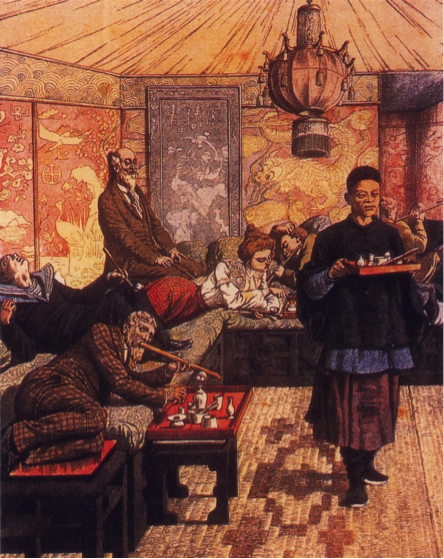
Though this sea change may appear to be a new and novel idea, there used to exist a time in pre-prohibition America where one could openly patronise opium and tea dens, free of legal and moral retribution. Amazingly, the sky did not fall and though there were addicts, no plague of mass indoctrination to the counter drug culture was exhibited.  This little known history disavows the prohibitionists’ argument at its core, for legalisation does not equate with higher consumption. It didn’t then and it doesn’t now. We only need to look to the likes of Portugal, where all drugs were decriminalised 11 years ago. As a result of this bold move, drug abuse in now down by half. That’s a fact and no one can dispute it.

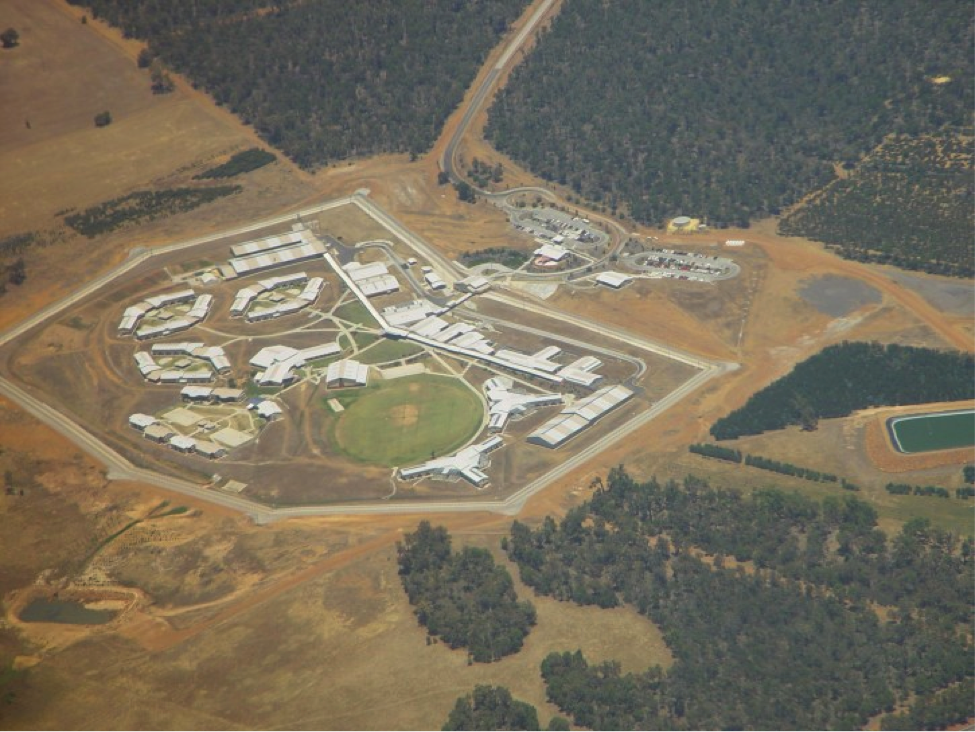
We have witnessed a direct correlation with the proliferation of the industrial prison complex industry in conjunction with the dawn of the modern drug war. Law enforcement can no longer focus solely on what’s important: public safety.  What the people have been subjected to is a stark increase in violent crime, human rights abuses, and blight in many of America’s impoverished neighbourhoods and beyond. One in 10 African American men in their 30s is incarcerated on any given day.  Blacks and Latinos account for three-fourths of those imprisoned for drug related offenses.  Arrests for drug offenses have increased exponentially since 1980, but I and everyone else knew that already. All that we need to do is to take a look around and there lies the truth in bold neon lights.

I had the pleasure of engaging in a thought provoking conversation with an acquaintance of mine recently. We talked mostly about violent crime, the proliferation of gun homicides, and the seemingly never ending dilemma of violence in our cities. In describing the neighbourhood that he grew up in, he mentioned how there only used to be about one shooting a month, as opposed to what we are now witnessing on the nightly news. The murder rate has statistically become closer to almost one a day in some cities like New Orleans. “It just never used to be this bad; there used to be more black owned businesses, and now we just have all of this shooting going on all around us all of the time; this is because of the drug war”, he stated emphatically. My acquaintance is not a criminologist (nor am I), nor is he a statistician; he doesn’t need to be. He has lived and grown up in the lower ninth ward of New Orleans for all of the 50+ years that he has inhibited this green earth. He has witnessed firsthand the war on drugs, therefore I believe him when he tells me that he knows what he’s talking about.

So while the failed experiment of alcohol prohibition has hopefully been left to the dustbins of historical reference, the idea of prohibition itself has not officially been dealt its final death blow, for it continues to proliferate despite the massive change in public opinion. It is easy to naively assume, however, that we are moving ever more close to achieving the objective of a post-prohibitionist world, for public has made it clear what the trajectory of the 21st century should entail. Though we have witnessed many signs of hope that appear on the surface to indicate that we are in fact moving ever closer to the decriminalisation of drug possession, it is clear that the opposing forces are as strong and as determined as ever.  As of 2012, 16 states, along with the District of Columbia, have legalised medical marijuana and 14 states across the county have decriminalised the simple possession of small amounts of cannabis.

At the federal level, a very different approach has been taking place under the Obama administration. Thus far, there have been more than 100 federal raids on medical marijuana dispensaries across the country, an impressive track record that makes the efforts of Obama’s predecessor pale in comparison.  So while the public perception of the war on drugs continues to evolve, it appears that there are two very distinctive and opposing forces currently at work. In the meantime, gross injustices continue to be foisted upon many of our nation’s poor and un-connected in what appears to be a feckless war with no end.

America has the highest incarceration in the world, beating out such countries as Iran, China, and Germany.  Among the 50 states, Louisiana is ranked at number one, with the highest incarceration rate in the United States, and thus the world. This shocking statistic seems to coincide with the observations of my acquaintance from the lower ninth ward, for he lives in one of the most dangerous places in the world where it is an exception, rather than the rule, not to have a brush with the law. The blight in some neighbourhoods that has resulted is simply unfathomable in a country that claims to be as advanced as ours. Something clearly has gone wrong, for instead of progressing into the 21st century with dignity, it is clear that in many ways we continue to revert backwards. The drug war is largely responsible for this disparity; it’s time that we end it once and for all.


Cloning is Here (in Korea)!

You would have thought that cloning a woolly mammoth would mean big news in this country, however it apparently doesn’t as there’s been absolutely no coverage for it. Russia and South Korean scientists signed an agreement to work together to recreate a woolly mammoth recently.

This is especially interesting as the mammoth last walked the earth about 4,500 years ago. But global warming has finally provided us with something good as the bones of these mammoths were uncovered when the permafrost of Russia’s Siberian plains melted.

Woolly Mammoth

The famous clone scientist Hwang Yoo-Suk signed on behalf of South Korea with Vasily Vasiliev signing on behalf of Russia’s North-Eastern Federal University in the Yakutsk area of Siberia. This is monumental because the idea hasn’t sparked any protests from people who want to hold back science due to their outdated ethical beliefs. Or maybe it’s just countries like the UK and the US that have people like that?

Hwang Yoo-Suk is perhaps the most famous scientist specialising in cloning on the planet as he successfully cloned the first dog in 2005. He and his team also unveiled eight cloned coyotes in October of 2011. However, like any good scientist, he has had his fair share of setbacks as in 2005 his research that supposedly read that human cloning could now be done was found to be faked. Nevertheless, he continued on and he is now one of the most respected scientists in the world.

The woolly mammoth is expected to be created by using tissue from the remains of the mammal recovered from the Siberian plains. The tissues are supposedly going to be cloned by using the eggs from a modern Indian elephant.

The Korea Herald then reported that a nuclear transfer process would be used on the tissue and the eggs would then be implanted into a live elephant so the mammal can give birth to the mammoth. This is a mammoth undertaking (pun intended) and this will push our ability to clone animals even further. Maybe one day we will manage to clone a fully fledged human?

But is this wrong in any way? My answer is no. Some people may argue that it’s messing with nature and playing god, and most of these people hold on to silly beliefs from thousands of years ago, but more practical people might argue that it causes undue suffering to the animals involved. The fear of creating mutants and deformed organisms is also a genuine concern.

When it comes to the undue suffering of animals I would argue that this is nothing new and we regularly test our latest medicines on them all the time. Granted, it never makes the news, but it does happen. You have to think about it like this. You can’t cause zero pain and take zero risk and still take the rewards. There’s risk and there’s pain, but for that we get the rewards that can take us into the future. The problem with people is that they only care about themselves and where they are now. Too many people look to the present and not to the future, and the worst of them even look purely at the past. The only way we can get past this is by having a more open mind, and that’s probably why we are talking about South Korea and Russia instead of the USA and the UK. This is one woolly mammoth for now, but in the future who knows?

Clonetrooper
Soldiers of the future, or would it technically be the past?