Anyone for whom the 1982 film “E.T. the Extra-Terrestrial” is a treasured childhood memory will have shared my rage when, back in 2002, Steven Spielberg and his producer Kathleen Kennedy digitally disarmed the cops pursuing the cute alien and his human pal, replacing their firearms with walkie-talkies. At the time, Ms Kennedy had worked hard to placate fans, explaining that Spielberg had always regretted the presence of weapons in the film and had thought it nonsensical that police would have tooled up to go chasing children (um, children and an alien, and this is America, but hey, who am I to stereotype?). This edit, one of many made for the theatrical re-release of the movie to mark its 20th anniversary, has been lambasted and quite shamelessly parodied since, particularly by the satirical geniuses behind South Park (the “Free Hat” episode). And there’s a good reason for the reaction: swapping out guns for walkie-talkies was a damn silly thing to do, and quite frankly smacked of an aging man getting embarrassingly jiggy with new technology in an attempt to reconnect wiv da kidz.
Well, it would seem that over the next nine years Mr Spielberg had a change of heart, and by 2011 had admitted that he regretted this “pointless” alteration of what is arguably his greatest film ever. (Seems Spielberg has a lot of regrets – I hope the Kingdom of the Crystal Skull is one of them.) I’m sure that fans and geeks everywhere will be ecstatic to hear that, in the 30th anniversary Blu-ray edition of ET, which will be released in Autumn 2012, the walkie-talkies are out and the guns are back in. Hell, I’m happy enough, and I don’t even have a Blu-ray player.
I can understand that directors, like many artists, are rarely wholly satisfied with their finished product and are often itching to tinker with it – take Picasso, for example, who would keep paintings back, sometimes for years, in order to continue adding to them – or Leonardo da Vinci, who reputedly said that art is never finished, only abandoned. But when your work has had such a positive effect on so many people, shouldn’t you just be content? With that level of impact, is it even really “yours” to tinker with anymore? Or do you make like Mr Lucas and insist that “my movie, with my name on it, that says I did it, needs to be the way I want it”? There are those who say that art is inherently selfish, but when you sell your art to others, it kinda becomes theirs.
The UK is apparently fighting a losing battle to prevent inmates from gaining the right to vote in general elections. The European Court of Human Rights, which ruled back in 2005 that the UK’s longstanding blanket ban on prisoner voting was “unlawful”, recently reiterated its ruling and gave Britain six months to set the relevant wheels of compliance in motion. Failure to do so could result in hefty legal costs for the government, but complying with the ECHR’s decision is certain to get MPs a-grumblin’ – particularly in view of last year’s motion opposing the ruling, which passed with support to the practically unanimous tune of 234 votes to 22 and no doubt caused ministers a headache when attempting to explain this response to Strasbourg. David Cameron made things no easier, being quoted as saying that the very idea of prisoners being allowed to vote made him feel “physically ill”. The PM’s delicate stomach notwithstanding, this is an interesting debate and by no means a clear-cut issue.
Now, I’m sure this is a naive and simplistic view, but I thought that prisons were where societies put people who had revealed themselves to be incapable of behaving according to a general set of rules upheld by the majority, and who were therefore required to be temporarily removed from that society until deemed fit to re-enter, with such terms being determined in accordance with the nature and severity of their crime. Not being a legal expert, I nevertheless hope that this is an adequate enough summation for the purposes of this article.
It is a notion held by many individuals that, if a member of society breaches the rights of others with their actions, they should in turn have their own rights impinged upon in some way. This would seem to be the main function of correctional facilities – and, in the view of many people, the overriding purpose of such. So, would it not logically follow that those who have removed themselves from society and forfeited certain rights – such as the rights to walk around unhindered and live in a house – also lose their right to add their opinion to the way in which that society is run? Seems straightforward enough.
But there’s a reason I used the term “correctional facilities” just then. For the overwhelming majority, prisons are also institutions in which inmates may be (and often are) rehabilitated, in order that they can at some point rejoin society and become productive members thereof. For those serving shorter sentences, those showing genuine remorse and a willingness to reform, those due for imminent release… shouldn’t they have the right to be included in the business of shaping the society they’re going to be rejoining?
Justice Secretary Ken Clarke, somewhat unsurprisingly, had an interesting view on the matter, and prior to last year’s vote on the motion to oppose the European ruling had urged MPs and ministers to not contest the decision. However, the main thrust of his argument seemed to be that, if the UK did not comply, it would face costly compensation claims brought by prisoners – did MPs really want to risk having to explain to their constituents why exactly so much taxpayer money was being paid out to criminals? Better to just comply with the ECHR’s decision, Mr Clarke suggested – voting is a right that prisoners “probably wouldn’t bother to exercise if we gave it to them.” Given that voter turnout for the 2010 General Election was only 65%, he may have a point. (Labour activist Emma Burnell, blogging on TotalPolitics.com, argues for voting to be compulsory, like jury duty. She may have a point, too.) As an update to Mr Clarke’s opinion, the ECHR has said that, if the UK removes its blanket ban and agrees upon a set of criteria by which some prisoners will be allowed to vote, then it will dismiss the 2,500 or so human rights cases currently being brought by UK inmates, thus protecting the UK from the otherwise likely risk of paying compensation to such complainants. Quite an incentive to comply, I think.
However, it seems that the ban on prisoners voting is one of those issues that has garnered cross-party agreement – Ed Balls has said that the ECHR’s ruling was “the wrong thing” and that Labour will support any action by the Coalition to oppose the decision (after all, it was Labour that was in power when the landmark judgment was initially passed). I would almost hope that politicians’ reticence is merely an indignant, knee-jerk reaction to Europe attempting to force a change in UK law – the alternative is that no senior political figures in our country consider those incarcerated in our prison system worthy of basic rights. The vast majority of prisoners will be returning to society sooner or later – some of them following a term of wrongful imprisonment, such as the recently released Sam Hallam, who spent over seven years in jail after a miscarriage of justice saw him wrongfully convicted of murder. Wrongful convictions are far more common in the UK than we would like to believe and, due to their often routine nature, rarely make the news. The right to vote, as with other rights debated in a court when a person has broken the law, should be decided on an individual basis – tarring all criminals with the same no-vote brush is akin to suggesting that a petty thief is as bad as a serial killer. In short, it is simply not fair.
Our legal system has long been in need of an overhaul; perhaps the perceived inference of the European court is necessary for change in the UK. How to apply the ruling in practical terms, however, is going to be complicated, and balancing the requirements of the ECHR with the wishes of our MPs is sure to be a delicate and longwinded task.
In yet another rebranding, Microsoft has officially killed Zune, the music and video player in Windows 7. Yusuf Mehdi, Chief Marketing Officer of Interactive Entertainment Division at Microsoft, has stated that the Xbox will become the entertainment hub and will be delivering new services in the near future with Windows 8.
This year, Xbox becomes the premium entertainment service for Microsoft. Whether on your PC, tablet, TV or phone, Xbox will be a gateway to the best in music and video, your favorite games and instant access to your friends. With the launch of Windows 8, we’ll bring Xbox entertainment to everyone. With Xbox on Windows 8 devices, we rapidly accelerate the reach of Xbox entertainment from more than 60 million people to hundreds of millions of people worldwide.
We understand that entertainment has become a multi-screen experience where you and your friends are watching TV, listening to music, and playing games while interacting with your tablets and phones in new ways. We’ve got ideas for making all the entertainment you love more personal, interactive and social across the devices you love—and on the phenomenal Windows 8 devices that are to come.
His comments are true, but will the death of Zune have a negative impact? It’s probably true to say that relatively few people had much to do with Zune – those with Zune players or Windows Phone would have had it, but many more people would have been reliant on Windows Media Player or iTunes. Nonetheless, in the media department at least, Microsoft seems to be suffering from a lack of decisiveness when it comes to branding, as it has been doing a lot of renaming. The Zune players were meant to be Microsoft’s answer to the iPod, and despite being critically well received they were short lived, with Microsoft killing the line off. Recently we have also seen Windows Live being given its retirement package, as it simply becomes Microsoft services – which begs the question of why Xbox is immune to this and doesn’t become Microsoft Entertainment or some such. Actually, the Xbox was so successful probably because it lacked the Microsoft/Windows branding.
The problem isn’t so much dropping Zune, but was there actually a need to? With Microsoft changing names at a speed that can make heads spin, the biggest problem it may face is alienating potential consumers that simply find too much confusion in Microsoft’s offerings.
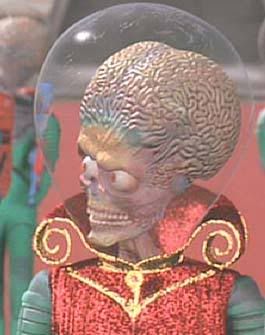
The idea that the legend of Martians on Mars is actually true has taken a further blow as the building blocks of life, which are present on the red planet, did not actually come from any life forms. Granted, it was a long shot in the beginning, but it’s nice to have a little bit of faith in these things. It allows us to make lots of bad Sci-Fi films.
Exhibit A
Anyway, the journal Science published its findings about the building blocks of life on Mars. Carbon is required for life on the red planet, the green planet, our planet, and any other planet that hopes to support life as its the main organic molecule that makes up practically everything. If you’ve ever taken a class in chemistry then you’ll realise just how often carbon pops up.
The scientists from Washington D.C. who ran their research from the Carnegie Institution for Science discovered that Mars actually has lots of reduced carbon. Reduced carbon is actually a different form of carbon. To put it simply, reduced carbon is a molecule that’s bonded either to a hydrogen atom or to itself. I’m not going to go into exactly how bonds work or anything, the point is that these are much smaller molecules as carbon normally has four bonds to utilise.
Ok, we’ve answered that. But does it answer the claims by geeks all around the world that Martians on Mars isn’t just a fantasy? In a way it does as this carbon was found to have been produced by volcanic activity. And that’s certainly possible since Mars has the largest known volcano around. On a side note, to give you a sense of scale of Olympus Mons (latin for Mount Olympus) it’s nearly three times the size of Mount Everest when it’s above ground level. Furthermore, it has a large moat surrounding its base that’s thought to be there due to its weight pressing down on the surface of the planet. But the truth is that there are other smaller volcanoes on the red planet as well.
That's the volcano.
It doesn’t mean to say that life on Mars doesn’t exist as this is only a small sample, but it does hit that myth and reduce its credibility significantly. What this research does mean, though, is that there could have been life on Mars at some point. It also tells us that life could exist on Mars in the future. And that’s something to be happy about as it’s always been one of those space possibilities of tomorrow.
This year’s Eurovision song contest cements an image of Europe that’s quite simply fed up with the United Kingdom and its arrogance.
As Scott Mills preceded to introduce his country’s votes to over 100 million people, and its subsequent hosting of the Olympics, he was met by a less than enthusiastic reaction, where other nations received mountains of applause at a mere mention of the name. Was this a lack of passion on our part, or that of Europe’s? Either way, it epitomised our toxic bilateral relationship with the continent, our condescending apathy and their bemused disgust at our inflated sense of self.
When our own charismatic stallion Engelbert Humperdinck finished a dismal but half-expected second from last place, Brits across the country would’ve been regurgitating the same ‘bloc voting’ crap that seems to resurface every year. But most embarrassing of all was the stark contrast between Humperdinck and winner Swedish dance ‘Loreen’, a woman who if not for her Nordic inflection could’ve been a Hoxton music babe, straight from a trendy bar with an upcoming collaboration with Tinie Tempah or the like. There’s an overwhelming feeling that the Swedes have beat us at our own game – spinning a half decent tune: wasn’t melodic pseudo-classy dance music meant to be our thing? Obviously not.
That’s not to say Sweden isn’t a European musical genius, far from it. Sweden has for a while been the ‘cool kid’ of the continent, a self-image dictated by the sense of pride an act like ABBA can bring you if all you’ve got is IKEA and Vikings for your national exports. In fact, behind us and the United States, with over 800 million dollars in revenue, Sweden is the third largest music exporter in the world – our showing at this year’s Eurovision did nothing to cement our deserving of the world’s Silver Medal in music.
Then again, take away Engelbert and there’s still a bucketload of reasons why not to vote for the world’s first proper imperial nutjobs. While the countries of the European Union see themselves in the globe’s largest ever financial crisis, there’s one thing that draws a wedge between us and our neighbours. While we see the impending financial and political disaster as a cue to head for the figurative door, the majority of the continent see it as nothing less than a stimulus for an ever closer fiscal and political union. We are fundamentally opposed to this idea, both in popular opinion and in our national politics. To us, one would rather gouge out its own eyes with Jedward’s abrasive personalities than see a future strapped to the backseat of a European death trap. Not only do Europeans know this, but they do not like it either.
For them, this exact way of thinking is nothing more than a remnant of our own bloated feeling of worth and importance, a staple to the very image that a word like ‘British’ conjures. It’s no wonder the phrase ‘Inselaffe’ (Island Monkey) is the conventional German term for an inhabitant of this country, an acknowledgment of our skewed view on just how far our blustering isle lies from the continent’s coastline. While our national insults for the Europeans range from a less than innovative nod to their eating habits (Frog-Eaters for the French, Krauts for the Germans) to a half-century old political legacy that still gives us a juvenile feeling of historical moral superiority (Nazi Scum anyone?) – their insults reflect an unpopular and arrogant political sentiment that has become a cornerstone of our identity on a continent that is characterised by its ideology of ‘togetherness’. And for the rest of them? It’s well known us Brits know just as much about the patchwork countries of Europe as we do about American “Football” – fuck all.
So next Eurovision, when we proceed to match our dismal performance at the world’s biggest song contest and follow it with a tirade of “it’s all political voting”, remember, it’s hardly fair to expect a Slovenian to remember your nation’s stone age ballad when you can’t even remember its capital city – and capital cities don’t change every year, unlike Eurovision entries. Well, apart from Jedward.
The heat is on, literally, and quite frankly I can’t stand it. That’s why it took me a while to write this column without making use of the overused four-letter word on a repeated basis. I feel quite calm at the moment so I’m giving it a try. Anyway, the saving grace is that I’m not short of material to write about this week.
Political Oops of the Week
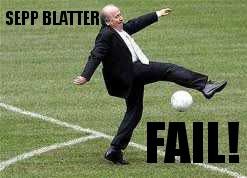
This week it’s all about the sport of football, and that’s not just because the European Championships are already upon us. We all know that Sepp Blatter is one of the most corrupt individuals in the world. I’m not going to act like a corrupt official is anything new, but what is shocking is just how corrupt and how biased he is. At least world governments try to hide it to some degree.
This week Sepp Blatter came out and said this: “Football can be a tragedy when you go to penalty kicks… Football should not go to one to one. When it goes to penalty kicks football loses its essence.” Fair enough, he’s voicing his opinion. But he lacks consistency as he said this about the World Cup in 2010: “If there is no winner at the end of 90 minutes of play, we would proceed directly to penalty kicks.”
And what’s more, he made things even worse by appointing a team headed by Franz Beckenbauer to come up with an alternative. Yes, that same figure who’s also the honorary president of Bayern Munich. The same team that just lost on penalties to the Premier League team that finished in sixth. Sometimes I wish that he would just come out and say that he hates English teams.
We can even go back to the decision to hold the 2018 World Cup in Russia. That was a good decision to hold it in one of the most racist countries in the world. Just look at the European Championships, only 3,000 England fans are travelling and some of the players have even told their relatives to stay at home due to their fears of racist attacks.
The Painful…
This week it’s the sun, that dodgy English summer. This is going to be quite controversial as many people seem to love the sun, but why is this such big news? Every year the news is filled with comparisons to other hot countries to show how we are hotter than them. I’m sure those in paradise are wishing that they were surrounded by a group of topless chavs in Swindon because of a slightly overcast day. And that brings me to my next point. What is it with British people and taking their shirts off when the weather turns like this? It’s made even worse as it’s always the fatties and the drug addicts who have to do it.
I can already hear your silent protests that our English summer allows you to have fun outside. Yes, it does allow you to have fun outside, but have you ever tried sleeping at night in this heat? You could sleep in a museum exhibition named ‘The Arctic Wasteland’ and you would still be watching as your testicles dissolve into a gloopy mess. This lack of sleep leads people to becoming hot and bothered, before they finally snap and everyone is praying that the rain and the clouds will come. It happens every year, and quite frankly I’m tired of it.
Filled with rain, storms, and an ice cream truck strike!
…And the Pointless
This week a Doncaster vicar came under investigation because he apparently used bad language on Facebook! Oh no! The sad thing is that some sad parasite actually reported him to…well everybody. They sent messages to the Bishop of Sheffield, the Bishop of Doncaster, the Right Reverend Peter Burrows, and a whole host of other figures. Of course, this coward decided to remain anonymous so everybody else wouldn’t know how much of a stain on the underwear of society they really are.
This actually made the news as well. What shocks me is how some people are so out of touch that they think that vicars don’t swear and vicars are beacons of morality when they are away from work. We all do it, your mother does it, you do it, David Cameron does it, and, evidently, he does it. The fact that this was made into a major issue just goes to show that either the news is getting boring or more and more people need to find a surgeon to get those metal rods out of their rectal tunnels. I just hope this Doncaster vicar walks free.
The So Outrageous That It’s Borderline Hilarious
The Highland Council’s Independent Group is concerned about low voter turnouts in the recent council elections. That’s understandable, I mean recent years have shown that it doesn’t matter if the people don’t like something because it will happen anyway. It sort of makes voting a little pointless, does it not? But it’s also important to mention that Scottish councils use the Single Transferable Vote (STV) system. This basically means that voters rank the candidates in their order of preference. Pretty simple, right?
Not according to this group who are claiming that people didn’t vote because the system is too complicated. Strangely enough, this was supposedly one of the reasons why people voted against the Alternative Voting system last year. But what strikes me is how can people find STV complicated? How can people be so stupid that they don’t understand such a basic system?
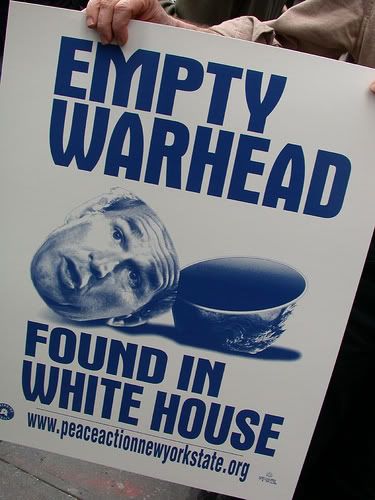
I would be spending less time complaining about the amount of people voting and more time complaining about a dire education system, if this is true. Of course, it could be just because people are disillusioned with politics, but if it’s true then George Bush would be considered a frickin’ genius if he lived in this country.
So maybe next week won’t be so bleak and irritating after all…