Has Apple Become What it Once Railed Against?

The above video is Apple’s (in)famous advert announcing the launch of the first Macintosh computer, which would compete with IBM’s latest offerings. At that time, Steve Jobs, ever the drama queen, expressed that being outsold by IBM would lead to a “Dark Ages” of technology, and that Apple – as the tacit technological heroes – must come in and save the day. With the Mac due to launch in January 1984, the advert was portraying the masses blindly going along with other computers, and the individuality expressed by Apple saving the day – and thus saving the world from a technological Dark Ages.

The irony though is that Jobs has always been bent on controlling Apple computers and how the user interacts with them. So intent was he on moving towards point-and-click with a mouse that he instructed the original Macintosh to have no arrow cursor keys on the keyboard, thus forcing users to interact with a mouse even if they didn’t want to. When asked if he wanted to conduct market research into what the public wanted, he responded that he didn’t because the consumers “don’t know what they want until we show them.” Far from being the antidote to the Big Brother of 1984, then, Jobs was shaping his company to be exactly that by controlling how the user interacted with the machine. This control went right down to such levels as designing the computer’s case in such a way that only Apple engineers could open it, removing the possibility for users to open it up to look inside.

Fast-forward to today and Apple’s portable devices – the iPhone, iPod and iPad – still adhere to this philosophy. In some ways it’s beneficial – by controlling the hardware and software Apple is able to produce a seamless user experience. The downside, however, is that the user is severely limited in how they use the devices. This means that, by Jobs’s own acknowledgement, the portable devices all look and act exactly the same. And the focus on simplicity has meant that many features have been stripped from the products. The iPhone, for example, was extremely limited in its first release, to the point that it lacked 3G connectivity, GPS and bluetooth transfer capability. Although it has progressed a lot since 2007, it hasn’t introduced anything revolutionary since its inception and indeed still lacks many features offered in other devices. Its uniqueness now lies mainly in its number of applications available – yet many of these apps are merely making up for the lacking native functionality.

Apple workers were quick to talk of Steve Jobs’s “reality distortion”, which essentially means his ability to twist and distort facts to suit his ideas, and persuade others to believe him. This is something the public has been able to witness in his public keynotes, and it allowed him to sell products that lacked many features as “revolutionary” and “amazing” – buzz words he used for all his products to convince the public that that’s exactly what they were.

While the “1984” advert has gone down in history as one of the greatest advertisements ever made, there is the wondering of whether Apple should have been the company to release it. After all, what’s more Big Brother than restricting something to such a degree that users are forced to adapt how they use it? While cursor keys have made it back to Apple keyboards, the ethos is still present. In iTunes, purchased items can only be played on Apple’s software – forget trying to put the iTunes film you purchased onto any other device than an Apple one. If you have an iPad, thanks to it missing the industry-standard of a micro-USB port, if you want to connect a digital camera to place your photos onto it, you need to spend more money purchasing Apple’s own cables to allow you to do so.

But to what degree does this “walled garden” approach genuinely benefit the user? Certainly, a good experience is given to the user by Apple managing its own hardware and software, so it can ensure that the experience is seamless. But it’s likely a stretch of the truth to suggest that micro-USB ports cannot be included without ruining the user experience, or giving a degree of customisation to the iPhone and iPad will ruin the experience. It seems instead that the ideology was born from Jobs’s desire to control – something that he never tried to hide, and Walter Isaacson’s biography of the man explains in great detail the lengths to which Jobs would go to ensure control of his products.

With Jobs’s untimely death and a new CEO at the helm of Apple, it will be interesting to see if more flexibility becomes of the iDevices.

Nokia Vibrating Tattoo – Never Miss Another Call

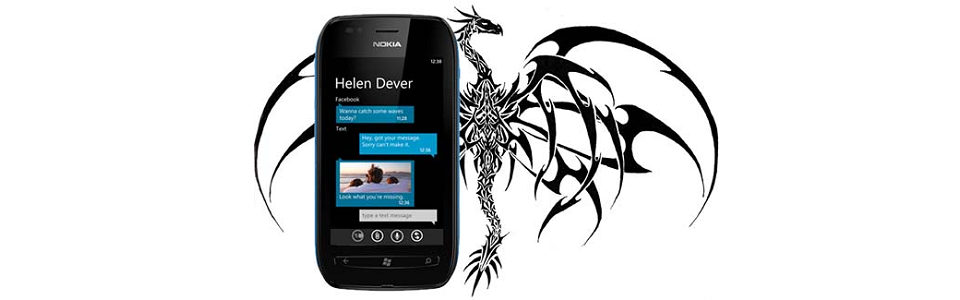
Nokia has filed a patent for a ferromagnetic material that can be applied to people’s skin, either sprayed, stamped or tattooed in the traditional way. When the phone gets a notification – SMS, email, phone call etc – the tattoo will vibrate alerting you to it.

The premise is explained in more detail at the Nokia Connects website:


The ferromagnetic material vibrates in a multitude of ways when a message, phone call, low battery indication or several other alerts are received by the tattoo from a Nokia phone. The magnetic field can cause of multitude of different vibrations!

The magnetic mark can however remain invisible, making it more appealing to people who don’t want to visibly mark their body with a tattoo. I know I’m not a tattoo person so this would appeal to me, but each to their own! Wait, there is more….

The tattoo also acts as a form of identity. Yes, could this be the end of passports?! Maybe not, but it does mean that I would no longer need to type a password into my phone. I AM THE PASSWORD!! If I happened to be walking around blissfully unaware that my pocket was flapping open on a busy street and someone saw the opportunity to steal my phone, I would be over the moon that they couldn’t access it without a small marking on my arm!

We will let you know soon once/if the patent application is successful. Fingers crossed everyone, until then don’t leave your pockets flapping open.

The Good, The Bad, Kermode and Me

Film critic and presenter Mark Kermode goes by many names, including The Good Doctor and Flappy Hands. You may know him from BBC2’s The Culture Show. His most devoted fans, however, tune in to hear his pithy comments on Kermode and Mayo’s Film Reviews on Radio 5 Live every Friday afternoon with Simon Mayo. Kermode and Mayo are a long-standing double act and they squabble like an old married couple.

I met Mark when he was touring his second book, The Good, The Bad and the Multiplex at the Hyde Park Picture House in Leeds. A very long queue formed after his talk for him to sign the copies we’d bought. He spent a long time chatting with each one of us, including me, was charming and seemed genuinely interested in all we had to say.

He even gave an impromptu blast on a harmonica that he whipped out of his pocket (Mark plays in a rockabilly band, which explains his haircut). He’s better looking in person, but I digress.

One of the things I like about him is that he’s not a snob. In fact, he’s the very opposite of a snob. If an action blockbuster comes out and he likes it, he’ll say so. Conversely, if a low budget, art house film comes out that he thinks is a load of rubbish, he’ll say so. He often defends films that are considered to be ‘uncool’. Mark simply likes good films, of any genre or time period.

I don’t always agree with his verdicts but he is never short of well informed, witty and entertaining. When he loves something, he is delightfully eloquent, but he is most famous for his rants and also for his pedantry. The rants can go on for a very long time, delivered with much hyperbole and unsurpassed fervour.

Mark has been passionate about films since he was eight years old. Other critics are deeply knowledgeable and entertaining but, for me, no one exudes that pure love of cinema like old Flappy Hands. After watching what must be thousands and thousands of movies (and an awful lot of crap), his enthusiasm is still intact. That’s why he gets so angry…because he cares so much.

In his previous book, It’s Only a Movie, he describes how he got into the world of professional film criticism. In this second book, The Good, The Bad and the Multiplex, he gives us his take on the modern Hollywood scene and the multiplex experience.  There are amusing anecdotes in both books with this latest one kicking off with his hilarious account of trying to get an assistant cinema manager to fix the screening of a film starring Zac Efron wherein the top of Zac’s head was missing. One of Mark’s many soap boxes concerns showing films in the correct Aspect Ratio and when cinemas GET IT WRONG!

As for multiplexes, his tenet is this: there is nothing inherently wrong with them provided they are run properly, but so many of them are run badly. They are like glorified sweet shops with a film casually thrown in. Selling popcorn is the priority and digital projection (digital doesn’t always equal efficiency) is left to its own devices, often without anyone capable of fixing something if it goes wrong. Mark’s opening chapter is aptly titled, ‘Would the Last Projectionist Please Turn Off the Lights’.

Does anyone really like their local multiplex? They are soulless places and they all look, smell and taste the same. Going to the aforementioned Hyde Park Picture House, a charming cinema dating from 1914, is a much pleasanter experience.

Another of Mark’s soap boxes is 3D and there is a chapter devoted to its technical shortcomings. The decision to invest so much money in this recent resurgence is not for any intrinsic artistic merits but as a defensive measure against piracy and to lure us away from watching Blu-ray on our 42-inch TVs with surround sound.

So much money is thrown at so many mediocre projects and it’s disheartening. Mark makes the point that a mainstream, big star film doesn’t have to dumb down. Audiences don’t need to be talked down to, including the all-important 15 – 35 years old, male demographic. He poses this question: Why not make it intelligent while you’re about it? As he points out, it didn’t do Inception any harm.

I’ve been thinking about the level of writing that goes into a lot of hit U.S. TV shows these days, in contrast to a lot of the bland releases that hit our cinema screens. Look at the series, Lost, a brain twister if ever there was one. Give audiences something to challenge them and they lap it up. Meanwhile, original filmmakers outside of the system, including some brilliant British ones, struggle to get their films distributed.

Mainstream cinema would benefit from more intelligent scripts. Mark’s proposal is that it wouldn’t damage the takings, at least. There’s absolutely nothing wrong with car chases and explosions or indeed, charming rom coms. Just spend some of those millions on the screenplay and see what happens. We’re being fed a diet of prequels and sequels with nary an original thought in sight.

Another issue Mark addresses in his latest book is Hollywood’s insistence on making its own versions of foreign language films. These re-makes are rarely as good, but try persuading the industry that distributing the original films would be a more worthwhile venture. When it’s a case of art versus money, there’s only one winner. So, audiences go to see an inferior movie, like feeding on the crumbs or wearing hand me down clothes.

Finally, the book ends with a sad farewell to celluloid, its history and traditions and the magic it has given us. As we boldly go into the digital future, we gain and we also lose. The closing paragraphs may just make you cry.

Film is one of the greatest art forms to come out of the 20th century and look how we treat it. Next time you’re sat in the dark, sucking on your mini-buffet, ask yourself this question. Is this screening worthy of the legacy that the great writers /directors / producers / actors have left us?

It doesn’t have to be Shakespeare every time. Heaven knows, America needed its share of fluff to get it through the Great Depression (the difference being it was mostly well made fluff) and we need it today too. Just every now and then…make us think. In the meantime, I shall bask in the glow of Mark’s rants. And for any Kermode fans reading this – “Hello Jason Isaacs” – they’ll know what that means!


Bear…Regenerate!

One part of popular games like Call of Duty that has us scratching our heads is how the characters are able to initiate their magic powers and begin regenerating wounds in humans after being shot by a bullet just by hiding outside of combat. But there’s also a real life way to do it too. Bears have apparently mastered this, according to a study completed in the US.

Raawr Beat

It was reported that medical researchers and zoologists from the University of Minnesota, the University of Wyoming, and the Minnesota Department of Natural Resources came together to publish the findings in the journal Integrative Zoology.

Their findings came as a result of a 25-year study carried out on 1,000 tracked black bears. They found that any wounds a bear sustained healed with little scarring and had absolutely no signs of infection at all. This was a process which happened in full during the hibernation process where a bear’s heart beat, metabolism, and body temperature will dramatically decrease; some bears will even have a heart rate of around 9 beats per minute.

Now, you don’t need a scientist to tell you that the point of this is to try and discover the secrets of the bear in order to gain the same skill to begin regenerating wounds in humans. But the scientists who were explaining this said the point of this study was geared towards healing infection-prone wounds in patients who are either malnourished or diabetic.

The researchers reported that bears who had gunshot wounds, arrow wounds, or wounds from other animals often became infected or inflamed by early winter. But, as if by magic, when the bears emerged from their hibernation process in the spring the wounds were healed and there were barely any signs of scarring.

What was even more surprising is the fact that after many months of hibernation the bears hadn’t lost any muscle mass or any fat either. Clearly bears have something special about them which could be useful to humans. And, no, it’s not going to be how to stay fat without eating.

Of course, this has massive implications for medical research because if humans can isolate whatever gives the bear their remarkable healing capabilities then it may be able to be translated into some form of drug to give humans their own healing capabilities.

We all know that the scientists said it was designed to aid those humans who have a significantly reduced capability to heal their own wounds, but, let’s be honest, it can be used for all humans. We could end up seeing it in the military and it might even become as common as morphine. Although don’t expect to be seeing any bear healing hormones for regenerating wounds in humans on the market for a very long time yet.

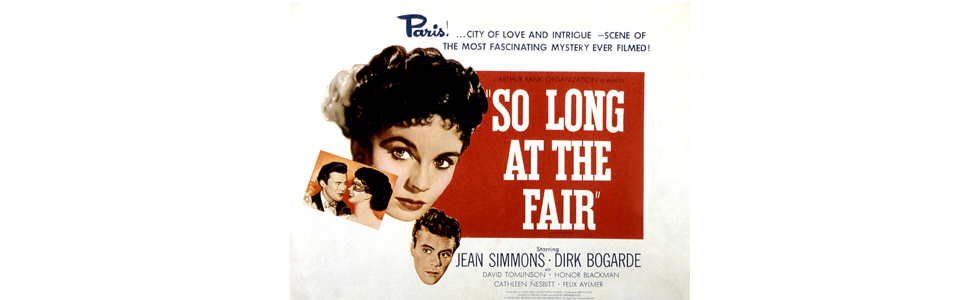
Film Review: So Long at the Fair

This period mystery made in 1950 and starring a very young and incredibly beautiful Jean Simmons really is a little known gem of British cinema and I highly recommend it to anyone who hasn’t seen it. Chances are, a good number of you haven’t even heard of it because it rarely crops up on anyone’s list of must-see movies. But do yourself a favour and don’t let that put you off – it’ll grip you from beginning to end!

Simmons plays Vicky Barton, who along with her brother Johnny (David Tomlinson – perhaps better known for his roles in Bedknobs and Broomsticks and Mary Poppins) is en route from Naples to the Paris Exposition of 1889. She is brimming with excitement at her first visit to the French capital and can’t wait to be one of the first people to climb the new Eiffel Tower. Johnny though is more reserved, one might even describe him as stuffy but he’s willing to endure the sightseeing to please his dear little sister. Vicky is keen to stay in Paris for at least a week but he’s only booked their hotel rooms for two nights and doubts whether they will be able to extend their booking on account of the crowds that have descended on the city for the Expo. He’s also tired and keen to get home to England.

On arrival at their hotel, Vicky and her brother are welcomed by owner and manager Madame Hervé (Cathleen Nesbitt), a chalk cliff-faced widower if ever there was one and she gives them the keys to their rooms, 17 and 19. Johnny is about to sign the hotel register when he is distracted by a missing item of luggage and while he pops outside to their coach to retrieve it, Vicky signs the register instead. After having settled into their rooms, Vicky drags poor tired Johnny out for a night on the town and following dinner they head to Moulin Rouge where she encounters George Hathaway (Dirk Bogarde), a charming young artist living in Paris. However, George is with friends and so their encounter is only brief.

Back at the hotel, Vicky leaves her brother in the lobby to enjoy a nightcap and she heads up to her room with the threat that she’ll drag him out of bed at 9 in the morning. As Johnny enjoys his drink, George appears with his friends who just so happen to be staying in the same hotel. He asks Johnny if he has change for a 100 franc note because he doesn’t have anything smaller to pay his cab fare but the best Johnny can do is lend him 50 francs, which he does. George promises to pay him back in the morning. And so nightcap imbibed, exhausted Johnny finally retires to his bed behind door number 19.

In the morning when Vicky trots down the corridor towards her brother’s room his door isn’t where she thought it was and on closer inspection, door number 19 opens to reveal a communal bathroom. Assuming she must have remembered his room number wrongly, she asks Madame Hervé which room her brother is in to which she is told – “Your brother? But surely you are here alone.’ Startled, she asks the hotel porter who confirms that she arrived on her own and the register backs up their story because only her name is in it. In fact, there’s no evidence of her brother at all, not even the room he was supposed to have taken. And so begins a wonderfully paced yarn full of Victorian etiquette and charm that will keep you guessing right up to the end.

I would be doing you a disservice if I revealed the rest of the plot so I won’t but I will say that Vicky seeks help from the dashing young George who is only too happy to come to this fair maiden’s aid. Simmons is just terrific as the confused and rather helpless innocent abroad and Bogarde plays his part of the raffish young hero as easily as he does in many of his movies. The sets and costumes are splendid as are the exterior shots; you’d never guess it was filmed entirely at Pinewood and to add to the film’s overall authenticity many of the British supporting cast (who are all excellent by the way), speak French like natives. The audience is not distracted by unnecessary subtitles either and it works because even if you don’t understand the language, you understand body language. Sometimes a shrug of the shoulders or a wave of a hand can relate as much as any line of dialogue.

Written by Hugh Mills and Anthony Thorne and directed by Terence Fisher and Antony Darnborough the film has parts that will make you giggle and others that will send a shiver down your spine. Imagine being a stranger in a strange land with no money and very little knowledge of your environment only to be told the person you arrived with (and more worryingly your guardian – the person who was looking after you) was but a figment of your imagination! A hard to imagine scenario, isn’t it but scary nonetheless. But did it really happen? Well, according to legend it did (with a slight variation on the characters) although there is no evidence to back up this claim (sounds like poor young Vicky).

So Long at the Fair is an intriguing British noir, a dark little tale set in the city of light. It’s worth a look for many reasons not least because there’s something frighteningly real about it. Has such a thing really happened before? And in today’s complicated and technologically advanced world could such a scenario happen at all? Surely not. But just suppose the day before the opening ceremony at London 2012…

News in Briefs 18/03/12

Today was a pretty dull week until Saturday as we all got to watch Bolton player Fabrice Muamba have a heart attack in the middle of the football pitch. This was about the most exciting thing which happened this week for this News in Briefs writer as all was pretty quiet on the foreign front. But at least North Korea is attempting to make things mildly interesting again.

Political Oops of the Week

This is more of an imminent political oops as the Labour Party offices in Westminster were mysteriously broken into. Clearly this will bring back memories of the Watergate scandal which brought down a president (it was Nixon). But, then again, it also shows how crap we really are at scandals because in America we experience a presidential scandal with the most powerful man in the Western world at the centre of it all. In Britain, though, we experience the opposition to the most powerful man on this tiny island having his offices broken into; the most uninspiring, most uncharismatic, and the most uninteresting man in the Western world, I might add.

Ed Miliband
See, I can be interesting!

Obviously nothing has happened as of yet because nobody has been arrested for it. But what random burglar decides to break into the Labour Party offices? The only burglar which would even think of doing anything like that is one which has some sort of political motive. Is it to do with the Conservatives? I highly doubt it, but one of the smaller fringe parties, or even Labour dissidents could be at the centre of all this.

Don’t expect to hear anything about this for a long time, but when it eventually comes back to the surface again expect it to cause shockwaves which will be felt for a very long time to come. The clock is ticking.

The Painful…

Normally in this News in Briefs section we pick something incredibly painful which makes one cringe, but this time it’s more of a mix between literal and metaphorical pain. All of us will have heard about Sergeant Robert Bales who left his base to go massacre 16 innocent Afghan civilians, and I think all of us will have felt some sense of pain when it comes to this.

However, I’m not merely talking about the fact that 16 innocent people were killed because, let’s be honest, this happens every day in Afghanistan at the hands of foreign forces and it never gets reported. But the fact that this has been reported just after the problems caused by the burning of the Koran just makes you cringe.

The fact that the Americans have not allowed the soldier to stand trial in Afghanistan is only going to mean that the Taliban gain even more support and even more people are going to die because of it. Furthermore, look at the general fact that all of these problems are surfacing now; it just goes to show how ineffective the foreign powers truly have been in Afghanistan.

I guarantee that the moment all foreign troops leave the country Afghanistan will descend into open civil war between the puppet government of the Western nations and the deposed Taliban government. The fact that the media constantly touts Britain and the Western powers as being victorious makes me laugh every time.

…And the Pointless

But away from more sombre news, let’s move to something incredibly pointless yet so so hilarious. The Italian village, Falciano del Massico, situated just south of Naples, has now made it illegal to die in their village. Yes, you read that right, it’s an offense to die in that village.

The row came about as a result of a feud with a neighbouring village. Everybody loves a good row with their neighbours every so often, but, unfortunately, their neighbours also hold the only graveyard in the area. So in a beautiful tactical manoeuvre they are now refusing to bury Falciano del Massico’s dead.

What’s even more hilarious is the fact that the mayor of the village decided to do some real life trolling by creating this law. Then mayor, Giulio Cesare Fava, was found telling the newspaper that the law had brought happiness to the village, before finishing on a more disappointing note: “Unfortunately, two elderly citizens disobeyed.”

Best throw their asses in jail, Giulio!

The so Outrageous that it’s Borderline Hilarious

This week, today actually, I read that the Government had made the decision to get rid of the Sunday trading laws for the Olympics. Now, you must all be wondering exactly why this seemingly innocuous news story has appeared in this section. Well, I’ll tell you why. Exactly why do we still have Sunday trading laws?

Last time I checked we live in the year 2012 not 1812, so the fact that we even have laws which dictate how trade works on this day of the week due to a silly thing like religion is quite frankly embarrassing. Unless you are an ardent advocate of religion, you must be irritated by the fact that if you want to go and buy something early in the morning then you can’t because everything opens at a later time than normal.

Now, don’t get me wrong, this is not a rant against religion in general. It’s not like that at all. What it’s a rant against is the inclusion of religion within politics, economics, and anything to do with life outside of religion. In the 21st century religion has no place in the running of a country and should remain a private practice.

And, no, I don’t care whether David Cameron is trying to pretend that we are a Christian country or not because we’re not a Christian country. British people have this nasty habit of claiming that they’re Christian, but how many times do they really go to church or pray? The answer is that they just say they’re religious out of habit based on the traditions of their ancestors.

In reality, we are a secular country and religion is on the decline within this country. This abandoning of the Sunday trading laws will have a massive impact on the future of Sunday trading because I expect that we may see a permanent relaxing of these laws when they find out how well it works during the Olympics.

Photobucket

A Positive Outlook for the Week Ahead

With any luck Fabrice Muamba will pull through from his illness and he won’t die. Even if you don’t like Bolton Wanderers, and I don’t particularly, you have to be hoping that the boy pulls through and gets playing again as soon as possible.

The budget from Chancellor Osborne is going to appear this week. Many of you will be asking exactly why this is a positive thing, though. Well the main benefit is that the stream of writers who keep producing speculation pieces based on what the chancellor may or may not say in his budget report will disperse.

Apart from that there’s not a lot else to look forward to, which is a blessing in itself because next week will certainly bring up a few surprises that we haven’t considered yet.

So maybe next week won’t be as bleak and irritating after all…