Most Users Satisfied With Siri

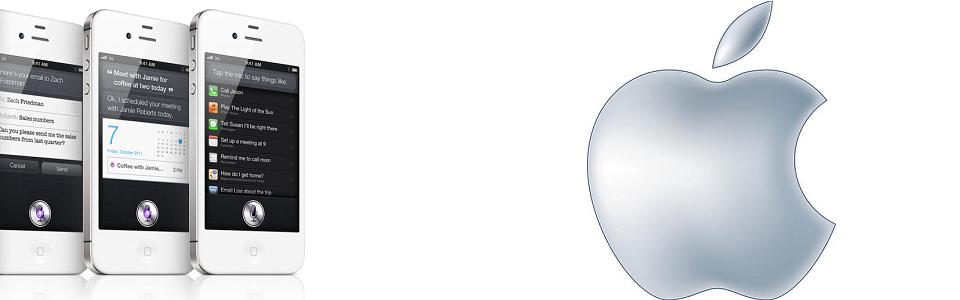
Yesterday’s article reported that a Brooklyn man is suing Apple because Siri doesn’t perform as advertised (for him at least), but most iPhone 4S users are happy with the function.

According to a survey of 482 iPhones 4S owners conducted by research firm Parks Associates, more than half said they were “very satisfied” with how it performed, with 87% saying they use it at least once a month. A further 21% said they were “satisfied” and 9% said they were “unsatisfied”. Considering Siri is still a beta product, having over 70% satisfaction rate is quite good. However, it’s also worth noting that the survey was US iPhone users only, and it’s a fair bet to think that users from other countries would be less satisfied as Siri has a reputation for not recognising words very well from non-US accents and it does not perform as many tasks outside of America – it doesn’t find local businesses, for instance.

An interesting finding from the study was that most of the users only use Siri for a handful of simple tasks, like sending emails or calling a contact, despite Siri being able to schedule reminders, browse the web, play songs and answer myriad questions. In fact, 32% of those surveyed have never used Siri for playing songs, and 35% have never scheduled a meeting with it. While those features are going unnoticed, the ability to send an email is something of a hit, with 26% saying they use Siri to do just that on a daily (or almost daily) basis, although 30% have never used it for that function either. Whether these people do not use Siri much for anything, or if they don’t send many emails, or if they just prefer to type them was not explored. The statistics from this report suggest that Siri is useful to those who have tried it, but it’s not a runaway success and arguably hasn’t shaped up to be what was expected of it in Apple’s 2011 keynote.

Indeed, John Barrett, Parks Associates’ director of consumer analytics, spoke of some drawbacks to Siri: “Some said Siri didn’t work well against background noise. Others said it had trouble understanding commands. These problems could be amplified in a noisy living room, where the main TV would be located.”

How Siri progresses in future software updates and upcoming handsets will be interesting to see. Will it cope better with noisy backgrounds like Shazam does? Will it recognise more accents? And if it performs perfectly, will it have much bearing on who uses it and how?


 

Yes, it’s Global Warming All Over Again

If there’s a topic that makes people sigh it’s certainly global warming. On one side you have the ones who believe that it’s a conspiracy, and on the other side you have the ones who feel that it’s their duty to have a fight with all those who dare disagree with them. But regardless of whether you are on the side of the conspiracy theorists or have nothing better to do than have a fight for no reason, some scientists have claimed to have evidence which indicates that the world is actually heating up faster than anticipated.

To put this study into terms we all understand, it says that by 2050 the average temperature could have risen 3 degrees Celsius at the worst and 1.4 degrees Celsius at best. The shocking thing is that this is much higher than what previous studies have predicted. Obviously, we will never know whether these are stupid or smart figures until it actually happens, but it’s still a cause for concern.

Man on Fire
This will happen to your children!

The University of Oxford team led by Daniel Rowlands carried out the study, but even they acknowledged the massive amount of factors associated with predicting climate change. To name just a few factors, we have to take into account the impact of greenhouse gases, and the growth or reduction of said gasses in the future, the activity of the sun, atmospheric pollutants that can scatter light, and general heat transfer across land, sea, and air.

However, what does all this mean for us? Well this depends on if these results are true. As already mentioned, the amount of factors means that there is a high margin for error so this study could be just utter tripe for all we know. But if it’s true, which we will assume it is for now, then it means that the average temperature around the world will rise, which won’t be good for our rapidly growing population.

Yes, it’s a good thing if you love the sun and you want to get a tan, but the problem is that there will be less rain. And less rain means less water for the planet. Less water for the planet means drought in certain areas and more deaths. So it means that areas of the United Kingdom, some of which are already in drought, could face increasingly strict restrictions on the usage of water, and that’s inconvenient for all of us.

Furthermore, there will no doubt be an increase in taxes because we may be left with no option but to start purifying the water of the sea. This can be done and the salt can be removed to make sea water safe to drink, but the problem is that it’s quite an expensive process which is just not viable in the modern world economy. If it was then we would be pumping out sea water and sending it off to the third world, would we not?


Photobucket


Many of you may respond to all this information by saying that it doesn’t matter because we will all be dead or just too old to care. But the fact is that if all of these unfortunate things occur then our world will be changed forever. And if those figures are true then what’s to stop our laissez-faire attitude from speeding up the process again in the next few years? That’s the question, and even if there is a high margin of error when predicting these things, I wouldn’t like to take any chances.


Google Instant “Ruined” Man’s Life

Another day another problem for Google. This time around it involves Google Instant – the recent addition where searching in Google leads to it auto-completing your search using previous search terms by other users as well as language and location, as shown below:


For most people this is just plain annoying, but for an unnamed Japanese man, it’s been nothing but trouble. The auto-complete feature allows you to see – sometimes uncomfortably – what other people have been using the infinite powers of Google to find. But the man in question discovered that Google auto-completes his name with crimes that he says he has not committed. Part of the problem no doubt is that he isn’t the only person in the world with his name, but with just one of Google’s suggestions returning over 10,000 individual results, it’s quite a big problem. Such a problem, in fact, that according to his lawyers the search results, thanks to employers increasingly conducting their own checks using the Internet, cost the man his job and resulted in him being turned down for others.

With Google itself turning down his request to remove the terms, the Japanese man decided to forge ahead and sought an injunction through the Japanese courts. The Tokyo court approved it and declared that Google now needs to suspend it’s auto-complete results. While it sounds cut-and-dry, Google being Google (and overlooking their own “Don’t be evil” mantra) have decided to ignore the ruling. The Japan Times reports Google as saying that it “will not be regulated by Japanese law” and that “the case does not warrant deleting the auto-complete suggestions.” Why? Because “the suggested words were being selected mechanically, not intentionally, and thus do not violate his privacy”. On the other hand, it could be argued that if Google wants to be permitted to be an active search provider in Japan, it needs to accept that it should be compliant with the country’s laws. If nothing else, the man who sought the injunction is likely to suffer from this far more than Google would if it suspended just a few terms. His lawyer embellishes on this: “This can lead to irretrievable damage, such as job loss or bankruptcy, just by displaying search results that constitute defamation or violation of the privacy of an individual person or small and medium-size companies.”

Although Google Instant blocks offensive or otherwise untoward phrases being returned with the use of strict filters, this isn’t an isolated incident. In 2010 Google lost a lawsuit in France due to the suggestions that appeared on its Google Suggest. In that case, the plaintiff’s name prompted the words “rapist” and “satanist”. The man in question had been convicted on appeal for corrupting a minor, but according to the AFP, the “conviction was not yet definitive” when Google’s suggestions appeared. In losing that case Google had to make a “symbolic payment” of one Euro and to ensure it took steps to eliminate the chances of it happening again. As with the case of the Japanese man, Google insisted in 2010 that it would appeal the decision.

Prior to that case in 2010 Google lost another case in France that were once again related to its suggestions. Search Engine Land carries the story that Google was ordered by a French appeals court to remove the word arnaque, which means “scam”, from its Suggest list when people searched for the Centre National Privé de Formation a Distance (CNFDI). Google’s response to the ruling was that the Suggest tool was automated, but the appeals court rejected this by stating that as Google permitted people to report offensive terms, the search giant has control over the terms that appear.


[Video]: Gibson Announces New 2012 Les Paul Standard Specs

The last major adjustments made to the timeless Gibson Les Paul Standard were in 2008, when the company made such changes as a chambered body to decrease the considerable weight of the mahogany and maple guitars.

One of the best additions is the Dual Burstbucker Pro pickups. Guitar players have long been able to ‘split’ their humbuckers to two single-coil pickups, producing a brighter sound similar to that of a Fender, but it required paying out to have the work done. Gibson’s new Les Paul Standards have it built it as, well, standard, so players can break free of the usual Les Paul sound and explore sonic territory new to the model.

Also finding its way to the 2012 model is the 60s neck radius, which allows for faster playing and is, to some, more comfortable than the fatter 50s neck.

You can read the full spec list here or watch the video below to see Chris from Gibson USA give a brief rundown of what’s new – and the changes are much more exciting than those in 2008.


Apple Being Sued Over Siri Woes

When Apple announced the iPhone 4S, the main feature to set it apart from previous offerings was Siri, a virtual personal assistant. With all its products, Apple claimed Siri was amazing, incredible, and unlike anything else (which no doubt angered Vlingo). What wasn’t so readily mentioned by Apple (instead buried away in a crevice on its website) is the fact that Siri is still in beta. The adverts showing Siri behaving like a portable Yellow Pages and fortune teller also omit this, along with any disclaimer that the feature may not work as well as advertised. To make matters worse, Siri doesn’t know business information or certain location-based information outside of the US – unlike its rivals Vlingo and Windows Phone’s Ask Ziggy.

So Apple’s flagship feature has landed the company in legal trouble once again – following the tradition of Apple being sued after an iPhone release, with users suing the company over the iPhone 4 “antenna gate” problem whereby holding it a certain way dropped calls (leading to Steve Jobs’s famous retort to “not hold it that way”, before getting up on stage to declare (falsely) that it’s a problem to plague all mobile phones), and an earlier court case where Apple got in trouble for claiming the iPhone offered a “full web” experience when it did not provide access to Flash content. This time around, it’s a man from Brooklyn, Frank Fazio, suing Apple, with the case claiming that Siri does not work as advertised because it produces incorrect answers, fails to understand what is said, doesn’t locate local shops and can’t understand directions, whereas the adverts show Siri understanding and replying to all these things without missing a beat, and even assisting people to learn music.

The inclusion of Siri led Fazio to spend $299 on an iPhone 4S, and his disappointment with how it performs has led to the case, which states that “The iPhone 4S’s Siri feature does not perform as advertised”. While it has yet to be decided in court if Apple has been misleading or not, Fazio is only one of a growing group of 4S users and critics frustrated with Siri, which seems to be hugely overhyped in the adverts. Other complaints of the service include it having a difficult time understanding non-US English accents (although it also seems to have trouble understanding American accents), and with Siri requiring an Internet connection to work, as most processing is done not on the phone but on Apple’s servers, it will not work for anyone without a connection. This particular problem was particularly troublesome when Apple had an outage that rendered Siri unusable for about a day.

Whether Apple’s claims are misleading has yet to be decided, but Fazio is part of a growing chorus of discontent over Siri. Despite an initially positive reception from reviewers when the iPhone 4S launched in October, users and critics have raised complaints about the iPhone 4S’ oft-hyped feature. The biggest complaint is that Siri requires an Internet connection to function since most of the heavy-duty processing is done on Apple’s servers and not the phone itself. So if you are without connectivity, Siri will not work. And the phone doesn’t even have a backup feature, such as the iPhone’s old voice control features, for basic Siri-like functions such as voice dialing. Siri’s connectivity limitations were highlighted in November when Apple suffered an outage that knocked Siri service offline for about a day.


Unboxing of the White Nokia Lumia 900

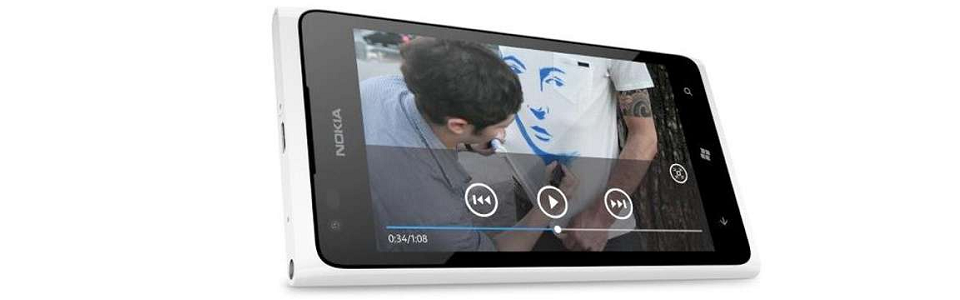
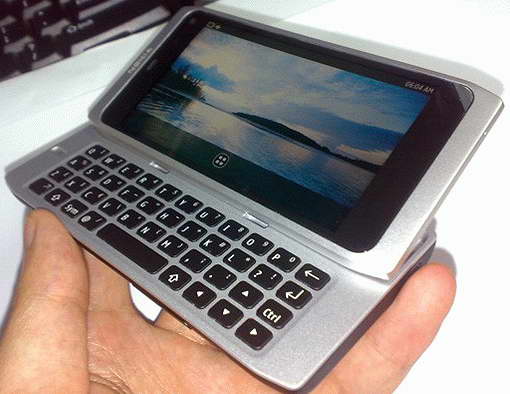
The Lumia 900 is the current high-end Windows Phone offering from Nokia, with a 4.3″ ClearBack Display and front-facing camera. The device is announced but not yet released, and from an aesthetics perspective, it is perhaps the most desirable Windows Phone yet. The Lumia 800 has the same design as the Nokia N9, which the 900 is also similar too, and in white the phones are reminiscent of the leaked images of Nokia’s white N950, the developer edition of the N9. The beauty of the N950 was its noticeable similarity to the stunning Macbook range: