
The Most Technologically Advanced Hotels in the World

In a world full of technological advances and innovation, it’s no surprise that this level of hi-tech mastery would find great use in the wonderful world of customer service. Paying a premium these days really does find you great value in the amenities on offer; the following gadgets are all found in hotels around the world, and truly are some of the most unique, bizarre, craziest, yet brilliant, inventions created in a world obsessed with digital.

The Yobot Yotel

Situated in New York City, the most innovative new customer service assistant around is actively working around the clock, entertaining and aiding customers of the New York City ‘Yotel’. A large mechanic arm attached to the wall, the Yobot allows customers to safely store their baggage in the compartments located in the lobby for a timid price of $2. The best thing about this glorified bellhop? No tips…ever (well, $2, I suppose – hardly a dent).

Designed as the most courteous and efficient way of handling your baggage, the Yobot is designed with a high-tech system that encourages the user to input their own personal pin code and card device, impressively allowing the robot to identify each separate piece of baggage corresponding to the specific customer. In a world making social interaction secondary to technological innovation, this certainly ranks high up at the top, and is no doubt an impressive feat.

The ‘Grace’ App

A saving grace, indeed; this nifty little app is basically a feature that you can download to your iPhone and watch as it creates your packing list for you. Let’s face it, when it comes to going on holiday, the packing is the bit you fear most, and for good reason. Last minute decisions can cause excessive and unnecessary panicking, but with the saving Grace app, you need not worry. Not only does it act as a generic checklist (including information on where to change your money, and reminding you to get travel insurance), it also packs in different scenarios.

Say you’re going skiing, what exactly do you need to pack? Say you’re going to Barbados for a week – well what then? The technology caters for different holidays based on the user’s preference and is incredibly interactive, allowing you to personalise it to your liking, deleting the appropriate topics and even adding your own if you don’t see it there; a must-have for any globe-setting fanatic.

iPads and Apple Macs
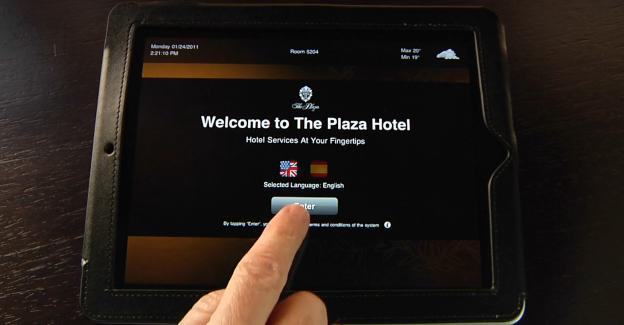
What better way to stay in luxury than to bring along your iPad or your laptop computer? Well, no need; certain hotels situated around the world actually provide their own iPad service in your room. Some, such as The Weinmesiter in Berlin, even include an Apple Mac for guests. Not only are you allowed to peruse the Internet from the comfort of your hotel room, rather than band about for a small, dingy Internet café, but it also gives you the option of checking flights, ordering room service, and finding the best places to dine out in town.

theWit, Chicago

Resembling something found in any old sci-fi film from the ’90s, theWit hotel in Chicago is one of the most forward-thinking hotel services on the globe.

The hotel is wired in every aspect with an IP Network that spans the entire building, from room to elevator, making it technologically complete. Every little aspect can be controlled, interacted with, and fitted to the customers’ needs. All lines are connected to the front help desk, and there is a remarkable little function that calculates body heat within a hotel room, based on pre-installed heat sensors, and changes the temperature accordingly to suit the customer.

In addition to all this, the rooms come complete with NEC VoIP phones, which act in a similar fashion to the iPads already discussed, and allow the user to take advantage of the hotel’s many services, as well as checking updated flight times and adjust their wake-up calls.

Do Not Disturb

One of the biggest problems customers have whilst staying in a hotel is the room service; it’s not that it’s particularly bad, but no one wants to have the maid abruptly walk in on them at 10.30AM whilst they’re having a well-deserved lie-in. In certain hotels, this problem has been rectified in a plethora of different and unique ways.

With the press of a button, you are able to illuminate a Do Not Disturb sign that is situated outside the door, doing away with those old cardboard pieces, and saying hello to a bright new future. In contrast, if you wish to ensure your room is cleaned by the time you return, you can choose the ‘Make Up Room’ option and encourage the maid to enter.

Elsewhere in the world, hotels have started to use infra-red sensors, which actually scan the room for the maid or clerk, to check if anyone is still in the room. If nothing is detected, the maids are given the all clear and are allowed to enter. Pretty sweet, right…?

Paving the way for a complete reboot of how we view customer service, these innovations have stunned and awed the masses, leaving one question fixed firmly in their minds – whatever next?

‘Like Water For Chocolate’ – Food for the Soul

Set in the Mexican Revolution, Laura Esquivel’s first novel taps into a world of family tradition and sexual liberation. The story has a backbone of recipes that hold the narrative together, taking you on a journey through the trials and tribulations of Tita de la Garza and her family.

Starting from January and working through to December, each recipe ties in with an event in the family and as you read it you can almost imagine yourself sitting alongside the narrator as she cooks, telling tales of her great aunt Tita. In each chapter we learn something new about cooking and the risks of preparing the ingredients in the wrong way. When the love of her life is set to marry her sister, Tita is left to make the wedding cake. Feeling her heart breaking, she cries so much that the cake mix becomes soggy and when all the guests eat the cake they are so overcome with longing that everyone is left dazed by a fit of vomiting. Although at times the magical realism that Esquivel uses can take you by surprise, it works to remind you of the mythical nature of the story. She conjures up such powerful images that the emotion behind the story is really intensified.

When it comes down to it Like Water for Chocolate is a love story, but the main love of Tita’s life is for cooking. Brought up in a kitchen by the family cook, Tita learns all the family secrets and home remedies, a tradition that the rest of her family has no time for. By the end of the novel you can’t help but wish that you had a book of recipes handed down through generations. It is by far the most interesting and thought provoking recipe book that you will ever read.

The Philips Light bulb: A 20-Year Idea

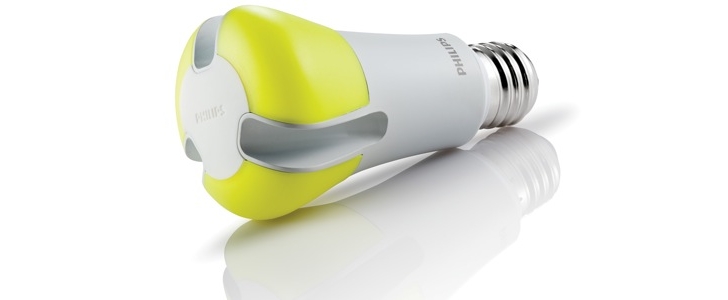
When somebody has an idea a light bulb bursts into life above their heads so everybody knows about it. Ok, not really, but what if we could create a light bulb that lasts for 20 years? Think about it, if you had a 20-year light bulb for every room in the house then by the time you have to replace it your kids will have left home. And that’s one less task to be dealing with.

But the future is already here because a 20-year light bulb has gone into production in America. The Dutch electronics giant Philips is the creator of this and has set its new invention for release on Earth Day. It was originally created as an entry for the Bright Tomorrow competition, which aimed to find an alternative to the 60-watt lights that will be phased out in America by 2014, and are already completely out of production in Europe.

The bulb is a change from your normal source of light, though, because it doesn’t use any filaments. Instead, it uses light-emitting diodes (LED) to light up a room. And it’s these LEDs that have created the long-lasting qualities and hefty price tag associated with this bulb.

LED light bulb

In America you can expect to fork out the equivalent of £37 for one of these bulbs. Even though it seems to be quite hefty, it’s probably a good idea in the long-run because you have to remember that it’s £37 for 20 years. Now that’s good value.

And yes, I can already hear many people commenting on the fact that new bulbs in general tend to have very cold and sterile glows. But this 20-year light bulb was created to keep the warm glow and be more energy efficient.

The only issue is that we’re not sure how well this is going to go down with an average person as the only reason Philips won was because it was the only entrant in the competition. So really it won by default.

On a side note, I’m not sure whether the fact that it was the only entry means that Philips is the only firm capable of creating this sort of device or whether it’s just because most people couldn’t care less. I sincerely hope that it’s the former.

Nevertheless, if it works then expect to see these LED bulbs in houses all around the world quite soon. Let’s just hope that it doesn’t demonstrate the very worst of a cold and heartless modern world.

News in Briefs 23/04/12

Oh look, the potential fuel strike made yet another appearance. But this time both the unions and the Government said that people shouldn’t panic buy. Some people really need to learn something about the concept of keeping one’s mouth shut.

And, for some reason, Ed Miliband started moaning that the Bahrain Grand Prix should be called off due to alleged human rights abuses. Last time I checked, taking a car and racing it around a track had absolutely nothing to do with politics or human rights. Shut up, Ed!

Political Oops of the Week

It’s been a long time since we’ve all had a good laugh at the British National party (BNP) and those associated with them. Luckily, the upcoming election for the post of London mayor has given us the opportunity to laugh again.

Carlos Cortiglia, who is obviously of British descent, is the BNP’s candidate and he wants to implement free travel for families at weekends. He claims it will provide more access to London for more people, and it will increase the revenue levels for the city. It will certainly increase revenue in some areas, but how much would the travel sector have to fork out in terms of transport?

This is a valid question and this was put to him by a BBC journalist. They asked exactly how much it would be to implement this plan, and he replied: “I don’t give appreciations in terms of numbers.”

Throw money
Here, have a fire-breathing caterpillar coated in gold on me!

So you don’t like to produce facts, figures, and numbers when it comes to big programs like this, Mr, Cortiglia? Then you’re probably not the best individual to be holding a political office. Essentially, what you are saying is that money is no object and you don’t know and you don’t care how much it costs.

It’s like its 1933 all over again and the Nazis have just come to power. Strangely enough, Nazi Germany was nearly always in complete and utter debt because the ruling party didn’t care much for numbers either. In fact, that’s part of the reason they went to war in 1939 instead of later on because they needed the resources and the money.

Still, political parties tend to follow their direct descendents.

The Painful…

New 10p and 5p coins set to be released in Britain have been coated in nickel in order to save money. The only problem is that medical experts are claiming that around 10% of the population are allergic to nickel.

So like responsible and intelligent people, the Mint decided to ignore all medical advice, all previous experiences with the potential of implementing nickel coins in Sweden, and the possibility of carrying out any health tests at all and surge ahead with their plans.

This is almost beyond belief when we look at the economics of the whole measure. The Mint is predicting that this will save around £10m a year due to the rising cost of copper. However, what we have to remember is that local councils are going to have to change all of their public machines, at an estimated cost of £5.5 million. Furthermore, the cost of recalibration has been estimated at a cost of £100m. And that’s before we start talking about the potential costs to the NHS due to additional cases of skin problems.

So any savings will only be seen in the generations after us, and even then, what if the price of copper falls? Then it’s a complete waste of time and we all would have lost money. It’s so illogical that it’s embarrassing.

…And the Pointless

The internet is under attack again as MPs call for better protections to protect children against porn. Now here’s some pointless news. When will these old fogies realise that you can’t protect children against this sort of thing in the current society we live in. It’s just impossible and it won’t work. Why won’t it work?

For a start, it’s not difficult to get past the arbitrary blocking methods used on the internet. Secondly, most parents are too damn lazy to implement the parental controls necessary to block their children. If the problem is really as bad as everyone is making out then stop attacking the internet and start attacking useless parents.

Furthermore, I can’t grasp how it would protect them against anything like this because the increasing sexualisation of children is due to many factors. And the availability of porn on the internet is a very small one.

Prostitution

Look at the terrible parents who let their children dress like sluts, look at the celebrities which celebrate dressing like a third rate prostitute, and look at the fact that sex and getting rid of one’s virginity is seen as the biggest task of a teenager’s life in this country.

Trust me when I say that the internet doesn’t hold the answers.

The so Outrageous that it’s Borderline Hilarious

This week’s hilarious news comes from the Employment Minister Chris Grayling. It’s actually quite funny when you think about it because it’s so absurd. We all know that business is about making money and making profits. Naturally, you want the best employees to fulfil that role. And if you truly care about your business then you are not going to care about where they are from.

But Chris Grayling thinks that British businesses should hire some local chav to do the work instead. In fact, his words were these:

“It’s easy to hire someone from Eastern Europe with five years’ experience and many employers choose to do so,” he went on to say that: “But those who look closer to home find gems too – turning round the lives of somebody from a poor background, given no real opportunity in life – and end up up with a model employee as a result. So we should give these young people a chance.”

Is he serious?

Chav
Chris Grayling looks and sees an employee of the month, but everybody else looks and sees a waste of space.

I could end up with a model employee, but I could also employ the modern employee with a good track record, so why should I waste my time? Are you going to give me or my business an incentive to do this? No, you’re not. What you fail to understand, Mr. Chris Grayling, is that business is a global one. I don’t care if you’re gay, straight, or Australian. If you can do the job then I will employ you because I have no incentive to do otherwise.

I’m not going to reward some bloody chav for sitting on a street corner and throwing their own lives away when I can reward an Eastern European worker who has made something of themselves. If they are out of work because they didn’t listen at school, spent most of their time drinking, or decided to hump their way through the greater Metropolitan area then that’s their bed and they can lie in it.

A Positive Outlook for the Week

The positive news is I will be away in Brighton next week, so I get to leave this horrible city. But on the negative side of things, I won’t be writing this column next week as that is in the middle of when I’ll be away.

But for some reason, I don’t know why, I have a good feeling that something really good is going to happen next week. I have a feeling that the potential fuel strike will end well, all the rubbish about the Bahrain Grand Prix will evaporate, and something major and interesting will happen.

So maybe next week won’t be so bleak and irritating after all…

Podcasts – An Alternative To Bad TV

Rightly or wrongly, I was rather quick to blame a recent spell of forgetfulness on an assumed wasting away of what Hercule Poirot would call my “little grey cells”. I suspected immediately it was partly influenced by our current evening television scheduling for in the main, prime-time TV being what it is (or rather what it has become), I felt certain it was having an adverse effect on my cognitive abilities. Today’s frightful concoction of reality shows and soap operas all blended together within a barrage of overtly annoying advertisements meant that while watching TV, my brain was completely surplus to requirements. Yes, I needed my eyes in order to see the characters on the screen and my ears to hear the steady stream of flapdoodle emanating from their mouths, but my brain? Not needed at all. So rather than forcing my precious cerebral matter into temporary dormancy for a few hours every evening as I sit glued to my TV, why don’t I let it go out for a walk by itself, around the park or along the seafront perhaps? At least it’d be getting some exercise.

Obviously this wasn’t a viable possibility but nevertheless, drawing a line firmly in the sand, or in this case, the living room carpet, I decided to try a little experiment and to abstain from regular evening viewing for as long as I could. And to help me achieve this incredibly far-reaching goal, I finally took up the advice given to me about a year ago by a friend who commented that I must surely get tired of listening to the same music on my iPod day in day out and why didn’t I listen to a podcast instead? At the time, I had no idea what a podcast was but having delved and explored, I became enlightened and learned that a podcast is simply a digital episode of a programme, any programme, be it old or current radio broadcasts or a series of discussions or informative dialogues from anyone who wants to share something with the rest of us. And six months on, I’ve become a rather avid podcaster, or is a podcaster the person who records a podcast? Perhaps I’m a podcastee then. I don’t quite know. Oh dear, this terrible withering of my brain! Oh, beware all you who sit in front of your HD TV flat-screens from dawn ’til dusk, beware the degradation of your cerebral cortexes. Anyway, I’ve become an avid listener of podcasts and I’m feeling rather confident that the atrophy of my encephalon has reduced considerably, nay perhaps even reversed such has been the steady curve of my learning.

I’m truly astonished at the amazing selection of listening material available online and I virtually guarantee that if you can think of a subject, any subject at all that has ever been discussed by human beings since they stopped their cave-painting in favour of a civilised confabulation around the evening fire, it’s highly likely there’s a podcast covering it. Politics, philosophy, music, current affairs, education, sports, science, cooking, entertainment, it’s all there and the best part is, it’s all free!

My personal favourites at the moment are found in the history category. For some reason, I can’t learn enough about the past. Perhaps it’s because I’m getting old and as my future gets shorter its significance lessens and so I find greater comfort in looking back, who knows, but I’m thoroughly enjoying learning all about the Second World War in one particular podcast, the history of England in another and an extremely entertaining and interesting selection of historical topics (usually people and events) from around the world in another. Compared to the (mostly) colourless and irksome voices from the television, these podcasters (note to self: investigate to see whether that is the correct noun) with their great passions for their subjects are inspired listening and I’m seriously considering putting the TV on eBay.

But won’t you miss the dramas and detective shows? I hear you ask. Not at all, I reply and I’ll tell you why. Because among these great online libraries of digital recordings can be found the types of show of which you speak. And to mention just two of my favourites – The Adventures of Philip Marlowe and Richard Diamond, Private Detective – both radio detective dramas from the 1940s and ’50s and both an absolute thrill. You can find all manner of others too if you look, Sherlock Holmes and Sam Spade among them as well as westerns like the Long Ranger and Gunsmoke.

I find it immensely rewarding listening to thespians of fine vocal ability acting out these stories while unseen studio hands create precise sound effects to bring life to their make-believe scenarios; their efforts really do install perfectly vivid images in my mind, the way that good story-telling should. It’s interesting too to listen to these old shows and to remember that the past generations who had nothing more to bring entertainment into their homes than the modest radio, a Bakelite tabletop set perhaps, would have considered them compulsory listening as they sat around comfortably beside the hearth and tuned in for the weekly instalment of their favourite characters. It doesn’t take much for me to picture a gentleman of similar age sitting comfortably by the fireside, slippers warming his toes and pipe smoke yellowing his moustache and Brylcreemed hair.

Another added bonus to this form of programming is that you don’t have to be sedentary all evening to enjoy it which means you can put the kettle on or get the washing in whenever you so desire, not at the prescribed time dictated by an ad break. If you are like me and are partial to a gentle stroll in fair weather then your podcast can engage or amuse you as you wander which is to my mind, making very good use of time. Now whilst I am not opining that all TV is hopeless – certain well-produced dramas are well worth sitting down to as are numerous documentaries and wildlife programmes – I am saying that I’ve realised (hopefully just in time for my cerebrum) that it’s far too easy to simply sit in front of the “box” all evening and to let the controllers of our national broadcast stations fill our minds with all sorts of intelligence sapping nonsense.

Maybe now I’ll even join the ranks of those listeners dedicated to The Archers.

Cyberbullying: How Serious is it?

We’ve all read stories of cyberbullying. We’ve all watched news reports of it. We are all at risk of cyberbullying as well. Social media is increasingly becoming a tool for bullies in their quest for misery and to inflict emotional pain on their victims. According to a report by the Department of Education, published in November 2011, almost 35% of young people and children in the UK have been cyberbullied. The most common forms of abuse were text messages and emails. The staggering statistic is not the percentage of young people who have been cyberbullied, it’s that almost 30% of those young people didn’t tell anybody about the abuse. What is important to realise is that text messages and emails are private to young people. Parents don’t have access to these in most cases, and so surely it’s hard to monitor?

Social media is a new way whereby bullies are increasingly targeting their victims. Hiding behind their keyboard, bullies can inflict as much hurt and pain as they want, with seemingly little consequences. In fact, I watched a story yesterday where a family was grieving the loss of their loved one, a young boy who took his own life because of cyberbullying. It is tragic that cowards behind a keyboard can cause this. The family, grieving and hurt by their loss, set up an online memorial page on the social network Facebook. It was a place where friends and family could mourn the loss of their friend and relative, and remember him in the way they wanted, by leaving messages of love and by sharing their memories. This was not to be though. The same cyberbullies who had targeted the young boy took to his memorial page to further inflict pain on his already suffering family and friends. The father of the boy said it was even strangers who got involved who just wanted to spread hate. Why? It’s simple: people can log onto a website and get away with it. They can set up a page in a fake name, and use it to cause pain and suffering for people. Surely this has to stop. I know there are privacy options on social networking sites, and tools in place so that people can stop others getting into contact with them, but clearly this isn’t doing a great deal.

Another example I would use of cyberbullying is the use of user-generated websites, such as YouTube. Anybody in the world can produce a video and upload it to the site. The video is then viewable for everybody across the world to watch. Great? Yes, great if you want to get yourself noticed, and great if you have a real talent. What strikes me though is the fact that users are able to comment on these videos. We know that some people may give positive feedback, others may give negative feedback. The negative feedback is the one we should be aware of. Negative feedback is all well and good if you’re performing on The X Factor, Britain’s Got Talent, The Voice or any other talent show; but that feedback is supposed to be constructive from professional people. The users on YouTube, who decide to ‘critique’ a video of someone singing, on the whole, aren’t professionals from the industry. They are, for the most part, people who want to be abusive to other users. Yes, there is the option to remove the comment tool from videos; but where’s the fun in that? People won’t get the comments they long for, and the attention they crave. Maybe it is fair game, if you put yourself out there in such a manner, then you lose your right to only positive comments, much like people who enter talent shows on television.

But what we need to realise is that people should not be able to get away with bullying, just because it isn’t happening face to face. Bullying on all levels needs to be stopped, and sanctions put in place to combat it. I mentioned just one example of a young person who took their own life as the result of being a victim of cyberbullies, but I can guarantee that there are plenty of the same stories across the UK. It has to stop. Our next generation should not have to put up with it; if it happened at school, there would be sanctions and punishments to adhere to; why not the same online?

Regardless of what happens now, it needs to happen fast. The government needs to act quickly, in order to prevent more tragedies across the UK. In my opinion, what has happened is simple: bullies have more tools at their disposal, thus meaning they can spread hate across a number of formats. Young people are constantly bombarded with the idea of fame and fortune. They want to replicate what they see on television; sadly to say, television ain’t all that real, a lot of it is blown up for entertainment. I understand that people who upload videos of themselves are fair game for comments, be it positive or negative. But you just do a search on YouTube; how many people on there are clearly disabled or have severe learning difficulties? Loads. Why were they able to upload videos? Who is caring for them? It’s a question I can’t answer, but perhaps education needs to start at home so that cyberbullying can be minimised. Sanctions should be put in place at home first, and then the Internet needs to be dealt with. But, realistically, can we really ever prevent cyberbullying or are the bullies becoming too creative?