Film Review: Trance

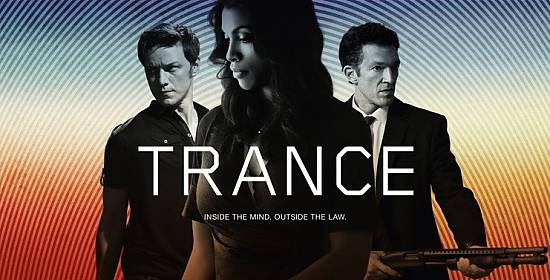
Oh Danny Boy, we know you are a national treasure after the success of the Olympic Opening Ceremony but I’m not sure your new film is going to be winning gold this year.  Okay, so some of Boyle’s past films have involved some suspension of disbelief but excellent storylines and endearing characters can help an audience forgive even the unlikeliest scenarios; unfortunately Trance has a distinct lack of both of these.

Trance, directed by Danny Boyle and starring James McAvoy, is a crime thriller that tells the story of an art heist; Simon (McAvoy) receives a blow to the head which leaves him unable to remember where he hid the stolen painting.  Desperate to find the painting and with a crime boss breathing down his neck, he seeks help from hypnotherapist Elizabeth (played by Rosario Dawson) who claims she can help him find it by taking him into a trance state.

The plot undergoes a number of twists and turns which make it hard to tell you much more about the storyline without giving too much away, but probably the most important thing to note is that your instinct about where the plot is going within the first half hour is probably right on the money.  As a cinema audience we are quite jaded and as soon as something labels itself a thriller you are immediately looking out for potential twists – unfortunately this means that all too often you see them coming a mile off.

It will not necessarily ruin a film when the twists aren’t quite as clever as the writers thought they would be; I was able to really enjoy Shutter Island despite guessing early on what the dramatic twist would be.  In this case the film was so well executed you could almost blame yourself for being just a smug viewer and seeking out clues.  With Trance you get the sense that the writers are the smug ones, thinking they have been ever so clever that even avid film watchers would miss the huge hints that are scattered throughout the film until the (un)surprising conclusion.

Trance is not an awful film, the talented Boyle givens us a visually pleasing journey, taking us through trance state and reality and exploring the notion of how far hypnotherapy can and should go.  However, despite being a fan of McAvoy I wasn’t convinced by his good boy gone bad character and Vincent Cassel does what he can with a fairly vague and unthreatening crime boss.  How many crime bosses do you think would be sympathetic to amnesia and hold your hand through hypnotherapy?

You get the impression that Boyle was trying to take us on an exploration of the mind and leave us questioning what was real and who the real criminal of the film was, but like the scene that involves a full frontal and shaved Rosario Dawson, you wonder if Boyle should have perhaps left a little more to the audiences’ imagination.

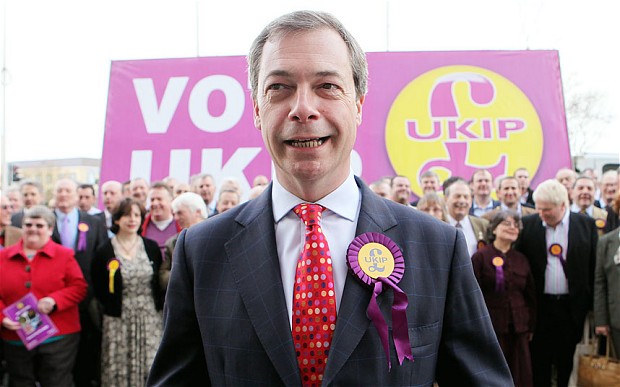
How does David Cameron overcome UKIP?

David Cameron has got a problem. It’s a problem nearly every post-war prime minister has had, and not many of them have found a satisfactory way of dealing with. What do you do when your party becomes unpopular in Government and voters start to drift towards alternatives?

Most people knew that by this point in Parliament the Government would be unpopular. Cutting public spending at rates not seen for decades and restricting benefits for those most in need was never going to lead to cabinet members being paraded through the streets on the shoulders of grateful electors. But not many people predicted the way that voters would go, and the effect this seems to be having on political debate in this country.

Governments are always unpopular half way through their term, and they very rarely gain seats at by-elections. What usually unites them is the ability to brush it off and say “None of this matters, we’ll still win the next general election.” Blair successfully did it for seven years, and Gordon Brown continued it for the next two, just with slightly less eventual success.

The problem that David Cameron and the Tories have is that they can’t just brush off their unpopularity. They can’t say “We’ll win again next time” because they didn’t win last time. They haven’t won an overall majority for a generation, something many Tory MP and lots more of the wider membership continually remind Cameron of.

Another thing that makes it harder for Cameron to shrug off his unpopularity is, unlike the last Labour Government, there is a refuge for those traditional right-wing Tory voters. Some former Labour voters flirted with the Lib Dems, but they tended to be those who were only attracted to the New Labour project. When the hard-core of the Labour membership fell out of love with Blair over Iraq, top-up fees, foundation hospitals or being too close to business, they largely drifted away from party politics. Cameron’s deserters are drifting to UKIP, and it’s changing the political debate of the country.

UKIP might have come a long way since it was founded in the early nineties, and the leadership of the party has undoubtedly worked hard to promote it as much more than a single issue party available for protest votes at unimportant elections. Despite all this work though, UKIP still mainly focuses on withdrawal from the EU and the subsequent control the UK would regain of domestic policy, especially immigration.

It’s no secret that the Tories are split on the issue of Europe. In fact every political party is. I know Labour MPs who despise the way the EU has imbedded capitalism and halted the evolution of European Socialism. I know Tory MPs who hate the EU because it has restricted capitalism through its forced implementation of European Socialism. In fact about the only party that stands united on Europe is UKIP. And the public like it when political parties are united.

So David Cameron has decided to tackle the issue head-on. He’s not going to hope that the arguments on immigration and Europe will disappear and that the Tory faithful will forgive him everything else by 2015. He’s made two speeches this year in a bid to meet the UKIP threat head-on. On both occasions they have been spectacular failures.

The first speech in Europe came in January, with the Prime Minister promising a renegotiation of the UK’s relationship with the EU *if* the Conservatives win a majority at the next general election followed by a referendum with an in/out option *if* those renegotiations are successful. Critics immediately spotted that Cameron would be going into the process wanting to stay in the EU anyway, hardly the best starting point for talks and without a clear idea of what powers he wanted to bring back from Brussels. UKIP immediately came out and said it was all too little too late and they would withdraw immediately, no questions asked.

Then last week there was the speech on immigration, and the way that immigrants were able to access benefits in the UK immediately upon arrival. As with many politicians discussing issues of immigration (not all on the right either) the speech strayed dangerously close to what some would call ‘incitement’ and others may label even more strongly. The thrust of the speech was to severely restrict access to benefits for those who came to the UK as immigrants, with the cost on the NHS the main focus. Cameron said in the morning that the cost was tens of millions per year, only to be trumped by Health Secretary Jeremy Hunt not two hours later saying the cost was hundreds of millions. The truth is probably that nobody knows.

The right-wing press seemed to like the speech, the comments section on the Daily Mail website was approving. But then out come UKIP to say not only would they stop immigration completely, but they would also severely restrict benefits to those already in the UK. All benefits, that is, except those being paid to UKIPs core vote (state pension, winter fuel allowance, free TV licence, bus pass). Once again Cameron’s rhetoric is lost in the tub-thumping of the mainstream extreme right.

The beauty of all this for UKIP is of course they have absolutely no chance of ever being asked to put any of it into action. We all thought that about the Lib Dems before the last election, presuming that’s why they were offering to abolish tuition fees. UKIP starts from an even lower base, and with the added advantage of everything they say being recorded because the main governing party is terrified of them and they continue to do well in the opinion polls.

Not all Cameron’s efforts have been in vain though. He has managed to somehow draw Labour and the Lib Dems into this Dutch auction on benefits and treatment of migrants, having previously done so with the EU issue. We now face the prospect that all three parties will spend the next two years telling us how they are going to ensure that the most vulnerable in society deserve to be treated badly. The next leadership debates will feature Ed, Nick and Dave scrambling to outdo each other in how tough they will make it for sick people to get treatment and for the working and non-working poor to survive.

It may well be the only thing we remember about David Cameron in 20 years’ time.

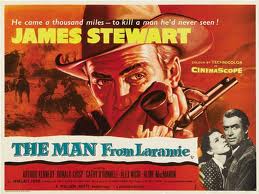
Film Review – The Man From Laramie

I hope regular readers of my musings on this website will not react with a weary roll of their eyes when they see, once again, I’ve employed that timeworn word – “classic”. Though I suppose more than this, I actually hope there are regular readers of my musings on this website. Even just one. Or perhaps two or maybe even a handful. Well, being the optimist that I am – Hi, hello, thanks y’all for stopping by.

You see, the word “classic” gets bandied about all too often in my opinion. It seems to be used as an enticing adjective for anything that isn’t particularly young. Art, architecture, furniture, clothing styles, cars, literature, music – and so on. But surely, there’s more to it than mere age – after all we don’t say “his grandfather was a classic person” or “Hadrian’s Wall is a classic defensive fortification” do we? Not usually anyway.  So what quality must be present for something to warrant the term “classic”? What does Cary Grant’s Savile Row suavity have in common with an original Jaguar E-Type? And what do they both have in common with New York’s Flatiron building? They are, after all, three things that could be described as being about as “classic” as you can get. Style and popularity? Yes and yes and certainly important. But age? Well okay, they’re all of the past but is that what defines them as classic? If the new iPhone 5 can be described as having classic styling, then surely age can be dismissed as being an influencing factor.

Perhaps all it comes down to is an initial opinion. The very first one. An opinion offered by an admirer who uses the term “classic” and the ears that hear that opinion agree and so the label sticks. I’m sure we can all summon something to our minds that has long held the “classic” monicker, something which we utterly abhor and deem totally unworthy and likewise on the other side of the coin something we hold dear that hasn’t garnered the label. If this should prove true for you, I suggest writing about it and giving it the label yourself, after all, the certification starts somewhere right? Did Khufu glance over the plans of his new pyramid and say to his chief architect, “Yes, it’s a classic design”? Maybe, maybe not.

Anyway I digress. Back to The Man From Laramie – a CLASSIC western if ever there was one. This was the last of eight collaborations between the film’s star (the wonderful James Stewart) and its director (the sublimely gifted Anthony Mann) and five of those eight were westerns. Over the years, Hollywood has churned out thousands of these horse operas and “cowboys and indians” films, many of which would blush with guilt at having to live up to being called “average”. But there are a good number of watchable ones too and of course as we reach the higher levels of excellence and artistry the number diminishes significantly just as it does in any other genre. But these five Anthony Mann westerns (and by the way, I already reviewed another one of his some months ago, see The Tin Star) can, in my opinion at least, sit right up there with all but the elite, the creamiest of the creamiest, the royalty of the genre.

Sometimes it’s hard to define, to put into words why something works so well when the same ingredients were used elsewhere less successfully. While there are plenty of things that can be said about these five westerns – Winchester ’73 (1950), Bend Of The River (1952), The Naked Spur (1953), Far Country (1954) and The Man From Laramie (1955) – they are all sums of their parts with many things working together in harmony to create that perfect “whole”. Certainly Mann and Stewart were the main factors. In productivity terms, their partnership was as harmonised as Wayne’s and Ford’s, Bogart’s and Huston’s, Eastwood’s and Leone’s or for that matter, De Niro’s and Scorcese’s . For a start Stewart’s glittering star was at its peak throughout the 50s but a quick glance at Mann’s credits suggest that his value in Hollywood during that decade was substantial as well.

But let me get to the point. The Man From Laramie tells the story of Will Lockhart (Stewart) a former captain in the U.S. Army who rides into the isolated town of Coronado to deliver supplies from Laramie. He has a personal vendetta to fulfil while there – to search for and kill whoever is responsible for selling repeating rifles to the local Apache Indians, Apaches that attacked and murdered his brother at nearby Dutch Creek.

What he finds is a town run by ailing cattle baron Alec Waggoman (Donald Crisp), his worthless and vicious son Dave (Alex Nicol) and ranch foreman Vic Hansbro (Arthur Kennedy). Plus of course a pretty woman in the guise of Barbara Waggoman (Cathy O’Donnell). Lockhart’s presence soon stirs things up like a mongoose at a snake party and it’s not long before he’s having to stand up to Dave and Vic. He’s persuaded to take a job with neighbouring rancher Kate Canady (Aline MacMahon), which he does in order to stick around and continue his investigations but again he’s soon facing the vicious Dave, who this time maims Lockhart in a most cruel way. As Lockhart begins to unearth the truth behind the sale of the rifles to the Apaches, conflict threatens to destroy the guilty party from within.

The film builds familiar themes like greed and betrayal into a tense climax however don’t for one minute think that ‘familiar’ here means average. This film has been described as a western version of King Lear and whilst that might be stretching the facts a little, it’s quite easy to see that Mann was hinting at something Shakespearean. The actors who do the most work are all terrific but the prize for audience captivation has to go to Stewart for yet another performance of brooding intensity (The Naked Spur being another fine example). An actor once said of his style, “It’s not what I say that’s important, it’s what I don’t say,” – a sentence that fits Stewart’s portrayal of Lockhart perfectly. He makes you feel what he’s going through as much by reading what’s behind his eyes as by what comes out of his mouth. He’s awesome. But then, he is James Stewart.

The Man From Laramie was adapted from a story of the same name in The Saturday Evening Post by Thomas T. Flynn in 1954. It was also one of the first westerns to be filmed in CinemaScope, a technique used for shooting wide screen movies which was popular from 1953 to 1967. It certainly helped Anthony Mann capture those sweeping vistas of scenery, which was something of a trademark in his James Stewart westerns. In this case it was the arid brown landscape of New Mexico but in The Naked Spur is was the mountainous beauty of Colorado and Lone Pine, California. Check it out. On film, you’ll never see it look better.

While there may be better examples of this most American of genres, they would be the exception rather than the rule. Anthony Mann was a director who never really garnered the praise he deserved and for all his contributions to cinema, he never won any awards. He received a few nominations, a Golden Globe for El Cid and three Directors Guild of America awards for El Cid, Men in War and The Glenn Miller Story but he was overlooked completely when it came time to hand out the Oscars. And yet, his body of work is truly solid and includes crime dramas, musicals, comedies, biopics, action adventures, historical epics and of course westerns. And he rarely failed to tell a story well. For me though, it’s his five westerns made with James Stewart that immortalises him in the pantheon of the great moviemakers for they are as “classic” as anyone else’s you’d care to mention.
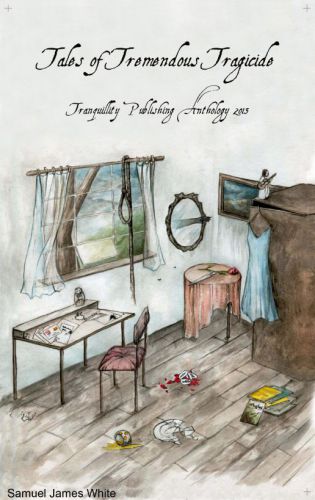
Tales of Tremendous Tragicide: An Anthology

Anthologies are to literature what the all-you-can-eat-buffet is to cuisine. A varied selection of authors, styles and characters, all with a common theme. Tales of Tremendous Tragicide focuses on the balance between love and tragedy, a mix that is so often present in life. Each story is very different from the next, and while some are more expected than others, they all take the reader by surprise and offer something new to the mix. You might not like all the stories, or feel a connection with every single one, but I can guarantee at least one will speak to you. The collection features everything from the life story of a plate, to the world through the eyes of a fly, to the question of life after death, but they all offer much more than the surface story and leave you feeling both fulfilled and contemplative .

As a collection the anthology works well, although the style of each story is not always complementary of the next one and some contrast strongly. In general I prefer a collection that takes you on a journey, with each story teaching you more and adding to the basis laid out by the first one. However, perhaps Tales of Tremendous Tragicide isn’t trying to take you on a journey, but instead it is showing you the harsh realities of our world, in the natural and sometimes jarring way that they come to us. Life doesn’t offer its lessons in bitesize chunks, it throws them at you, seeing how much you can take. In a way, this is what the anthology is doing.

There are certainly some stories that made more of an impression on me than others, as is expected with so many stories in one place. I wouldn’t be able to pick a favourite, but Asia with Amy by Ruby Johnson is certainly one that I’d go back to. Telling a story through letters can often either give great insight or turn into a complete cliché, but Ruby certainly did the former here. She creates a beautiful balance between the loss of a loved one and the trauma of genocide. Although this story is one of immense pain, the changing setting and narrative style keeps this pain at a manageable and understandable level. Similarly, The Ward, by Samantha Carey, tells the story of a children’s cancer ward and by the end of it I desperately wanted someone to tell me that it is now a novel, so I could carry on reading it.

While all of these stories reached for the heights, covering some very difficult topics and including such a wide range of issues, there were some that I felt fell short of the mark. Plate, by Arthur Sharpe, offers a new twist on class distinction through the eyes of a plate and although he is making an interesting social commentary the story just doesn’t quite captivate the reader. Making your reader empathise with a plate is quite a difficult task though. However, every single story in the collection says something about the world we live in and is very well written, so overall I’d say the authors have really achieved something here.

The Inmate of Rome

But what are kings, when regiment is gone,
But perfect shadows in a sunshine day?

— Edward II (Christopher Marlowe)

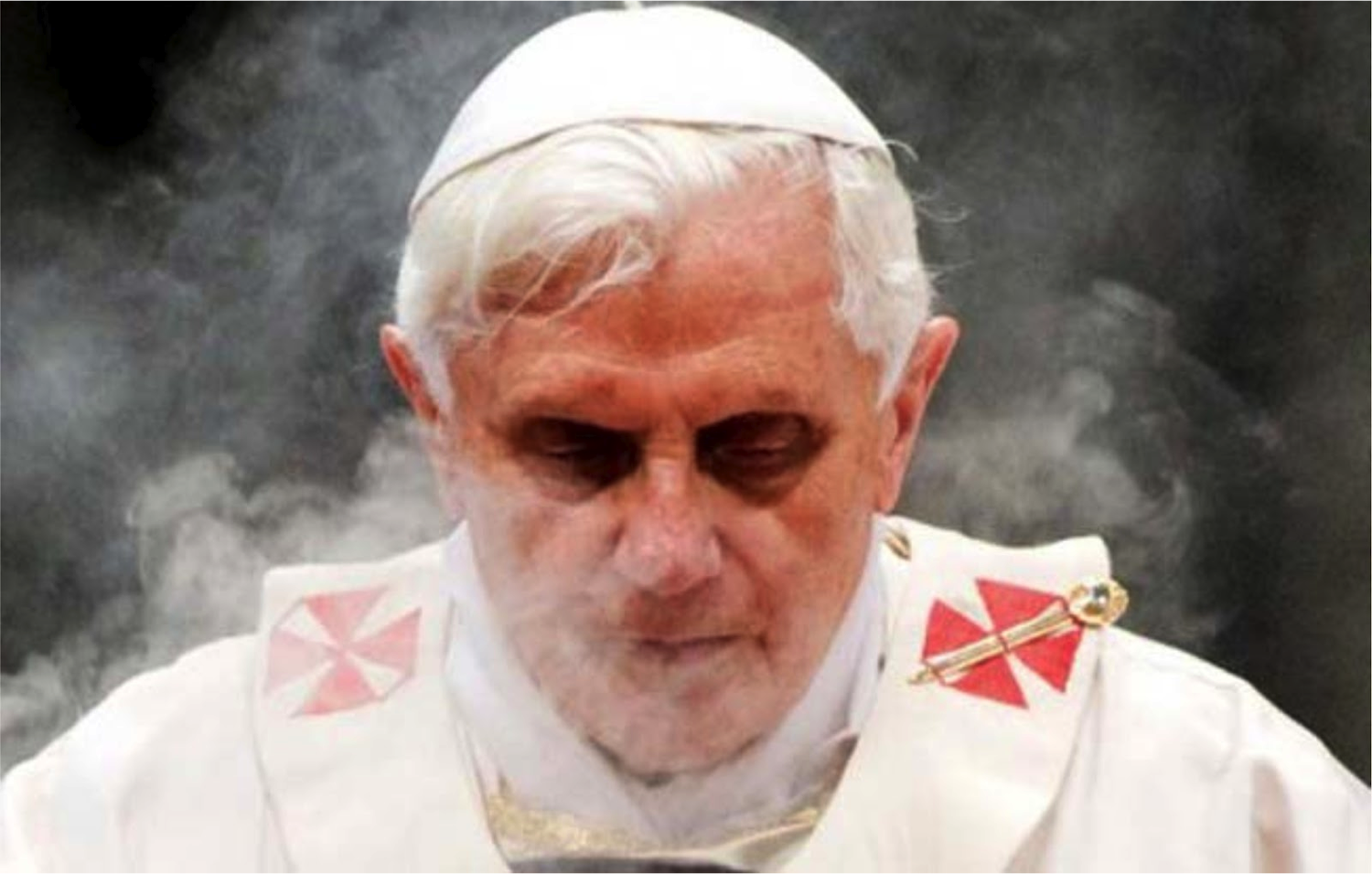
It’s a relief to be able to call him Joseph.  And it will be a relief once he’s treated just like any other Joseph.  It’s been said before and it will be said again: there’s a Ratzinger-sized space in Rome’s nearest prison cell just waiting to be filled.  The former Bishop of Rome should soon become the Inmate of Rome.

It shouldn’t have taken me by surprise when I discovered recently that the Vatican doesn’t actually have a prison system.  Earthly justice doesn’t seem to apply to the elect, after all.  Not to a man who personally granted the abuser of 200 deaf and dumb children in a Wisconsin school his wish to die without the oh-so-unconscionable spectre of a canonical trial hanging over him.  Not to a man who delayed the defrocking of a convicted child molester for four years, before writing and personally signing a letter asserting that the “good of the Universal Church” and that of the offender had to be considered for longer still – without even a hint of a mention for the trauma of his 11- and 13-year-old victims.  Not even to a man who disseminated the disgusting memo to every single Catholic bishop in 2001 that encouraged – nay, demanded – secrecy and silence with regard to every last case of child molestation and rape under pain of excommunication.  ‘Tackling’ the issue head on was something of a speciality of his, it seems.

In any other walk of life, that man would already be locked up.  And that’s just what he is: a man.  No more, no less.  Vaticanites may reason that elevating him from mere primate to venerable and venerated Primate lifts him above the law, as if a capital letter and a Latin intonation automatically give you special privileges; but strip him of his robes and his cronies, and you’ll soon find out that he’s no different from you or I.

Is this how brittle our values really are?  So brittle that we’re willing to excuse from justice anyone who can persuade us that they’re running a rather important errand for God?  ‘My apologies,’ he says, ‘but I happen to be infallible too.  Fancy that?’  Maybe what we should actually be questioning is the kind of God that would endorse such arrogance, such malevolence, such a sickening brand of despotism.  This is not morality; this is delusion and depravity.

And I, for one, am having none of it.  Think of every single one of the many thousands of victims of child abuse by priests; think of all those cases that Ratzinger could have stopped – and chose not to – as Prefect of the Congregation for the Doctrine of the Faith.  Just think.  And then imagine looking into a young child’s eyes and telling them that the man who put the welfare of a 2,000-year-old Church over that of 12 year-old children is likely to go unpunished.

Any decent human being simply couldn’t.

When Ratzinger announced his resignation, he talked about having “repeatedly examined my conscience before God”.  He can say that again, and again – in the jail cell where he belongs.  Apologies and excuses and stage-managed contrition won’t cut it anymore.  The most courageous thing he could do now is to hand himself in.  If the spiritual leader of the Catholic Church can’t subject himself to civil law and emerge unscathed, his 1.2 billion followers have got to question whether his ‘divine’ mission is one they want to be part of.

The Vatican is shaken, no doubt.  An institution that has insisted on being its own judge and jury for so long suddenly finds its carefully sealed totalitarian tinderbox at risk of being prised open.  Reuters recently quoted a Vatican official who commented revealingly that it was “absolutely necessary” for Ratzinger’s future place of residence to be within their jurisdiction.  Otherwise, he might end up as defenceless as the children abused at the hands of Father Keisle or Cardinal Law or Father Hullerman or Father Murphy: “He wouldn’t have his immunity, his prerogatives, his security, if he is anywhere else”.  What more needs to be said of the constipated morality that underpins the Roman Catholic Church?

After Ratzinger’s final disrobing, we mustn’t let ourselves be persuaded that he’s to be handled with care.  There’s no reason for us to respect his rights in a court of law any more or less than the next man.  There never has been.  But now, we can either make it our duty to challenge him and the institution he represents – on behalf of the children whose lives have been blotted by his signature, and on behalf of an entire civilisation whose progress surely relies on unflinching inquiry and scrutiny – or else face being complicit.

For if you look on impassively as Ratzinger slinks off to his very own 4,300-square-foot convent for the rest of his days, you’re like the kid in the playground who’s too timid to stand up for the victims of the mother of all bullies.  Only the stakes are higher this time.  Much higher.

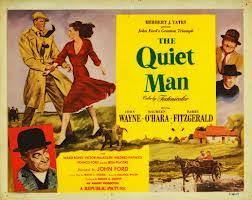
Film Review: The Quiet Man

As far back as I can remember I’ve been a John Wayne fan. I may have been but a freckle-faced junior with grazes on my knees and dreadfully sensible sandals on my feet but there I was, sitting with my father watching those weekend matinee cowboy films on one of the three TV channels (remember those days?). I recall Dad frequently telling me not to sit so close to the screen – “You’ll make yourself cross-eyed!” Wayne’s embodiment of heroism, strength and honour was, to my young mind, as right and true as any natural law of the universe, something to aspire to so that whatever you did, wherever you went, everything would work out fine as long as you conducted yourself in the same manner. Sure, there’d be hardships along the way and battles to fight but if you’d quit bellyaching, stand firm and face your adversaries head on, you’d triumph in the end and be able to ride off into the sunset with love and righteousness by your side. (Sounds almost biblical, doesn’t it?)

Well, I’m older now (you don’t say!) and, I hope, a little wiser and a little more knowledge about some things in life but when I sit through a Wayne movie my mind just goes right back to those formative years when life seemed simpler, when love and honour seemed to truly mean everything and when a man was only as good as his word.

Hand on heart, I can say that I’ve watched pretty much all of John Wayne’s films – certainly those of which came after Stagecoach in 1939 and with equal sincerity, I can attest to having enjoyed them all. To me, he’s just so watchable. However, when it comes to truly great pictures, classic films, I have to concede that he made but a handful. And yet that’s okay because let’s face it, any artist, be they an author or a painter or an actor, if they leave even just one shining example of their craft – one book, one painting masterpiece or one performance that is unmatched or unquestionable in its brilliance, then they’ve hit the jackpot. They’ll inspire generations and live on forever. Wayne did just that – some might say with the help of a great director but as I’ve said before in these pages, sometimes in the movies, the stars in the heavens align, the talents of cast and crew come together in total harmony and perfection is created.

For Wayne this is clearly evident in The Searchers, She Wore a Yellow Ribbon and Red River. Three superb films directed by two of Hollywood’s greatest movie makers –  John Ford and Howard Hawks – with performances from the Duke that should be ranked as highly as any performance by any actor, ever! There are a few other titles that could arguably join this group – True Grit (for which Wayne won the Oscar for Best Actor), Rio Bravo and The Shootist (his last and most poignant performance) and I cannot omit The Quiet Man. If you’ve only seen Wayne wearing a gun-belt or brandishing a Winchester, then this is a bit of a departure but it is an absolute GEM. If you’ve never seen it, I urge you to do so. It’s beyond beautiful, it’s funny, moving and utterly charming. And it’s the sort of film that would not, nay, could not be made today. No matter how overused it is, the aphorism is true – they just don’t make ’em like they used to. Yes, modern cinema had gained much with its CGI, its new fangled digital cameras and lightning quick editing techniques but along the way something has been lost. If you’re into great movies, you’ll know what I mean.

Anyway – The Quiet Man. Wayne plays Sean Thornton, an Irishman by birth who returns from 1920s America to his childhood home with the intention of settling down. He’s also running away from something in his past. He meets and falls in love with the beautiful but feisty Mary Kate Danagher (played by the incredibly lovely Maureen O’Hara). Unfortunately, she happens to be the younger sister of local squire and ill-tempered bully Will Danagher (a role that suited the hulking Victor McLaglen to a tee). Sean’s attempts to court Mary Kate are met with stiff resistance from her brother however, with the help of the friendly locals – an impossibly loveable bunch of village stereotypes – the romance gets a leg up (so to speak). Sean’s romance of Mary Kate forms the main plot of the movie but there’s an intriguing undercurrent because the past that Sean was hoping to leave behind in America returns to haunt him.

The script was based on a 1933 Saturday Evening Post short story by Irish novelist Maurice Walsh.  Apparently director John Ford read the story and soon after bought the rights for $10. Republic Pictures, the studio through which the film was made, was known mostly for low budget B-movies and considered The Quiet Man to be a big risk with Wayne and Ford stepping away from their usual genre of the western. They only agreed to finance it if Wayne and O’Hara and Ford agreed to film a western with them first, which they did. Rio Grande was that western. The studio needn’t have worried though because The Quiet Man was a commercial and critical hit upon release and it went on to become the first and only time the studio received an Oscar nomination for Best Picture.

The Quiet Man would go on to win two Oscars out of seven nominations, one for Ford’s directing, the other for Winton C. Hoch’s cinematography. All of the outdoor scenes were shot in various locations around County Mayo and County Galway in Ireland throughout the early summer of 1951and Hoch used his lens to capture the vivid green beauty of the countryside like Constable used his paintbrush. It’s just lovely. Many of these locations have since become tourist attractions and the pub used in the film (though it had been a shop at the time of filming) hosts daily reruns of the film on DVD! The production employed many actors from the Irish theatre as well as extras from the surrounding countryside and the film is one of the few Hollywood movies in which the Irish Gaelic language can be heard.

Wayne’s performance as the stranger in a strange land is well judged. The little town of Innisfree, its people and their customs are a far cry from the world his Sean Thorton has left behind. Wayne doesn’t do peaceful and quiet very often in his films  so it’s great to see him in something with a gentler pace but he still bellows his authority when he has to. The chemistry he shares onscreen with Maureen O’Hara is something special too. They must have adored working together because it shows in their performances and it’s no surprise to note that they would go on to make a total of five films together. As always, O’Hara is just wonderful, portraying innocence and youth, romance and passion like few are able. The other main characters are played by some of John Ford’s regulars – Victor McLaglan, Ward Bond and Barry Fitzgerald. The latter is absolutely hilarious as the cheeky Michaeleen Oge Flynn who likes a drop o’ whiskey every now and then. The music by Victor Young compliments the picture perfectly – frequently romantic and cheerful and at times wonderfully cheeky but always keeping that Gaelic heart. At a certain point in the film, Michaeleen begins humming a catchy little melody called “The Rakes of Mallow” and if you’re anything like me, you’ll be humming the tune yourself as he credits role.